The National Day Expressway is heavily congested, and the performance shortcomings of new energy vehicles appear.
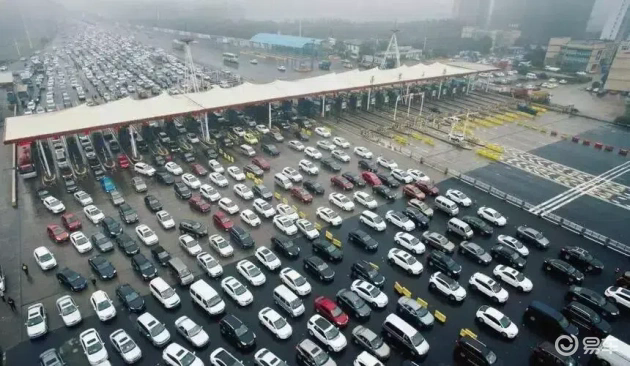
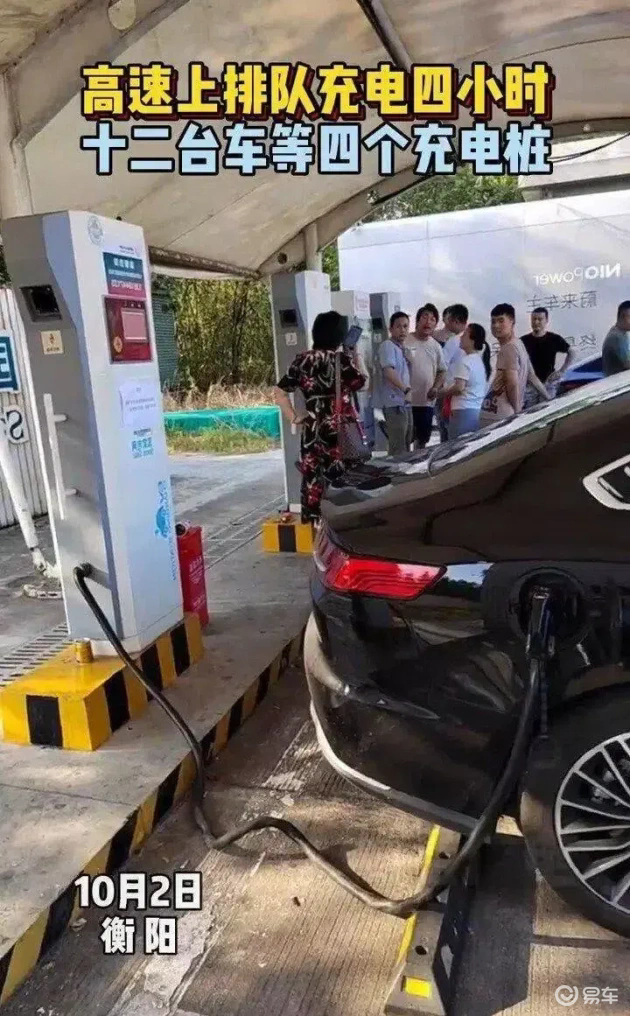
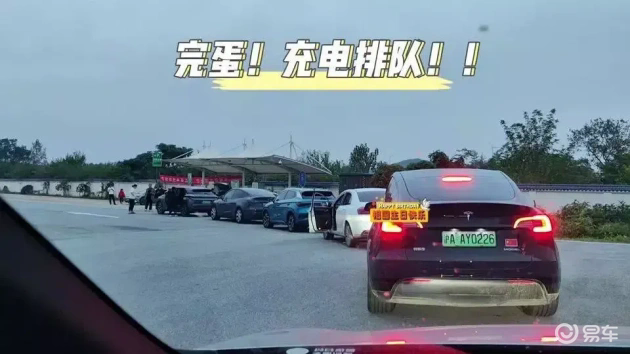
During the National Day holiday, the scenes on the expressway were really impressive. The circle of friends is full of the "spit" of electric car owners-queuing for 3 hours, actually driving for 2 hours, and even more car owners directly parked their cars on the side of the road to dissipate heat. The scene is quite embarrassing.
This is not beyond my expectation. Although the number of new energy vehicles has exceeded 18 million, the construction speed of charging infrastructure has obviously failed to keep up with this growth.
The problem of this concentrated outbreak only exposed the contradictions that were usually covered up completely.
01
Data don’t lie.
Let’s look at some key data: at present, the total number of charging piles in China is about 7.6 million, and the ratio of vehicles to piles is about 2.4:1 based on 18 million new energy vehicles.
This ratio seems reasonable, but the problem lies in the uneven distribution-the charging piles in the city are dense, while the charging piles in the expressway service area are much sparse.
More importantly, the charging time. Even if fast filling piles are used, it will take 40-60 minutes to fill from 30% to 80%, which does not include the queuing time.
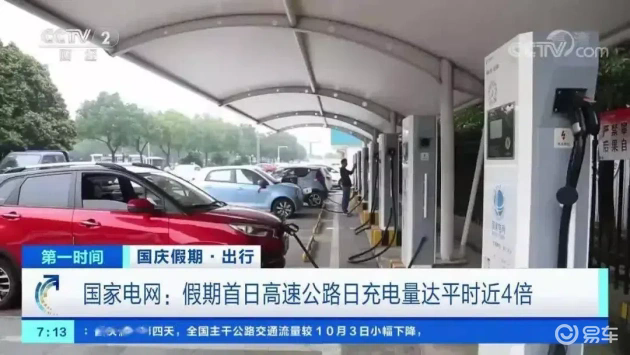
In contrast, it takes only 5 minutes for a fuel truck to fill up a tank of oil. In the case of a surge in holiday traffic, this efficiency gap is infinitely magnified.
As far as I know, six charging piles are enough in a service area, but there were more than 50 vehicles queuing during the National Day. A car owner said that it took him 12 hours to return to his hometown in Hunan from Guangzhou, and half of the time was spent looking for piles, queuing and charging.
02
Endurance anxiety still exists
The gap between the manufacturer’s nominal NEDC battery life and the actual high-speed battery life was fully exposed during this long-distance trip.
A model with a nominal cruising range of 510 kilometers can only run about 300 kilometers in high-speed actual driving, which is really not small.
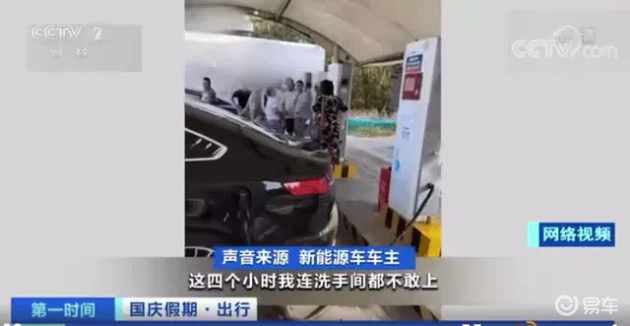
Factors such as temperature, vehicle speed, and air conditioning usage will all affect battery life, but many users lack full understanding of this. In order to save electricity, some car owners dare not turn on the air conditioner when driving at high speed. This experience is obviously not comfortable.
03
Look at the short board rationally
We can’t completely deny new energy vehicles because of these problems. In daily urban commuting, the advantages of electric vehicles are still obvious-low cost, good driving quietness and fast acceleration response.
The problem mainly focuses on the specific scene of long-distance travel across cities.
At present, plug-in hybrid and extended-range models do have advantages in long-distance travel, which can enjoy the smoothness of electric drive without worrying about battery life. This also explains why extended-range models such as Ideal and Boundaries perform well in the market.
Write at the end:
The charging problem during the National Day really reminded users who are going to buy pure electric vehicles. If your main purpose is to travel in cities, pure electric vehicles are still a good choice.
However, if you often need to travel across cities, perhaps plug-in hybrid or extended-range models are more suitable for the current use needs.
Both the improvement of infrastructure and the progress of technology take time. What do you think of the long-distance travel of new energy vehicles? Welcome to leave a message.