The real tiger can’t carry "Sunshine Robber", so it’s time to talk about the existence value of animal actors.
Author/Baoyi
This May 1st file, the film "Sunshine Robber" promotes the real tiger element in a high-profile way, which is bound to bring a real and shocking visual experience to the audience.

"Sunshine Robber" promotional materials
According to producer Fang Li, in order to highlight the real tiger texture in the film, he "used five real tigers, including three Siberian tigers and two Bengal tigers" in the process of photography. After the screening, many viewers also gave positive comments on this little tiger, such as "cute", "lifelike" and "the best in the audience".
However, the real tiger element seems to have failed to greatly promote the box office and word-of-mouth of Sunshine Robber. The film was released for 4 days, with box office less than 40 million, Douban 5.5, Cat’s Eye 7.2 and Taobao Film 7.3, and the voices about boycotting animal performances came as scheduled.
From this, we can’t help asking questions: can animal actors make stars and what is their value?
Recently, Mr. Hao Shuai, a professional animal actor director,Film Information Office (ID: dianyingqingbaochu)Sharing first-hand industry information, this article, let us face up to all kinds of problems and challenges around animal actors at present.

From props to actors
Looking back on the film history, it can be said that there is a century difference between the establishment of the status of "animal actors" in Europe, America and China.
As early as the 1920s, Hollywood giant Warner Bros. began to sign contracts with animal actors, and successfully produced dog stars like Rin Tin Tin, a German shepherd. However, when did China’s film and television industry officially recognize the title and identity of "animal actor"? Hao Shuai, who has been working as an animal actor director for nearly ten years, thinks that this time point should be between 2015 and 2017, because during this period, the TV series "Dog Seven" was broadcast on Hunan Satellite TV and "A Dog’s Purpose" was released on the big screen, and both of them got good market response one after another.
"After these two projects, more and more crews no longer classify us as a prop group, and the staff in the group are willing to call our little animals’ animal actor teachers’," Hao Shuai shared with Intelligence Jun with satisfaction.
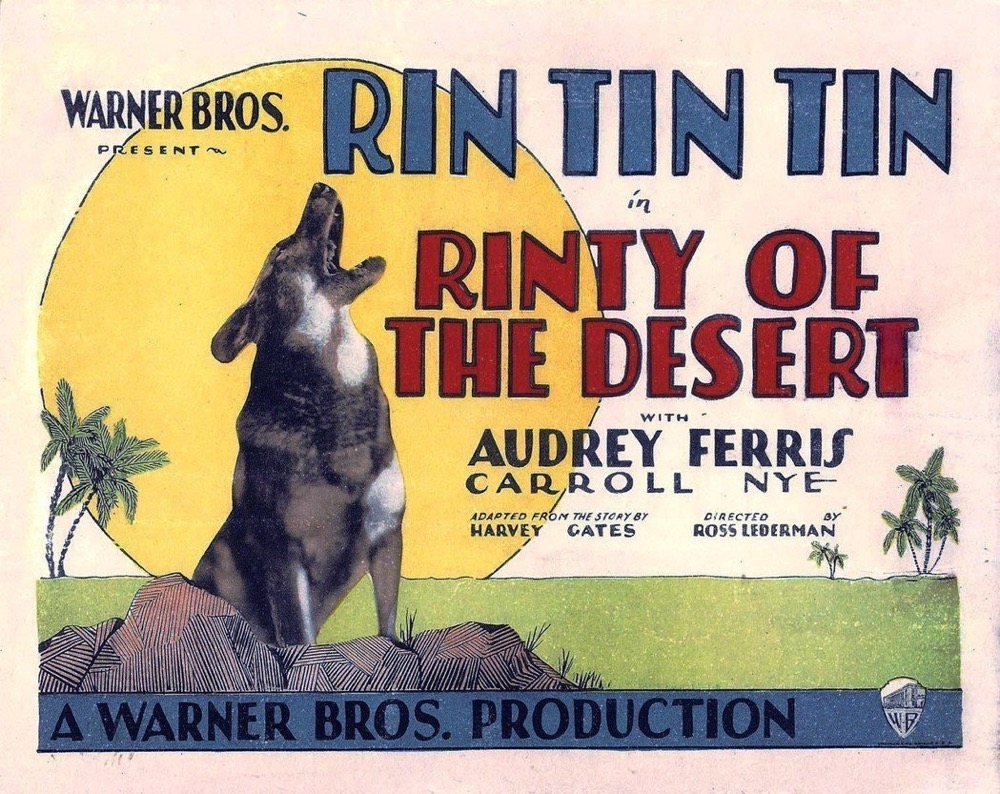
The film "Rinty of the Desert" starring rin tin tin.
However, Hao Shuai also bluntly said that, in addition to the rising market demand, the status of animal actors has been improved, and the unpleasant events that have appeared in the filming process of some film and television projects have sounded the alarm for how to regulate the use of animal actors.
"For example, some directors will think that dogs are born to stand or catch the ball. Some directors will think that dogs can work endlessly for two or three hours after watching some videos on the Internet. Others will ask dogs to make the expression required in the script at the first time … and then something will happen," Hao Shuai went on to say. "We have also participated in and witnessed related unpleasant events, so now everyone is paying more and more attention."
In this regard, access to past news can also be traced.
First of all, animal sacrifice accidents caused by the imperfect working procedures of the crew and the negligent operation of the crew have really happened in China, especially in the use of horse actors. According to the report of Youth Weekend in 2009, due to the inappropriate remarks made by Gao Xixi, the director of the new version of Three Kingdoms, that "six horses were sacrificed and eight horses were crazy in filming", the China Small Animal Protection Association "held" a media briefing in the form of a salon. At that time, Lu Di, the president of the new version of Three Kingdoms, not only denounced the crew of the new version to the media.
Secondly, even though the awareness of protecting animal actors has been improved, many crews now use bionic mechanical animals to assist filming, but due to the needs of the plot, the crew sometimes cannot provide 100% security for all actors, including real actors and animal actors. For example, the crew of Lonely City Closed (later renamed Qingpingle), which was accused by netizens of deliberately tripping horses and dogs in order to restore the plot of "killing dogs by escaping horses" in ancient books, made an explanation statement, while the crew of Crazy Alien, which was condemned by animal protection organizations for abusing dogs and throwing them into the river during filming, also made a statement afterwards, and director Ning Hao also deleted relevant scenes in the film.

Behind-the-scenes interview of CCTV6 "Crazy Alien"
However, the possible danger between the interaction between real actors and animal actors is also two-way. Once, jean jacques annaud, the director of the movie Wolf Totem, and William Feng, the main actor, showed the media that it was very difficult and dangerous to act with animals. Even in Hollywood, where the training mechanism for animal actors is quite mature, it is inevitable that the trainer will be accidentally killed by a bear or tiger during the filming process.
It can be seen that if you want to make a star as an animal actor, you must first admit that "it" is an actor, and if you want the animals in the studio to realize the gorgeous turn from props to actors, it is not just a matter of changing their names, but also requires cognitive transformation, process standardization and supporting technological innovation of all nodes in the whole industry.
First, real animal actors need to receive professional performance training like real actors. Therefore, from the animal training courses designed and developed for the common needs of film and television projects to the mutual cooperation of animal owners, trainers and animal directors, it is necessary to specialize in the technical field.
Secondly, animal actors also need to enjoy corresponding labor benefits. For example, they should not only get proper living and food care on the set, but also work moderately and avoid overtime. More importantly, all welfare items should be determined in black and white to avoid unnecessary disputes in audience sitting.
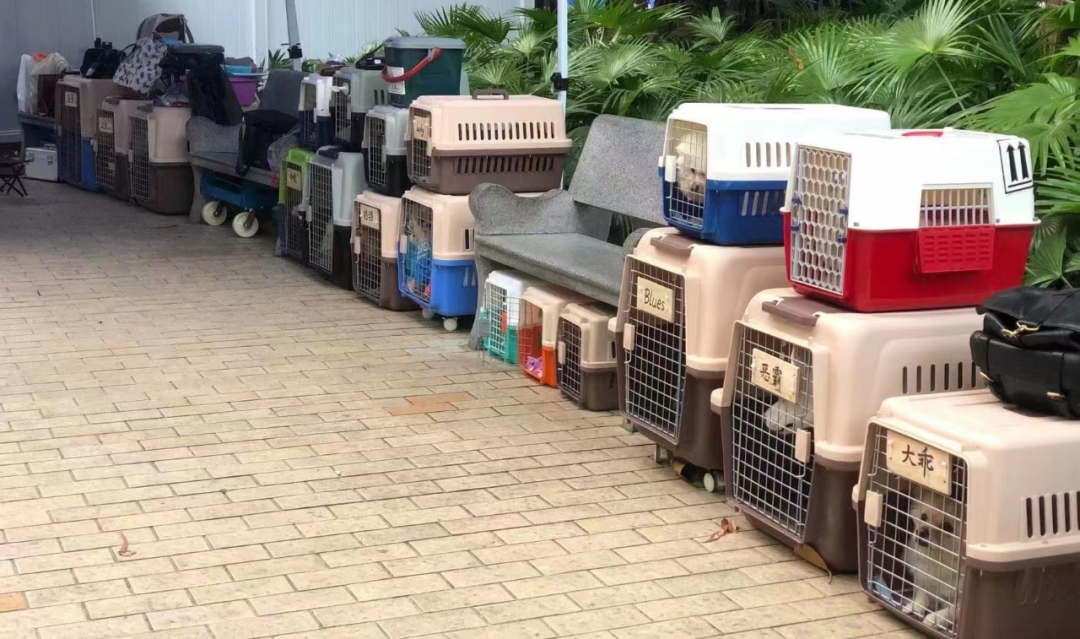
Animal actors who have just arrived at the scene of the crew

The field staff is looking after the animal actors in the waiting field (source: Hao Shuai)
"Then who will sign the contract on behalf of the small animals?" When talking about this labor agreement, Intelligence Jun asked Hao Shuai questions. "You don’t want to grab the paws of small animals to cover the red handprints, do you?"
Probably amused by the brain hole of the intelligence officer, Hao Shuai replied unhurriedly: "Actually, the animal as the noumenon and the actor as the identity can’t be equated directly, because an animal actor has the efforts of the trainer and the animal director behind him, so you can understand Party B on the contract as a trinity collective noun, including the animal itself, the trainer and the animal director."
"So Party B in the contract is actually you as an animal director or a company legal person, right?" Intelligence jun summed up.
"Yes, that’s right, we act as an agent." Hao Shuai replied.

A bolder idea
By clarifying the process of how the animals on the set "become" actors, Hao Shuai described to us a vibrant and developing branch of the film and television industry. However, a slogan once said, "How bold people are, how productive the land is." Besides the current cognition and ability of practitioners in the field of animal actors, there are other bolder ideas for making stars in the market.
First of all, the marginal ability of animal actors is constantly being broken through, from simple turning around and picking up the ball upright to more complicated subtle emotional expression, the professional level of animal performance training team is constantly being pushed up. In Hao Shuai’s original words, "We will be eliminated if we don’t make progress."
Secondly, the business scope of the animal performance training team is constantly expanding outward. From the initial performance training and script planning to the subsequent brokerage business, medical support and animal placement, the animal performance training team has long been not limited by the word "performance training". The reason is also very simple. If they don’t participate in script planning, it will be difficult to train animals in advance according to the requirements of the crew. If they are not responsible for post-use resettlement, most crew members have no ability and obligation to undertake this responsibility.
Therefore, just as Beijing Mingshi Dog Industry Co., Ltd., which participated deeply in the TV series "God Dog Seven", recorded in its own official website, matters related to pet film and television, such as foster care, performance training, theme planning, actor brokerage and film and television shooting base construction, all belong to their business scope.
Thirdly, the types of animal actors are constantly being enriched, from pet actors with the lowest training difficulty coefficient (cats, dogs, hamsters, etc.) to scene actors with a slightly higher training difficulty coefficient (horses, sheep, etc.), and then to beast actors with the highest training difficulty coefficient (tigers, bears, wolves, lions, etc.). Writers and directors increasingly want to complete richer and more interesting film and television expressions through animal actors.
In this regard, some are rigid requirements, such as horses used in war scenes, while others are based on the soft requirements set by story characters, such as the horse named Joey in the classic movie War Horse, the monkey played by Geng Hao (Bo Huang) in Crazy Alien, and Xiaoxue (Song Jia)’ s pet tiger in Sunshine Robber.
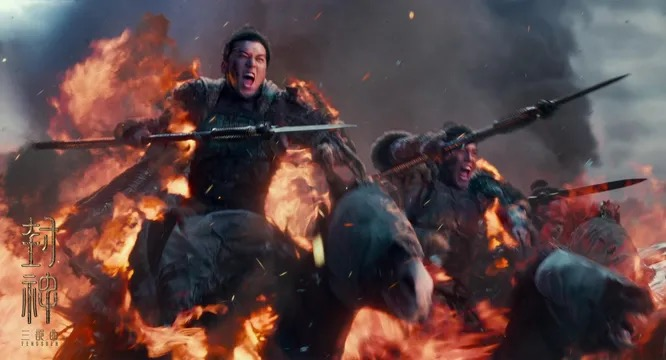
The war scenes in the preview of the trilogy of deities
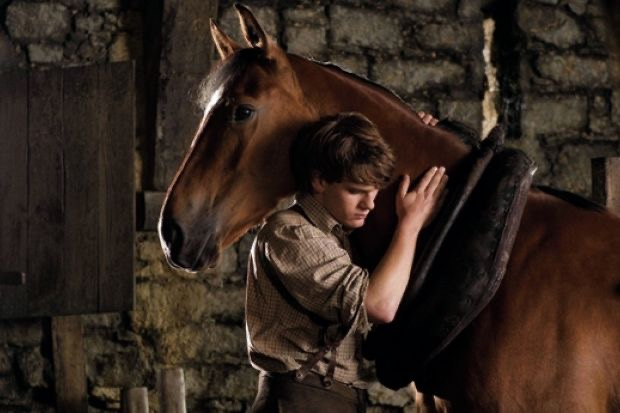
Stills of "War Horse"
However, training beast actors is not easy. Time cost, money cost, ability and qualification, risk coefficient, legal protection and other issues have all become the constraints of vigorously developing beast training business in China at present.
In this regard, Hao Shuai explained to Intelligence Jun that if a crew asks them for the training of specific animal actors, they will consider undertaking it on the premise that time and funds are sufficient, but not all the crews are willing to provide corresponding time and remuneration. More importantly, not all kinds of animals can be called into film and television projects, such as parrots listed in the List of National Key Protected Wild Animals. As for tigers, their breeders have to pass many examinations before they can be successfully employed in China.
It is reported that when film and television crews need to use beast actors in the filming process, most of them will seek assistance from compliance agencies such as circuses or zoos. For ordinary people or general training teams, taming wild animals in daily environment is even more comparable to reaching the sky.
Take raising tigers as an example. According to the investigation, Article 17 of People’s Republic of China (PRC) Wildlife Protection Law stipulates that the state encourages the domestication and breeding of wild animals, but it should hold a license. If you want to get a license to domesticate tigers, you need facilities and equipment that meet the conditions for raising tigers, ensure the source of feed for tigers, and make a good plan to prevent tigers from escaping. In this way, circuses, zoos and other institutions are indeed the right choice for taming tigers.
Therefore, if the domestic film team wants to introduce wild animals such as bears, tigers and wolves into the project, they will choose to cooperate with foreign teams and even set the shooting location of related scenes abroad. Just like "Wolf Totem" and "Sunshine Robber" both cooperated with the team of Andrew Simpson, a famous animal performance trainer, and the company "Instinct animals for film" founded by Simpson also featured animal actors such as wolves, tigers and leopards.
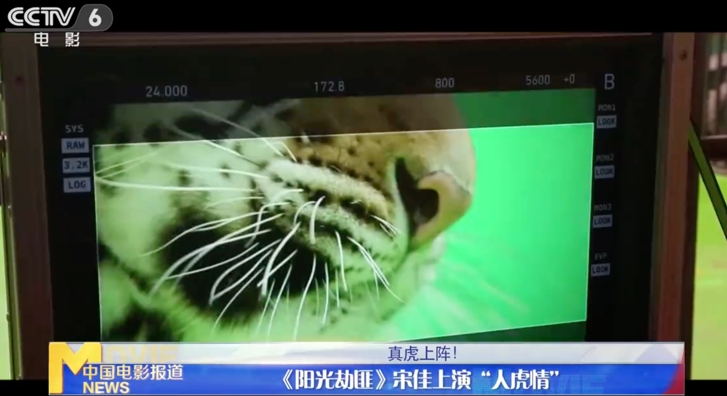
CCTV6 column report
In this case, why are there always fresh commercial film projects that choose to use other animal actors besides cats and dogs, or even choose to take greater personal risks to use beast animal actors? "Maybe I want to pursue novelty," Hao Shuai guessed.
It can be seen that in the idea of star-making animal actors, people with a keen sense of business have already considered and laid out, and they are constantly pushing up the possible margin of star-making animal actors through bolder business development. Regardless of whether such motives and goals will be understood and supported by the whole society, it may not be a good thing if the training system and welfare guarantee mechanism of animal actors can be continuously improved in this process.
However, around the "animal actors", industry bottlenecks and external doubts have never stopped.

Limitation and breakthrough
Just as real actors have to face problems such as performance evaluation, salary payment, labor welfare and career transformation, animal actors are no exception. However, these problems are more demanding for animal actors, and the collective "aphasia" of animal actors also increases the difficulty of promoting the corresponding rights and interests.
In the past ten years, Hao Shuai has continuously paid attention to the above problems and pushed forward to solve them. Among them, the resettlement of animal actors, which he is particularly concerned about, has also been improved.
Nevertheless, the quality level and accuracy of animal performances must have a ceiling, and probably no one can clearly answer where the breakthrough in this field will fall.
At present, the existence and development of animal actors are faced with two major problems: one is the technical problem, that is, the competition and integration of animal actors’ real shooting and visual effects technology, and the other is the ethical problem, that is, the correctness and rejuvenation of animal performances in social audio-visual
Let’s start with the first question.
Looking at many films involving animal scenes and their behind-the-scenes production tidbits, it is not difficult to find that no animal can consistently and completely participate in the filming. body double, green screen, special effects, bionic mechanical props … behind a screen animal role, it must be supplemented by sufficient scientific and technological support.
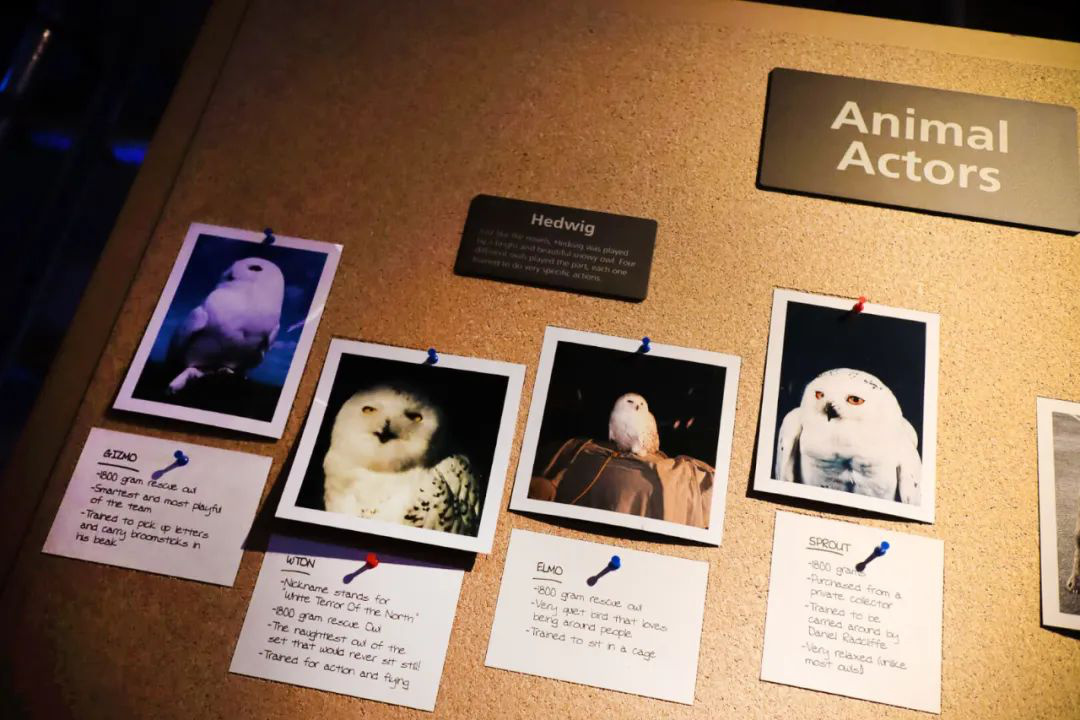
Hedwig "Men" in Harry Potter
(Source: Warner Bros. Studio, London-Harry Potter Studios)
However, if visual effects technology can really develop to a perfect level in the future, can animal actors still keep a foothold? In this regard, Intelligence Jun believes that the optimization and industrialization of film visual effects technology is an inevitable trend, and a higher level of visual effects production ability can also give the crew more animal protection space. But even so, the existence value of animal actors cannot be completely replaced-"mainly because of the cost of time and capital", Hao Shuai explained.
Specifically, bionic machinery, foamed latex used in physical visual effects, and 3D modeling and animation rendering used in digital visual effects are not cheap options. For shots such as capturing subtle expressions of animals, shooting real animals is indeed a more cost-effective option.
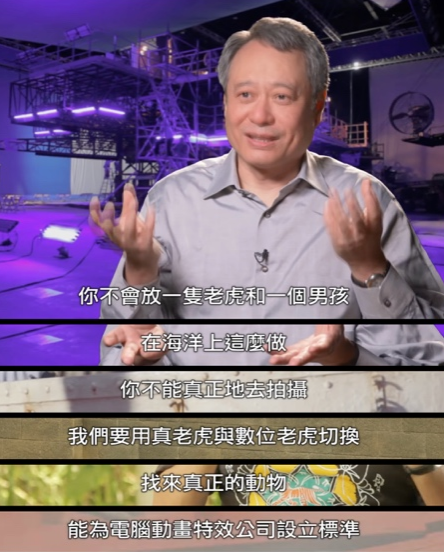
Behind-the-scenes tidbits of "The Fantasy Drifting of Youth School": Tiger
Let’s talk about the second more complicated problem.
Ethics has never been a black-and-white word, and the debate about the significance of animal performances has always been in the gap between the supply side and the defenders. For example, just as "Sunshine Robber" is being released, social organizations headed by "China Green Hair Society Endangered Species Special Fund Saving Performing Animals Project" are also sparing no effort to speak out for the treatment of Tiger Wenwen.
However, does "animal performance" include film and television performances, can "animal film and television performances" be compared with zoo performances and circus performances, where should the "moral yardstick" be placed in animal film and television performances, and does "stopping all animal performances" include the special effects presentation of collecting animal muscle data and reprocessing? And so on, all remain to be discussed.
After all, no one can give a satisfactory answer to all parties in an authoritative manner, and no one can make a presumption of guilt for the suppliers and defenders of animal performances. Just as everyone can applaud the The Shawshank Redemption crew for feeding crows with insects that died naturally in response to the call of animal protection organizations, they have no right to blame Christopher Nolan for not explicitly disclosing how to shoot the magic trick of "swatting dead birds".
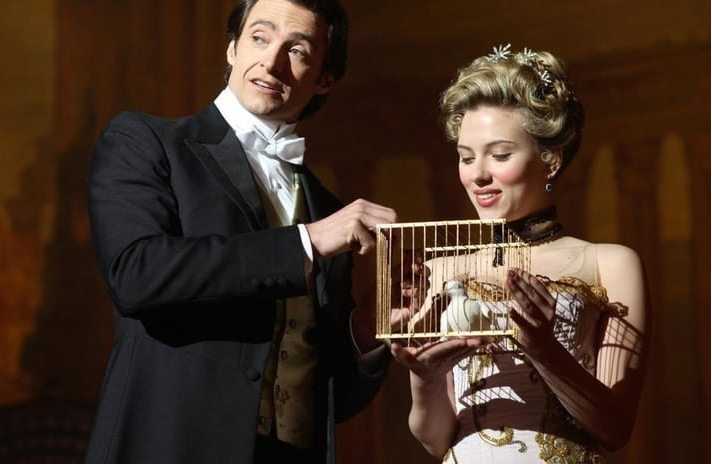
Stills of Fatal Magic
So, can we seek a compromise breakthrough for the career planning of animal actors? For example, like the "Palm Dog" at Cannes Film Festival, a similar "Best Animal Actor Award" was set up at domestic film and television awards ceremony? In this way, not only the animal actors who have contributed superb acting skills to film and television works can be commended, but also the service team behind them can be encouraged, and a positive animal publicity image can be established in the whole society, thus promoting the benign development of the whole industry of animal performance, and achieving multiple goals in one fell swoop.
"We are looking forward to the birth of such an award, but I think it will take at least one or two generations to see the dawn," Hao Shuai said. "Why? Because the cognition of animals in China is still quite uneven, the older generation still has many concepts of equating kittens and puppies with livestock and wolves and tigers and leopards with fierce elephants, while the younger generation is just beginning to think about the companion role of kittens and puppies and the cultural significance of wolves and leopards. "
Yes, in the past words, such as Geng Hao (Bo Huang) in Crazy Alien, you can burn incense at the bodhisattva and worry about whether the name of "Southwest Monkey King" will be broken in your own hands; For example, Bao Shungui (played by Yin Zhusheng) in "Wolf Totem" regards wolves as enemies and is driven to extinction. In the discourse of the younger generation in our country, the demand for companions of various animals, the proposition reconstruction of traditional cultural images, and the active thinking about the value of life are just blooming.
But this is not enough, at least in the two dimensions of "partner" and "life".
"Suppose an ascending actor wants to walk down the red carpet with a cat or a dog, can he/she really accept that he/she is not as good as an animal in the spotlight?" Hao Shuai asked the intelligence officer.
"Not necessarily," the intelligence gentleman replied. However, Intelligence Jun thought to himself that some people would regard pets as the apple of their eye, and some people would feast on them in dog meat shops. Some people will really regard pets as emotional dependence, and some people will go to the "cat and dog" store to complete social needs; Some people will bow to the experimental animals under their own swords, but others will only illegally collect money under the guise of protecting animals … Who can say that no one in China will walk down the red carpet with animal actors full of joy and honor in the future?

tag
From witnessing the small animals around them get rid of the label of props, to promoting the landing and improvement of projects such as animal actor welfare agreement and job placement, most of the animal performance-related practitioners represented by Hao Shuai have witnessed and personally participated in all aspects of star-making animal actors.
In the matter of star-making animal actors, their goal is also very simple: that is, carefully shoot the projects in their hands, try their best to treat the actors in their hands, and if they can get a little praise, it would be great.
Just like Uggie, a dog who contributed superb acting skills in The Artist, he not only completed the feat of getting on the red carpet of the Academy Award, but also left paw prints on the walk of fame, writing a brilliant page in the world film history.
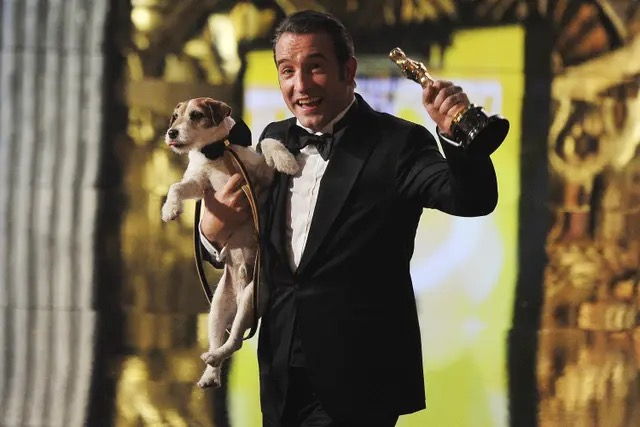
Jean dujardin and Aji shared the Academy Award for Best Actor.
(Source Getty Photo Agency)
To sum up, animal actors can make stars-there are many pioneering cases, and looking forward to the future is even more promising.
However, how can we be a better and more positive star-making animal actor in China? -this question remains to be considered by all parties.