"Use the weapon of criticism and self-criticism" (2) Abandon selfishness out of public interests.

The quality of democratic life depends largely on the use of criticism and self-criticism. "Several Guidelines on Political Life within the Party under the New Situation" clearly requires that "criticism must be based on public interests". The public is selfless, regular and innocent. Only by upholding the public interest, criticism and self-criticism can the weapons be used better and more effectively.

The General Secretary of the Supreme Leader pointed out: "No matter criticism or self-criticism, we must seek truth from facts, be public-minded, be kind to others, not engage in the’ ostrich’ policy, not be careless and perfunctory, not whitewash, and not vent our personal anger." Criticism is out of public interests, first of all, we must put a correct position and attitude. Criticism with the word "public" as the head is based on the standpoint of doing a good job and promoting the development of the cause of the party and the people. In the attitude of being responsible to the party and the people, we seriously analyze the problems, resolutely oppose things that have nothing to do with ourselves, hang high, dare to touch the truth, and dare to expose shortcomings and expose ugliness. "Gong" is objective and fair, seeking truth from facts, based on facts, one is one, the other is two, neither exaggerating nor narrowing; It is neither subjective nor arbitrary, nor does it cover up the ugliness and praise in disguise. Seeking truth from facts is the greatest party spirit. To carry out good criticism and self-criticism, we must talk about party spirit, not personal feelings, telling the truth, not face, telling the truth, telling the truth and telling the truth. Whether criticizing others or self-criticism, we should make a realistic analysis and appropriate evaluation to understand and grasp the problem, so as to be targeted, fair and reasonable, and convince and agree with people.

For the sake of public interests, we must abandon selfishness, resolutely oppose vulgar philosophy and humanism, and resolutely prevent personal grievances, framed attacks and unprincipled disputes. If you criticize with a small abacus, it is either not "spicy" or easy to change its taste, which is bound to deviate from the original intention of the democratic life meeting. An important manifestation of the "fairness" of criticism is to adhere to the principle of "learning from the past and saving lives", helping comrades and forging ahead in unity. Criticism and self-criticism are aimed at helping comrades correct their shortcomings and mistakes. We should be frank and open-minded, put our words on the table, insist on convincing others with reason and treating others with sincerity, and communicate our thoughts with sincerity and sincerity, so as to achieve a situation of talking about everything and having a heart-to-heart, not only maintaining the tension and seriousness of "blushing and sweating", but also being relaxed and harmonious of "refueling and encouraging"; Even if I am educated, I will make other comrades take warning and lay a solid foundation for correcting shortcomings and mistakes and improving their work.

"If you look at the mirror, the defects will not stay in the body; If you listen to the truth, you will not be tired. " Carry out criticism, flashlight should shine on others as well as yourself. Party member cadres, especially leading cadres, should face up to the problems and be modest in coachable. We should be open-minded, frank, generous and conscious, and tolerate different opinions and sharp criticism. We should take criticism as a mirror to examine ourselves, strive to find our own gaps and shortcomings, and correct them if there are any, and truly regard criticism as a "catalyst" for improvement. In the face of criticism that points directly at the problem and the drawbacks, we can’t be indifferent, and we can’t pretend to be a snake, and the left ear goes in and the right ear goes out. In the face of problems that are not conducive to the cause of the party and the people, don’t be afraid of losing face and image. We must resolutely change, completely change, and change without delay, and win the trust of the masses and establish credibility with solid rectification results.

The bottom of my heart is selfless and wide. Selfless can be fearless, and fearless can dare to take responsibility. On the new journey of building a strong country and national rejuvenation, only by using the weapons of criticism and self-criticism can we effectively enhance the party’s ability of self-purification, self-improvement, self-innovation and self-improvement, and constantly enhance the party’s creativity, cohesion and combat effectiveness. (Original title: Fiona Fang talks about | "Use the weapons of criticism and self-criticism" ② Abandon selfishness out of public interests)

Original title: "Use the weapon of criticism and self-criticism" ② Abandon selfishness out of public interests.

Read the original text

Looking at the new consumption trend from the semi-annual report

  Core reading

  Catering consumption is growing rapidly, the number of flights continues to rise, and the sales of smart home appliances are improving … … The warmth of consumption is not only reflected in macro data, but also in micro performance. Recently, a number of listed companies have successively disclosed their half-year transcripts. From the overall performance, while the income of consumer listed companies increased, the profit level also improved significantly, reflecting the vigorous vitality of consumer demand growth and continuous market expansion in the first half of the year.

  The tourist attractions are crowded, the movie box office has set a new record, and the railway summer vacation has reached a new high … … This summer, the consumption vitality continued to be released. Statistics from the National Bureau of Statistics show that in the first half of this year, the total retail sales of social consumer goods exceeded 20 trillion yuan, reaching 22.8 trillion yuan, up 8.2% year-on-year, and the growth rate was significantly faster than last year. In the first seven months of this year, retail sales of services increased by 20.3% year-on-year.

  The warmth of consumption is not only reflected in macro data, but also in micro performance. Recently, a number of listed companies have successively disclosed their half-year transcripts. Observing the consumer market through the semi-annual report of listed companies, what new ideas are surging in the warmth? What about the consumption expectation in the second half of the year? The reporter interviewed relevant departments, relevant listed companies and industry experts.

  Demand for service consumption is strong, and corporate profits are significantly improved.

  Lingnan fragrant crispy chicken and Cantonese crispy meat are attractive in aroma, and the dining environment is full of characteristics … … In May this year, the first store of Guangzhou Restaurant, an old brand of Cantonese cuisine, opened its doors to welcome guests, attracting diners from East China to try Cantonese cuisine.

  "The rapid growth of catering consumption has driven us to speed up the layout of stores and expand the catering market." Chen Yang, the director of Guangzhou Restaurant, said that since the beginning of this year, the consumption scene has gradually recovered and the consumption policy has been promoted. The company has realized the synergy of the two main businesses of "catering+food", expanding the market and enhancing brand awareness. The "time-honored brand" glows with new brilliance. In the first half of the year, Guangzhou Restaurant is expected to achieve a year-on-year increase in revenue of 22.57% and a year-on-year increase in net profit of 39.86%.

  On the one hand, the overall recovery of catering consumption, on the other hand, the centralized release of tourism demand.

  "Free tickets for anniversary" and "Hot air tickets kill" … … Recently, Spring Airlines’ 10,000-ticket special promotion activities set off a wave of ticket purchase. "The passenger load factor continues to rise, turning losses into profits in the first half of the year!" Zhang Wu’ an, spokesperson of Spring Airlines, said that in the first half of this year, the number of domestic flights exceeded the same period in 2019, and international routes also accelerated their recovery. More than 100 countries and regions resumed group tours, and tourists’ willingness to travel was fully released, which greatly improved the company’s main business.

  Zhang Wuan introduced that in the first half of the year, the net profit of Spring Airlines is expected to be 650 million — 850 million yuan. "Judging from the current booking situation, the demand for tourism in the Mid-Autumn Festival and Golden Week of the National Day is even stronger. In the second half of the year, with the further recovery of international routes, in addition to the explosive growth of holidays, daily travel will also accelerate. " Zhang Wuan analyzed.

  According to the statistics of Shanghai Stock Exchange, in the first half of the year, the listed companies in the hotel and catering industry in Shanghai accelerated their recovery. As of August 15, 13 such listed companies have released interim performance data, and it is estimated that a total net profit of 1.6 billion yuan will be realized, and a substantial turnaround will be realized in an all-round way.

  "As of August 18, the disclosure rate of performance reports and profit forecasts of listed companies in the first half of the year was close to 50%. From the performance of the disclosed companies, the recovery of the service consumer industry in the first half of the year was relatively elastic. With the recovery of offline passenger flow and travel activities, there was a certain shortage of supply in some areas, which also brought some support to the price increase." Li Qiusuo, chief domestic strategist of CICC’s research department, said that the service consumption areas such as catering, tourism, hotels, offline retail and cinema lines have recovered rapidly, showing that China’s consumption pattern has gradually changed from commodity consumption to both commodity and service consumption.

  From the overall performance, while the income of consumer listed companies has increased, the profit level has also improved significantly. As of August 15th, the data of 38 retail and wholesale listed companies that have disclosed interim results in Shanghai Stock Exchange show that the total net profit is expected to reach 13.2 billion yuan, up 36% year-on-year.

  As of August 23, a total of 38 daily consumer listed companies in Shenzhen disclosed the 2023 semi-annual report, achieving a total operating income of 291.861 billion yuan, an increase of 11.57% year-on-year; The net profit was 8.614 billion yuan, a year-on-year increase of 348.09%. Among them, the revenue of 36 companies increased year-on-year, and the revenue of 18 companies increased by more than 20% year-on-year; A total of 34 companies achieved profitability.

  Sales of upgraded goods increased, and online and offline integration developed.

  "Look, this is the overhead constant temperature fresh freezing system of the refrigerator, which makes the temperature fluctuation of frozen ingredients less than 0.2 degrees Celsius, greatly improving the umami retention rate and reducing bacterial growth." On August 22nd, in Hefei Department Store, citizen Zhang Shaohua bought Changhong Meiling’s "frozen fresh" refrigerator after careful comparison under the introduction of the staff. "We have many families, and there is a great demand for frozen fresh-keeping of ingredients. There are special activities in the summer shopping mall to try new high-tech products. " Zhang Shaohua said.

  "The domestic home appliance market has entered a mature stage, and the competition for stock in the industry is fierce, but the escalating consumer demand of consumers has opened up new market increments for us." Zhong Ming, president of Changhong Meiling Co., Ltd., said that in response to consumers’ higher requirements for refrigerator preservation, enterprises increased their research and development efforts and accelerated the upgrading of product structure. In the first half of the year, the company’s refrigerator and freezer business revenue increased by 22.54% year-on-year.

  "Not only the upgrading of traditional household appliances such as refrigerators, air conditioners and washing machines has brought strong support to performance, but also new products such as small household appliances have brought new growth momentum." According to Zhong Ming’s analysis, in the first half of the year, the company’s smart tea machine and other small household appliances and kitchen and bathroom businesses realized revenue of about 853 million yuan, a year-on-year increase of 17.21%.

  "From the performance of commodity sales listed companies in the first half of the year, some sub-sectors of automobiles and household appliances achieved good profit growth, and some companies maintained resilience in overseas exports to support their performance; At the same time, the sales of upgraded goods grew rapidly, and the growth trend of new consumption related to young people was good, including the sales growth rate of new consumption such as small household appliances, medical beauty, cosmetics and trendy play was better than the overall growth of consumption. " Li Qiusuo said.

  According to the analysis of Shanghai Stock Exchange, from the semi-annual report of listed companies in Shanghai stock market, consumer groups and consumer demand are diversified and upgraded, with many highlights: the performance of household appliances industry keeps growing, and smart appliances are loved by young consumer groups; With the rise of domestic beauty products, four listed companies in Shanghai, such as Polaiya and shanghai jahwa, are expected to achieve a net profit of 800 million yuan, an increase of 83% year-on-year; With the upgrading of product structure in the food industry, prefabricated dishes have become new consumer products, and 35 food and beverage companies are expected to achieve a net profit of 47.5 billion yuan, up 20% year-on-year & hellip; …

  With the steady growth of commodity sales, the profitability of commodity sales listed companies has also improved. Li Qiusuo’s analysis: "With the decline in the cost of upstream raw materials, the cost pressure of the consumer industry has eased compared with the past two years, and the gross profit margin has generally improved, especially in the manufacturing industry where raw materials such as automobiles and household appliances account for a relatively high proportion."

  According to Tian Lihui, dean of the Institute of Financial Development of Nankai University, there is another distinctive feature in the half-year performance of the consumer sector — — Online consumption continued to grow, and the sales revenue of e-commerce enterprises and traditional retail enterprises in e-commerce channels increased significantly.

  "In the first half of this year, the company achieved a year-on-year increase in revenue of 32.58% and a year-on-year increase in net profit of 47.41%. As the main entrance for new consumers, online channels provided strong support for performance growth." The relevant person in charge of Tomson Bianjian Co., Ltd. said that the online channel revenue of Tomson Bianjian’s main brand increased by over 60% in the first half of the year.

  "Many listed companies have strengthened the integration of online and offline development and gradually formed a new retail model to meet the dual needs of consumers for shopping experience and convenience. In addition, branding has become an important means for listed companies to cope with consumption upgrading. Some companies improve their added value and premium ability by enhancing their brand image and strengthening brand marketing. " Tian Lihui analyzed.

  Optimize the supply of products and services and promote the upgrading of consumption.

  "While grasping the key competitiveness of taste, Guangzhou Restaurant is committed to combining traditional diet, regional culture and emerging consumption concepts to meet more levels of catering needs." Chen Yang said.

  "On the basis of keeping the safety bottom line, Spring Airlines strengthens data mining analysis, continuously improves the punctuality rate of flights, and optimizes product mix and travel services by using its own channels to further stimulate travel demand." Zhang Wuan said.

  … … … …

  Listed companies are not only an important window to observe the consumer market, but also a strong driving force to promote high-quality development.

  "The retail and consumer goods listed companies in Shanghai represent the leading domestic production technology and marketing concept. From the perspective of half-year performance, they have played a more obvious leading role in the recovery of consumption." Yang Delong, chief economist of Qianhai Open Source Fund, analyzed that on the one hand, listed companies have stronger resource allocation ability, can respond to the latest consumption hotspots and changes in the first time, and cultivate new consumption habits by continuously strengthening product innovation and exploring consumption patterns; On the other hand, leading enterprises can cultivate and incubate more new consumer industry chain companies and expand the consumer industry circle through foreign investment and mergers and acquisitions.

  Li Qiusuo believes that the high-quality development of consumer listed companies not only ensures the stability of the supply side, but also meets the new consumption demand of residents for a better life through continuous innovation and upgrading, which helps to expand domestic demand, promote consumption upgrading and accelerate the formation of a higher level of dynamic balance between demand traction supply and supply creation demand.

  Since the beginning of this year, various departments have successively introduced policies to promote the consumption of household and electronic products and support new energy vehicles. With the effective implementation of policies and the gradual stabilization of economic development and residents’ income, experts believe that there is still great potential for consumption expansion and upgrading in the next stage, and listed companies should continue to be "locomotives" and lead the industry to upgrade and upgrade.

  "China’s industrial upgrading will continue to be an important foundation for consumption upgrading, and the continued recovery of service consumption is still an important trend. Listed companies should actively increase investment in research and development, closely integrate products with new technology applications, and further improve the quality of supply." Li Qiusuo believes that with the help of innovative technology, all kinds of consumption are expected to continue to develop in a more comfortable, convenient, cleaner, more beautiful and healthier direction.

  Tian Lihui suggested that listed companies should optimize the supply of products and services by strengthening technological innovation and research and development, improving supply chain efficiency, improving product quality and strengthening brand building, and continue to promote the high-quality development momentum of the consumer market.

Make clear the specific judgment situation, and the Emergency Management Department will interpret the Judgment Standard for Major Accidents in Industry and Trade Enterprises.

  Cctv newsAccording to the news of the Emergency Management Department, in order to accurately determine and eliminate the hidden dangers of major accidents in industrial and commercial enterprises in time, according to the Law on Work Safety and other laws and administrative regulations, and combined with the lessons of typical accidents in industrial and commercial enterprises in recent years, the Emergency Management Department formulated and issued the Criteria for Determining the Hidden Dangers of Major Accidents in Industrial and Commercial Enterprises (Order No.10 of the Emergency Management Department, hereinafter referred to as the Criteria), listing 64 cases that should be determined as hidden dangers of major accidents. In order to further clarify the specific judgment situation, facilitate the application of emergency management departments at all levels and industrial and trade enterprises, and standardize the effective implementation of the Judgment Standard, the meanings of key clauses in the Judgment Standard are now explained.

  Attachment: Interpretation of Criterion for Judging Major Accidents in Industry and Trade Enterprises

  Article 1 In order to accurately determine and promptly eliminate the hidden dangers of major accidents in industrial and commercial enterprises (hereinafter referred to as the hidden dangers of major accidents), this standard is formulated in accordance with the Law of People’s Republic of China (PRC) on Work Safety and other laws and administrative regulations.

  Article 2 This standard is applicable to determine the hidden dangers of major accidents in industrial and trade enterprises such as metallurgy, nonferrous metals, building materials, machinery, light industry, textiles, tobacco, commerce and trade. If there are other provisions on the determination of major accidents involving dangerous chemicals, fire fighting (fire), gas and special equipment in industrial and trade enterprises, such provisions shall apply.

  [Interpretation]

  (1) The third "management" major accident hidden danger judgment standard in this Judgment Standard is applicable to all relevant industrial and trade enterprises; Article 4 to Article 10 The criteria for judging the hidden dangers of major accidents in "industries" are applicable to industrial and trade enterprises in seven industries: metallurgy, nonferrous metals, building materials, machinery, light industry, textiles and tobacco. Article 11 to Article 13 "Special category" major accident hidden danger judgment standards are applicable to relevant industrial and trade enterprises in three fields, namely, dust explosion danger, refrigeration with liquid ammonia and limited space operation with poisoning risks such as hydrogen sulfide and carbon monoxide. (2) If there are ironmaking blast furnaces, steel-making converters, steel-making electric arc furnaces and molten steel refining furnaces of more than 30 tons in industrial and trade enterprises other than metallurgy and nonferrous metals, the relevant requirements shall be implemented in accordance with Items (1), (2), (4), (5), (6), (7) and (8) of Article 4 for metallurgical enterprises.

  (3) If there is deep well casting technology in industrial and trade enterprises other than nonferrous metals, the relevant requirements shall be implemented in accordance with Items (3), (6), (7), (8), (9) and (10) of Article 5 for nonferrous metals enterprises.

  Article 3 An industrial and trade enterprise shall be judged as a major accident hidden danger under any of the following circumstances:(1) Failing to coordinate and manage the work safety of contractors and lessees in a unified way, or failing to conduct regular safety inspections.

  [Interpretation]

  Judgment situation:

  (1) Where the production and operation projects and sites are contracted out or leased to other units, the enterprise has not signed a special safety production management agreement with the contractor or lessee, or has not stipulated their respective safety production management responsibilities in the contract or lease contract. (2) If the production and operation projects and sites are contracted out or leased to other units, the obligations of unified coordination and management of production safety of the enterprise shall be exempted or passed on in the safety production management agreement, contract and lease contract signed by the enterprise and the contractor and lessee.

  (3) If the production and operation projects and sites are contracted out or leased to other units, the enterprise fails to conduct regular safety inspections on the contractors and lessees in accordance with the rules and regulations on production safety or the requirements in the agreements and contracts, or fails to urge the rectification if safety problems are found.

  (two) special operations personnel have not received special safety training and obtained corresponding qualifications in accordance with the regulations, and they have been working at their posts.

  [Interpretation]

  Judgment situation:

  (1) Enterprises use special operators who have not obtained corresponding special operation certificates to work at their posts.

  (2) Enterprises use special operators who forge special operation certificates to work at their posts.

  (3) Enterprises use special operation personnel whose special operation certificate has expired or has not been reviewed upon expiration to work at their posts.(three) the main person in charge of the metal smelting enterprise and the safety production management personnel have not passed the examination in accordance with the provisions.

  [Interpretation]

  Judgment situation:

  6 months after the main person in charge of the metal smelting enterprise and the safety production management personnel took office, they failed to pass the examination of the corresponding emergency management department.

  Article 4 Metallurgical enterprises in any of the following circumstances shall be judged as major accidents:

  (1) The meeting room, activity room, lounge, operation room, shift changing room, changing room (including bathhouse) and other six kinds of people gathering places, as well as the cold (hot) repair station of steel water tank are located in the terrace area where molten iron, molten steel and slag are hoisted.

  [Interpretation]

  1. Description:

  (1) "Floor area" refers to the zero-meter ground area in the workshop with molten iron, molten steel and liquid slag (hereinafter referred to as "molten metal", the same below for metallurgical enterprises) as the boundary, and the vertical boundary is the boundary between the columns on both sides near the lifting side of molten metal. Among them, the transverse direction refers to the running direction of the trolley for lifting molten metal crane; Longitudinal refers to the running direction of the cart for lifting molten metal crane (Figure 4-1). "Zero-meter ground area in the workshop" does not include the sheltered area directly below the overhead platform, such as the walking area of molten steel tank car and slag tank car under converter furnace. (2) "Operation room" includes control room, inspection room and laboratory (the same below for metallurgical enterprises).
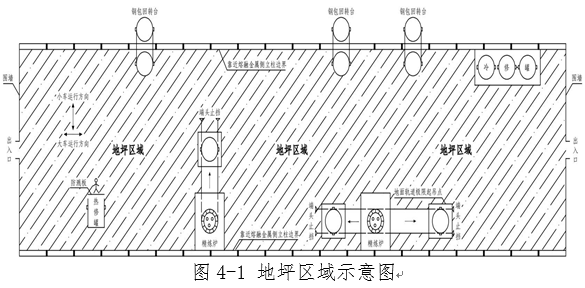
  2. Judgment situation:

  (1) Meeting rooms, activity rooms, lounges, operation rooms, shift rooms and changing rooms (including bathhouses) of steel-making plants and ferroalloy plants are set in the terrace area directly below the running area of molten metal cranes.

  Note: The "floor area directly below" refers to the workshop floor area, which is bounded horizontally by the side line of the column near the molten metal lifting side on both sides of the lifting span, and vertically by the limit boundary of the lifting process of molten iron, molten steel and slag at the extreme ends of the lifting span (Figure 4-2).

  The "lifting process limit boundary" refers to the vertical boundary position reached by lifting the ladle, ladle and slag ladle (ladle and basin) across the outer wall of the ladle (ladle and basin) near the extreme ends in the longitudinal direction when the ladle, ladle and basin are located at the loading position, pouring position, ladle turret or ground track limit lifting point (the same below for metallurgical enterprises).

  The outer wall of the slag tank (ladle, basin) in steelmaking and continuous casting is not regarded as the limit boundary of molten metal lifting process.
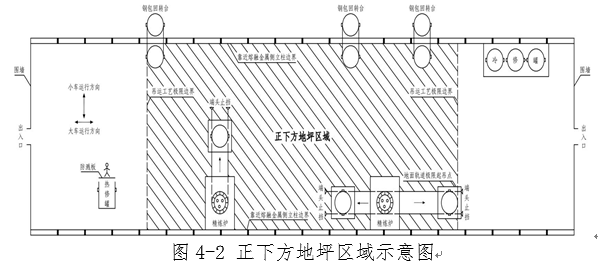
  (2) The meeting rooms, activity rooms, lounges, operation rooms, shift rooms and changing rooms (including bathhouses) of steel-making plants and ferroalloy plants are located in the floor area (in the longitudinal direction, as shown in Figure 4-3) within 50m of the lifting limit boundary of molten metal.
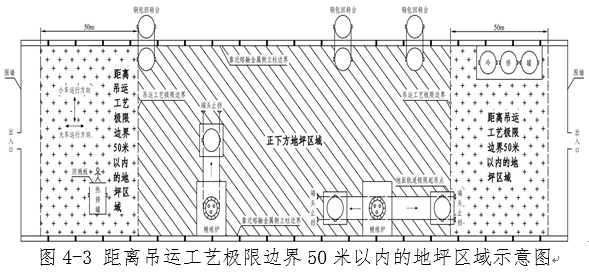
  (3) The converter operation room of the steel-making plant is located on the overhead platform of the workshop, and its side facing the hot metal lifting is not completely enclosed by a solid wall.

  Note: "Solid wall" refers to brick wall, concrete wall or wall built with refractory materials (the same below for metallurgical enterprises); "Not completely enclosed by solid wall" means that the entrance and exit doors and observation windows of the operation room facing the lifting side of molten metal are not completely enclosed by solid wall (the same below for metallurgical enterprises).

  (4) The operating rooms of the AOD furnace, VD furnace and VOD furnace on the overhead platform of the steel-making plant face the external wall that the lifting side of molten iron and molten steel is not completely closed by the solid wall, and are within the side line of the column near the lifting side of molten metal in the ladle and the ladle.

  (5) In the continuous casting process of the steel plant, the operation room of the continuous casting platform is arranged in a single span by using the horizontal continuous casting car of the ladle or the ladle turret, and the external wall facing the lifting side of molten steel and slag is not completely closed by the solid wall, and it is within the side line of the column near the lifting side of molten metal of the continuous casting platform.

  Note: The lifting side facing molten steel and slag includes two directions: facing the continuous casting span and facing the walking route of the ladle.

  (6) The cold (hot) repair station and the cold repair station of the steel ladle in the steelmaking plant are located in the terrace area directly below the running area of the molten iron, molten steel and slag crane, or at the extreme ends of the lifting span in the longitudinal direction, which fails to meet the safety protection requirements.

  Note: "Safety protection requirements" refers to the outer wall of the tank at the cold (hot) repair station and the cold repair station of the hot metal ladle (near the limit boundary of the tank lifting process), and the distance between the tank and the limit boundary of the molten metal lifting process is greater than or equal to 15m; A solid wall with a height greater than or equal to 2 meters and a width more than 1 meter beyond the hot repair operation station shall be set at the hot repair station of the ladle near the lifting side of molten metal (Figure 4-4); The distance between the solid wall and the limit boundary of lifting technology should be greater than or equal to 13 meters.
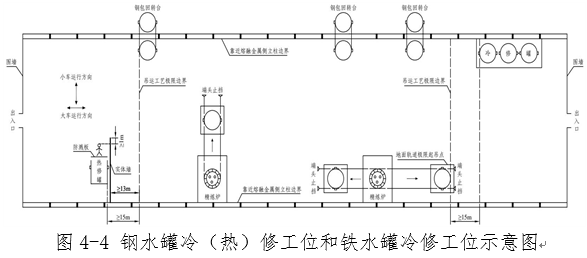
  (2) During the production period, there is water accumulation in accident pits and slag pits in smelting, refining and casting production areas, as well as six types of areas such as platform in front of the furnace, furnace base area, lifting in the factory building and ground transportation channels within the scope of molten metal leakage and splashing.

  [Interpretation]

  1. Judgment situation:

  (1) During the production period, there is accumulated water in the area within 3m from the blast furnace main trench and the edge of the iron trench.

  (2) During the production period, there is accumulated water in the working platform in front of the furnace, the accident pit and slag pit under the furnace, the molten metal lifting channel in the workshop and the ground transportation channel in the workshop, such as steelmaking slag span, molten iron pretreatment, converter, electric arc furnace, induction furnace, refining furnace, continuous casting and submerged arc furnace.

  (3) During the production period, there is accumulated water in the pouring pit of steel ingot and in the running track area of pouring vehicle.

  2. Exceptions:

  (1) During the production period, the area within 3m from the blast furnace main trench and the iron trench edge in the tapping field in front of the furnace is wet.

  (2) During the production period, the working platform in front of the furnace, the accident pit and slag pit under the furnace, the molten metal lifting channel in the workshop and the ground transportation channel in the workshop are wet.

  (3) During the production period, the accumulated water in the drainage ditch (tank) used for collecting (discharging) maintenance, equipment failure, water leakage and process cooling water keeps flowing. (4) During the production period, the steel-making slag keeps flowing over the stagnant slag and the accumulated water in the drainage ditch (well) where slag is splashed under the electric arc furnace.

  (3) The accident ladle, tundish breakout pit (trough), tundish overflow pit (trough) and breakout rotary chute are not set in the steelmaking and continuous casting process, or the accident ladle (pit, trough) is not set in the die casting process.

  [Interpretation]

  1. Judgment situation:

  (1) No emergency ladle, tundish breakout pit (trough), tundish overflow pit (trough) and breakout rotary chute are set in the continuous casting process.

  (2) The breakout rotary chute is not set or maintained as required.

  Note: The requirements for setting the rotary chute include that the chute body is welded with steel plates, and the interior is built with refractory bricks or refractory materials. One end of the chute extends above the accident ladle, and the other end should be as close as possible to the side of the tundish body without affecting the normal running of the tundish car, and the end is closed. Maintenance requirements include no internal blockage and no water accumulation. The continuous casting machine can be equipped with a single-sided breakout rotary chute.

  (3) The emergency storage capacity of tundish breakout pit (groove) is less than the full capacity of tundish.

  (4) There is no emergency ladle (trough, pit) in the ingot casting process.

  Note: Ingot pouring pit shall not be used as accident pit.

  (5) The emergency storage capacity of the ladle (pit, trough) in continuous casting accident or ingot casting accident is less than the full capacity of the ladle.2. Exceptions:

  (1) The continuous casting process of horizontal continuous casting car of ladle is used, and the breakout rotary chute is not set.

  (2) The continuous casting process using a horizontal continuous casting car with a steel ladle, in which the accident steel ladle is set on the ground of zero meters in the workshop below the continuous casting platform.

  (4) The water cooling elements of steel-making furnaces such as converter, electric arc furnace, AOD furnace, LF furnace, RH furnace and VOD furnace are not equipped with monitoring and alarm devices, or the monitoring and alarm devices are not interlocked with the tilting of furnace body, automatic lifting of oxygen (auxiliary) gun, automatic power-off of electrodes and lifting devices.

  [Interpretation]

  1. Judgment situation:

  (1) The automatic lifting of oxygen lance of converter and AOD furnace is not interlocked with oxygen pressure of oxygen lance, water inflow of cooling water, water outlet temperature and water inflow and outflow difference; The automatic lifting of the water-cooled sub-gun is not interlocked with the inlet water flow rate, outlet water temperature and inlet and outlet water flow difference of the sub-gun; The tilting of the furnace body is not interlocked with the difference of water flow in and out of the water-cooled oxygen lance or sub-lance. (2) Water-cooled ladle cover of 2)LF furnace, water-cooled furnace wall of electric arc furnace, water-cooled furnace cover, water-cooled oxygen top gun and shaft water-cooled parts. Consteel furnace is connected with trolley water jacket, and there is no monitoring and alarm device for outlet water temperature and inlet and outlet water flow difference, or the alarm device is not interlocked with the automatic power-off and rising of electrodes. (3) The monitoring and alarm device for the difference between the outlet water temperature and the inlet and outlet water flow of the water-cooled oxygen top gun of the electric arc furnace is not interlocked with the automatic lifting and stopping of oxygen supply to the top gun. (4) The water-cooled oxygen lance of 4)VOD, CAS-OB, IR-UT, RH-KTB and other refining furnaces is not equipped with a monitoring and alarm device for the flow difference between inlet and outlet water, or the alarm device is not interlocked with the automatic lifting and stopping of oxygen supply of the oxygen lance.2. Exceptions:

  Using atomized water (mixture of compressed air and water) cooling process, and equipped with atomized water circulating water supply tank and electric arc furnace to monitor the water level difference in the water tank in real time, but not equipped with monitoring and alarm device for inlet and outlet water flow difference.

  (5) During the production of blast furnace, the set value of furnace top working pressure exceeds the maximum working pressure specified in the design documents, or the monitoring device of furnace top working pressure is not interlocked with the relief valve of the furnace top, or the set value of interlocking relief pressure of the relief valve of the furnace top exceeds the design pressure value of the equipment.

  [Interpretation]

  1. Description:

  "Equipment design pressure value" refers to the maximum pressure value of interlocking automatic relief of the relief valve on the top of the furnace specified in the design document.

  2. Judgment situation:

  (1) During production, the set value of the working pressure of the furnace top exceeds the design value of the highest working pressure specified in the design documents.

  (2) During production, the relief valve on the top of the furnace was not interlocked with the working pressure on the top of the furnace.

  (3) During production, the set value of interlocking relief pressure of the relief valve on the top of the furnace exceeds the design pressure of the equipment.

  (4) The valve cover of the top relief valve is bolted and fixed.

  3. Exceptions:

  The number of top relief valves of a single blast furnace is greater than or equal to 3, and at least 2 top relief valves are interlocked with the working pressure of the top during production.

  (6) Six kinds of places where people gather, such as meeting rooms, activity rooms, lounges, operation rooms, shift rooms and changing rooms, near facilities for gas production, recovery and purification, pressurized mixing, storage and use, and places and parts where gas leakage and accumulation may occur are not equipped with fixed carbon monoxide concentration monitoring and alarm devices, or the monitoring data are not connected to places where people are on duty for 24 hours.

  [Interpretation]

  1. Description:(1) "Facilities for gas production, recovery and purification, pressurized mixing, storage and use" refer to blast furnaces, converters, coke ovens, shaft furnaces, shaft kilns, continuous casting, submerged arc furnaces, gas dust collectors, gas holders, pressurizers, air exhausters, mixing devices, gas heating furnaces, annealing furnaces, preheating furnaces, ignition furnaces, drying furnaces, hot stoves, rotary kilns and power generation facilities. (2) "Places and positions where gas leakage and accumulation may occur" refers to the coke oven basement, heating furnace basement, annealing furnace basement, gas holder inlet and outlet pipeline basement, gas holder piston upper part, pressurizing machine room, air extractor room, drainer room, roaster, preheater, blast furnace tuyere and platforms above (except platforms above the square hole on the top of the blast furnace), blast furnace top hydraulic station (including closed oil pump room and closed tool room), Operating platform of automatic shut-off valve for hot blast stove gas, coal injection drying furnace, pulverized coal preparation room, gas power generation facility room (including TRT turbine sound insulation cover), ash unloading platform of gas dust collector, platforms above converter mouth, water sealing pool of vacuum refining device, mechanical vacuum pump room, gas heating furnace, gas preheating furnace, gas heat treatment furnace, main exhaust fan room for sintering pellets, sintering ignition furnace, pellet shaft furnace (rotary kiln) igniter and lime shaft kiln (rotary kiln)2. Judgment situation:(1) The meeting room, activity room, lounge, operation room, shift room and dressing room near the gas production, recovery and purification, pressurized mixing, storage and use facilities are not equipped with fixed carbon monoxide concentration monitoring and alarm devices. Note: This item is not applicable to the 6-category personnel gathering places set beside the gas transmission and distribution pipeline in the plant area. (2) Stationary carbon monoxide concentration monitoring and alarm devices are not set in places and parts where gas leakage and accumulation may occur. (3) The real-time data of the fixed carbon monoxide concentration monitoring and alarm device is set in the six categories of people gathering places and places and parts where gas leakage and accumulation may occur, and it is not connected to the 24-hour manned place.3. Exceptions:(1) There are six kinds of people gathering places without other entrances and windows in the meeting room, activity room, lounge, operation room, shift room and dressing room, and no fixed carbon monoxide concentration monitoring and alarm device is set. (2) The judgment of this item (1) When the facility site is unattended, the conference room, activity room, lounge, operation room, shift room and dressing room in the unattended area are not equipped with fixed carbon monoxide concentration monitoring and alarm devices.

  (3) Real-time data of alarm devices in the 24-hour manned operation room of gas production, recovery and purification, pressurized mixing, storage and use facilities are not connected to the 24-hour manned place.

  (seven) heating furnace, gas holder, dust collector, pressurizer, roaster and other facilities, as well as the gas pipeline before entering the workshop without partition device.

  [Interpretation]

  1. Description:"Blocking device" refers to the device which is arranged on the gas pipeline and used to block the gas and has the function of reliably keeping the gas from leaking to the isolated area. Devices with this function can be independent or combined. Independent partition devices include fully enclosed glasses valve, valve cavity water injection type double gate cut-off valve and valve cavity water injection type NK valve; The combined partition device consists of butterfly valve, gate valve, ball valve and other cutting devices, glasses valve, blind plate and U/V water seal.2. Judgment situation:(1) The gas pipelines of gas facilities such as heating furnace, gas holder, dust collector, pressurizer and roaster are not provided with partition devices. Note: When the combined cutting device and blind plate partition device are used, the supporting iron should be set at the blind plate blocking position. The gas pipelines at the inlet and outlet of gravity dust collector, cyclone dust collector, cooler, spray tower, washing tower, annular seam cleaning tower, Venturi tube and dehydrator involved in the blast furnace and converter gas purification system are not provided with partition devices according to the process characteristics. (2) The inlet gas pipeline before entering the workshop is not provided with a partition device.3. Exceptions:(1) The gas pipelines at the inlet and outlet of the electrostatic precipitator under the negative pressure condition of the converter gas purification system are not provided with partition devices.

  (2) When the gas pipeline with a diameter of less than 100mm adopts the combined cutting device and blind plate partition device, the supporting iron is not set at the blind plate.

  (8) The maximum plugging gas pressure of the water-sealed drainer of the positive pressure gas transmission and distribution pipeline is less than 30kPa, or both sides of the same gas pipeline partition device share a drainer, or the upper drainage pipes of different gas pipeline drainers are connected, or the gas pipelines of different media share a drainer.

  [Interpretation]

  1. Description:(1) "Water-sealed drainer" refers to a device that uses the height of the water column to overcome the gas pressure and automatically discharges the condensed water and accumulated water in the gas pipeline through overflow. According to the different structure of the drainer body, it can be divided into vertical water-sealed drainer and horizontal water-sealed drainer. (2) "Maximum sealing gas pressure" refers to the highest pressure that can seal the gas in the pipeline determined by the structure of the water-sealed drainer itself, which is generally expressed in kPa (international unit) or mmH2O (water column height).2. Judgment situation:(1) The maximum sealing gas pressure of water-sealed drainer in positive pressure gas transmission and distribution pipeline is less than 30kPa(3060mmH2O). (2) Both sides of the partition device of the same gas transmission and distribution pipeline share a drainer. (3) The drainage pipes at the upper parts of the drainers of different gas pipelines are connected. (4) Gas pipelines with different media share a drainer.3. Exceptions:(1) The maximum gas blocking pressure of the water-sealed drainer at the bottom of the electrostatic precipitator behind the gas cabinet, cabinet body and converter gas cabinet is less than 30kPa(3060mmH2O). (2) The positive and negative pressure drainage pipes on both sides of the pipeline partition device at the inlet and outlet of the gas extractor share water-sealed wells (tanks).

  Fifth non-ferrous enterprises in any of the following circumstances, it should be judged as a major accident hazard:

  (1) Six kinds of personnel gathering places, such as meeting room, activity room, lounge, operation room, shift room and dressing room (including bathhouse), are set in the floor area of molten metal lifting span.

  [Interpretation]

  1. Description:

  (1) "Molten metal" refers to molten and liquid nonferrous metals, slag and liquid slag. (2) "Floor area" refers to the zero-meter ground area in the workshop bounded horizontally by the side lines of the columns on both sides of the molten metal lifting span near the molten metal lifting side, and vertically by the fence on both sides of the lifting span. Among them, the transverse direction refers to the running direction of the trolley for lifting molten metal crane; Longitudinal refers to the running direction of the crane for lifting molten metal. (3) "Operation room" includes control room, inspection room and laboratory (the same below for non-ferrous enterprises).2. Judgment situation:(1) The meeting room, activity room, lounge, operation room, shift room and dressing room (including bathhouse) are set in the floor area directly below the lifting span. Note: The "floor area directly below" refers to the workshop floor area bounded horizontally by the side line of the column near the molten metal lifting side on both sides of the lifting span, and vertically by the limit boundary of the molten metal lifting process at both ends of the lifting span; "Lifting process limit boundary" refers to the vertical boundary position reached by lifting the molten metal tank (ladle, basin) across the outer wall of the tank (ladle, basin) near the extreme ends in the longitudinal direction when the tank (ladle, basin) is located at the loading position, the pouring position, the casting position or the extreme lifting point of the ground track (the same below for non-ferrous enterprises, Figure 5-1).
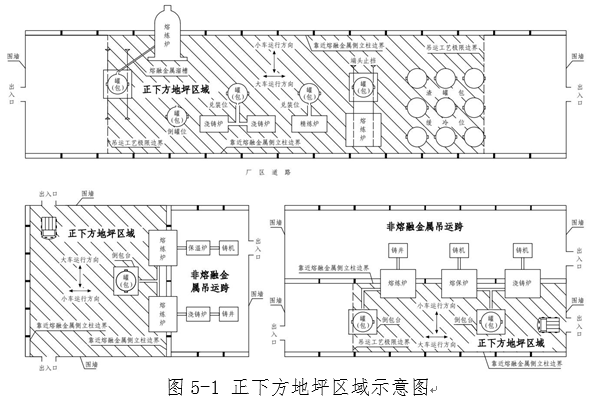
  (2) The meeting room, activity room, lounge, operation room, shift room and dressing room (including bathhouse) were set at the longitudinal ends of the lifting cross-floor area, which failed to meet the safety protection requirements. Note: "Safety protection requirements" refer to the external walls of six kinds of people gathering places (near the limit boundary of tank lifting process, the same below for non-ferrous enterprises) in meeting rooms, activity rooms, lounges, operation rooms, shift rooms and changing rooms (including bathhouses), and the limit boundary with molten metal lifting process is 15m or more (Figure 5-2).
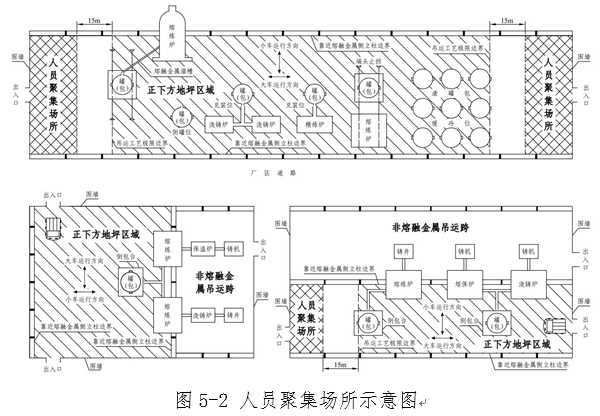
  (3) When the production process requires molten metal cans (ladle and basin) to enter the overhead platform of the factory building, the external wall of the operating room on the platform facing the molten metal lifting side is not completely closed with a solid wall, and the lifting span is within the side line of the column near the molten metal lifting side.

  Note: "Solid wall" refers to brick wall, concrete wall or wall built with refractory materials; "Not completely enclosed by solid wall" means that the entrance and exit doors and observation windows of the operation room facing the lifting side of molten metal are not completely enclosed by solid wall.(2) Accident pits and slag pits in smelting, refining and casting production areas during production, as well as platforms in front of the furnace, furnace base areas, lifting and ground transportation passages in the workshop within the influence range of molten metal leakage and splashing, etc.sixThere is unproductive water accumulation in the class area.

  [Interpretation]

  1. Description:

  "Productive accumulated water" refers to the water source necessary for the production process operation that must exist and run synchronously with the production equipment and be exposed to the production site, such as the collecting tank and water tank of the open-circuit cooling water system and the cooling water in the deep well of the deep well casting process.

  2. Judgment situation:

  (1) Unproductive water accumulation exists in the accident pit, slag pit under furnace, working platform in front of furnace and furnace base area of smelting, refining and casting production area during production.

  (2) During the production period, there is accumulated water in the molten metal lifting channel and the ground transportation channel in the workshop.

  3. Exceptions:

  (1) During production, the accident pit, slag pit under the furnace, working platform in front of the furnace and furnace base area are wet.

  (2) During the production period, it is set in the smelting, refining and casting production areas, and is used to collect (discharge) water leakage due to maintenance and equipment failure, as well as the accumulated water in the drainage ditch (tank) of process cooling water to keep flowing.

  (3) During the production period, there is water in the slag and liquid slag slow cooling site in the workshop.

  (3) There are no emergency discharge and emergency storage facilities in the molten metal casting process (except tilting melting furnace, tilting holding furnace, tilting integrated melting furnace and fixed melting furnace with holding furnace);

  [Interpretation]

  1. Judgment situation:

  (1) The melting furnace, holding furnace and casting furnace of molten metal deep well casting process are not equipped with emergency discharge and emergency storage facilities.

  Note: The "casting furnace" refers to the casting furnace group directly connected with the casting deep well through the launder and the distribution launder, including the holding furnace (static furnace) and the integrated melting furnace, excluding the melting furnace with independent melting function (the same below for non-ferrous enterprises).

  (2) The capacity of emergency storage facilities of fixed casting furnace for molten metal deep well casting process is less than the rated charging capacity of furnace body; When multiple fixed casting furnaces share emergency storage facilities, the capacity of emergency storage facilities is less than the maximum rated charging capacity of a single furnace body.

  2. Exceptions:

  Tilting melting furnace, tilting holding furnace, tilting integrated melting furnace and fixed melting furnace with holding furnace are not equipped with emergency discharge and emergency storage facilities.

  (four) smelting furnaces, casting machines (except the crystallizer of aluminum deep well casting process) and heating furnaces with water cooling are not equipped with emergency water sources.

  [Interpretation]

  1. Judgment situation:

  (1) The water-cooled molten metal smelting furnaces, heating furnaces and casting machines are not equipped with emergency water supply facilities such as high-level water towers (boxes and pools) and emergency water supply pumps.

  (2) Emergency water supply facilities are not equipped with emergency power supply.

  Note: "Emergency power supply" refers to dual-circuit power supply, UPS power supply, diesel generator with automatic conversion, or other power sources with emergency function of the same level; High water tower (box, pool) and other facilities that realize emergency water supply through gravity gravity gravity flow do not involve emergency power supply (the same below for non-ferrous enterprises).

  2. Exceptions:

  There is no emergency water supply facility for the crystallizer of aluminum processing deep well casting process, or emergency power supply is not provided for the emergency water supply facility.

  (5) The closed-loop water cooling element of the molten metal smelting furnace is not equipped with a monitoring and alarm device for outlet water temperature and inlet-outlet water flow difference, or the open-circuit water cooling element is not equipped with a monitoring and alarm device for inlet water flow and pressure, or the outlet water temperature of the open-circuit water cooling element is not monitored.

  [Interpretation]

  Judgment situation:

  (1) Closed-loop water cooling elements of melting metal smelting, smelting and refining furnaces are not equipped with monitoring and alarm devices for outlet water temperature and inlet and outlet water flow difference.

  (2) Open-circuit water cooling elements of melting metal smelting, smelting and refining furnaces are not equipped with water inflow and pressure monitoring and alarm devices.

  Note: The setting of monitoring and alarm devices for outlet water temperature, inlet water flow, inlet and outlet water flow difference and pressure can be set in different regions and categories according to the water supply characteristics of different water cooling elements in molten metal furnaces, that is, it is not necessary to set corresponding monitoring and alarm devices separately for each water cooling element.

  (3) The outlet water temperature of the open-circuit water cooling element in the melting, smelting and refining furnaces of molten metal is not detected.

  Note: Detection methods include regular manual detection and online real-time monitoring. When an enterprise manually detects the outlet water temperature of an open-circuit water cooling element, it shall conduct the detection according to the requirements of the management system or operating procedures, and the detection results shall be recorded in writing.(6) The cooling water system of the crystallizer for the deep-well casting process of aluminum processing is not equipped with the monitoring and alarm device for water inlet pressure and water inlet flow, or the monitoring and alarm device is not interlocked with the quick shut-off valve, emergency discharge valve and chute disconnection device, or the monitoring and alarm device is not interlocked with the tilting casting furnace control system.

  [Interpretation]

  Judgment situation:

  (1) The cooling water system of crystallizer is not equipped with water inlet pressure and water inlet flow monitoring and alarm device.

  (2) The alarm signals for monitoring the inlet pressure and flow rate of cooling water in the crystallizer are not interlocked with the quick cut-off valve or emergency discharge valve.

  (3) The alarm signals for monitoring the inlet pressure and inlet flow of cooling water in the crystallizer are not interlocked with the chute disconnection device.

  (4) The alarm signals for monitoring the inlet pressure and flow rate of cooling water of crystallizer are not interlocked with the tilting control system of tilting casting furnace.(7) The liquid level monitoring alarm device is not set at the junction of the liquid aluminum outlet chute of the casting furnace and the inlet of the die plate (distribution chute) in the deep well casting process of aluminum processing, or the liquid aluminum outlet of the fixed casting furnace is not set with a mechanical locking device.

  [Interpretation]

  Judgment situation:

  (1) The liquid level monitoring and alarm device is not set at the outlet chute of molten aluminum in the casting furnace or the joint between the chute and the inlet of the die plate (distribution chute).

  Note: Each crystallizer (for example, slab ingot production, the same below for non-ferrous enterprises) or each runner of the die plate in the casting deep well is equipped with a liquid level monitoring and alarm device, which is regarded as the joint between the runner of the casting furnace and the inlet of the die plate (distribution runner).

  (2) The aluminum liquid outlet of the fixed casting furnace is not provided with a mechanical locking device.(8) There is no emergency discharge valve in the aluminum liquid flow tank of the fixed casting furnace of the deep well casting process for aluminum processing, or there is no quick cut-off valve (disconnection device) at the junction between the flow tank and the entrance of the die plate (distribution flow tank), or the liquid level monitoring alarm device at the junction between the flow tank and the entrance of the die plate (distribution flow tank) is not interlocked with the quick cut-off valve (disconnection device) and the emergency discharge valve.

  [Interpretation]

  Judgment situation:

  (1) The aluminum liquid flow tank of the fixed casting furnace is not provided with an emergency discharge valve.

  Note: A fixed casting furnace with a disconnecting device is installed at the junction of the launder and the entrance of the die plate (distribution launder), and the aluminum liquid flow trough may not be provided with an emergency discharge valve.

  (2) There is no quick shut-off valve or disconnection device at the junction between the runner of the fixed casting furnace and the entrance of the die plate (distribution runner).

  (3) The liquid level monitoring alarm signal at the joint between the runner of the fixed casting furnace and the entrance of the die plate (distribution runner) is not interlocked with the quick cut-off valve, disconnect device and emergency discharge valve.

  Note: Each crystallizer or each runner of the die plate in the casting deep well is equipped with a liquid level monitoring and alarm device, and each monitoring and alarm device is interlocked with an emergency discharge valve and a quick cut-off valve (disconnection device). It is deemed that a liquid level monitoring and alarm device is installed at the joint between the runner of the fixed casting furnace and the inlet of the die plate (distribution runner), and is interlocked with the quick cut-off valve, disconnection device and emergency discharge valve.(9) There is no quick cut-off valve (disconnection device) at the junction between the chute of the tilting casting furnace and the entrance of the die plate (distribution chute) in the deep well casting process of aluminum processing, or the liquid level monitoring alarm device at the junction between the chute and the entrance of the die plate (distribution chute) is not interlocked with the tilting control system of the casting furnace and the quick cut-off valve (disconnection device).

  [Interpretation]

  Judgment situation:

  (1) There is no quick cut-off valve or disconnection device at the junction between the chute of tilting casting furnace and the entrance of the die plate (distribution chute).

  (2) The liquid level monitoring alarm signal at the joint between the chute of tilting casting furnace and the entrance of the die plate (distribution chute) is not interlocked with the quick cut-off valve or the disconnection device.

  (3) The liquid level monitoring alarm signal at the joint between the chute of tilting casting furnace and the entrance of the die plate (distribution chute) is not interlocked with the tilting control system.

  Note: Each crystallizer or each runner of the die plate in the casting deep well is equipped with a liquid level monitoring alarm device, and each alarm device is interlocked with the quick cut-off valve (disconnection device) and the tilting control system. It is deemed that the joint between the chute of the tilting casting furnace and the inlet of the die plate (distribution chute) is equipped with a liquid level monitoring alarm device, and it is interlocked with the quick cut-off valve (disconnection device) and the tilting control system of the casting furnace.

  (4) The liquid level monitoring alarm device, emergency discharge valve, quick cut-off valve and disconnection device are not equipped with emergency power supply.

  (10) Non-steel core steel wire rope is selected for the steel wire hoisting system of aluminum processing deep well caster, or the system of regular inspection and replacement of steel wire rope is not implemented.

  [Interpretation]

  Judgment situation:

  (1) Non-steel core steel wire rope is selected for the steel wire hoisting system.

  (2) The steel wire rope is not inspected regularly according to the requirements of the system of regular inspection and replacement of steel wire rope.

  Note: The periodic inspection cycle is at least once a month.

  (3) The wire rope that should be scrapped still continues to be used.

  (11) No fixed gas concentration monitoring alarm device is set in the places and parts where four kinds of toxic gases such as carbon monoxide, hydrogen arsenide, chlorine gas and hydrogen sulfide may leak and accumulate, or the monitoring data are not connected to the places where people are on duty for 24 hours, or the places and parts where hydrogen arsenide gas may exist are not tested with the same effect.

  [Interpretation]

  1. Description:

  (1) "Places and locations where carbon monoxide gas leakage and accumulation may occur" refers to the vicinity of various gas generating facilities; All kinds of basements and pressure stations involving gas; Hot stoves, roasting furnaces, drying furnaces, etc. using gas; Production links using coke (carbon powder and coal powder) as fuel or reducing agent, such as fuming furnace and anode furnace; Gas purification, recovery, storage, distribution and use areas of electric furnaces and fully enclosed submerged arc furnaces for smelting high titanium slag, nickel pyrometallurgy and silicon.

  (2) "Places and positions where hydrogen arsenide gas may leak and accumulate" refers to the acid leaching process, liquid cleaning process, sponge cadmium process, indium replacement process, etc. in lead-zinc smelting; Electrolyte purification process in copper smelting, copper electrowinning process of dust recovery; Impurity removal process in tin smelting.

  (3) "Places and positions where chlorine leakage and accumulation may occur" refers to the liquid chlorine storage and vaporization room in precious metal production; Chlorination gold separation process (gold separation kettle, primary reduction kettle, secondary reduction kettle, etc.) and palladium precipitation process; Liquid chlorine storage and vaporization room for germanium production; Chlorination process, rectification (re-steaming) and other processes; Liquid chlorine chlorination refining process in lead and bismuth refining process (such as bismuth chlorination refining pot).

  (4) "Places and positions where hydrogen sulfide gas may leak and accumulate" refers to the sewage treatment system that adopts arsenic removal process with gypsum sulfide (such as adding sodium sulfide or sodium hydrosulfide to waste acid to produce hydrogen sulfide, electrolyzing hydrogen with water to produce hydrogen sulfide, cracking hydrogen with methanol and reacting with sulfur to produce hydrogen sulfide, etc.); Storage location of sodium sulfide and sodium hydrosulfide (e.g. sodium sulfide and sodium hydrosulfide are stored in the same warehouse with acid or hydrogen sulfide is generated due to moisture).

  2. Judgment situation:

  (1) There is no fixed gas concentration monitoring and alarm device in the places and parts where carbon monoxide, hydrogen arsenide, chlorine and hydrogen sulfide may leak and accumulate.

  (2) The real-time data of the fixed gas concentration monitoring and alarm device in the places and parts where carbon monoxide, hydrogen arsenide, chlorine and hydrogen sulfide may leak and accumulate are not connected to the 24-hour manned places.

  Note: For non-24-hour continuous production enterprises, the real-time data of on-site fixed gas concentration monitoring and alarm devices should be connected to manned places during production.

  (3) In places and parts where hydrogen arsenide gas may leak and accumulate, and no fixed gas concentration monitoring and alarm device is set, mercury bromide (mercuric chloride) test paper is not used to detect the concentration of hydrogen arsenide gas.

  3. Exceptions:

  Use mercury bromide (mercury chloride) test paper to detect the concentration of hydrogen arsenide gas in places and parts where hydrogen arsenide gas may leak and accumulate.

  (12) The gas main of the combustion device that uses gas (natural gas) and forced air supply is not equipped with a pressure monitoring and alarm device, or the monitoring and alarm device is not interlocked with the emergency automatic cut-off device.

  [Interpretation]

  1. Description:

  "Combustion device using gas (natural gas) and forced air supply" refers to ignition furnace, rotary kiln, shaft furnace, shaft kiln, drying kiln and flue gas furnace, as well as gas (natural gas) single fuel gas such as molten metal pot (ladle, basin) roaster, smelting furnace, refining furnace, holding furnace, melting furnace, heating furnace, annealing furnace and heat treatment furnace.

  2. Judgment situation:

  (1) The main gas (natural gas) inlet pipe using gas (natural gas) and forced air supply combustion device is not provided with a non-return device or an emergency automatic cut-off device.

  (2) The emergency automatic cut-off device of the inlet main pipeline of the gas (natural gas) monomer gas equipment is used, which is not interlocked with the low-pressure monitoring device of the gas inlet main pipeline.(13) The maximum plugging gas pressure of the water-sealed drainer of the positive pressure gas transmission and distribution pipeline is less than 30kPa, or both sides of the same gas pipeline partition device share a drainer, or the upper drainage pipes of different gas pipeline drainers are connected, or the gas pipelines of different media share a drainer.

  [Interpretation]

  1. Description:

  "Maximum sealing gas pressure" refers to the highest pressure that can seal the gas in the pipeline determined by the structure of the water-sealed drainer itself, which is generally expressed in kPa (international unit) or mmH2O (water column height).

  2. Judgment situation:

  (1) The maximum sealing gas pressure of water-sealed drainer in positive pressure gas transmission and distribution pipeline is less than 30kPa(3060mmH2O).

  (2) Both sides of the partition device of the same gas transmission and distribution pipeline share a drainer.

  (3) The drainage pipes at the upper parts of the drainers of different gas pipelines are connected.

  3. Exceptions:

  (1) The maximum sealing gas pressure of water-sealed drainer at the bottom of gas cabinet is less than 30kPa(3060mmH2O).

  (2) The positive and negative pressure drainage pipes on both sides of the pipeline partition device at the inlet and outlet of the gas extractor share water-sealed wells (tanks).Sixth building materials enterprises in any of the following circumstances, it should be judged as a major accident:(a) the temperature and fixed carbon monoxide concentration monitoring and alarm device is not set in the bag dust collector and pulverized coal bunker of the coal mill, or the gas fire extinguishing device is not set.

  [Interpretation]

  Judgment situation:

  (1) The ash hopper or air inlet and outlet of the coal mill bag filter are not equipped with temperature monitoring and alarm devices.

  (2) The cone of pulverized coal bunker is not equipped with temperature monitoring and alarm device.

  (3) No fixed carbon monoxide concentration monitoring and alarm device is set at the air outlet of coal mill bag dust collector.

  (4) The pulverized coal bunker is not equipped with a fixed carbon monoxide concentration monitoring alarm device.

  (5) The coal mill bag dust collector or pulverized coal bunker is not equipped with a gas fire extinguishing device, or the gas fire extinguishing device is not equipped with three startup modes of automatic control, manual control and mechanical emergency operation at the same time.

  (two) the manual cleaning operation of the barrel storage failed to implement the safety measures to prevent falling and collapse from a height in the cleaning plan.

  [Interpretation]

  Judgment situation:

  (1) The manual warehouse cleaning operation of the barrel warehouse has not made a warehouse cleaning plan.

  (2) The manual cleaning scheme of barrel storage lacks safety measures to prevent accidents such as falling, collapsing and burying suffocation.

  (3) The safety measures to prevent accidents such as falling, collapsing, burying and suffocation from heights were not implemented during the manual warehouse cleaning operation.

  (3) The tubular storage of carbide slag raw materials in cement enterprises is not equipped with a fixed combustible gas concentration monitoring and alarm device, or the monitoring and alarm device is not interlocked with the emergency ventilation device.

  [Interpretation]

  Judgment situation:

  (1) There is no fixed combustible gas concentration monitoring and alarm device at the top of the tubular storage of carbide slag raw materials in cement enterprises.

  (2) There is no emergency ventilation device in the tubular warehouse of carbide slag raw materials in cement enterprises.

  (3) The fixed combustible gas monitoring and alarm device of carbide slag raw material barrel warehouse in cement enterprise is not interlocked with emergency ventilation device.

  (4) Failing to take isolation measures for the equipment that may be started accidentally, the influx of materials, high-temperature gas, toxic and harmful gas, etc., or failing to implement safety measures to prevent falling and collapsing from high places before entering the barrel storage, roasting kiln, cyclone of preheater, calciner, shaft furnace, grate cooler, mill and crusher.

  [Interpretation]

  Judgment situation:

  (1) When entering the barrel storage, grate cooler, mill and crusher, the power supply of the equipment is not cut off and locked and listed in the transformer room.

  (2) When entering the barrel storage, roasting kiln, preheater cyclone, calciner, shaft furnace, grate cooler, mill and other operations, the valves and rams to prevent the influx of materials, high temperature or toxic and harmful gases from entering were not closed, and the power was cut off, locked and listed.

  (3) No measures were taken to prevent the collapse of materials above the working surface or to prevent people from falling from high places when working in the barrel storage, roasting kiln, preheater cyclone, calciner, shaft furnace and grate cooler.

  (5) The gas main pipe of a gas kiln (except the heat generator gas kiln) adopting premixed combustion mode is not provided with a pipeline pressure monitoring and alarm device, or the monitoring and alarm device is not interlocked with an emergency automatic cut-off device.

  [Interpretation]

  1. Description:

  "Gas main" refers to the pipeline that supplies all the gas of a single gas kiln.

  2. Judgment situation:

  (1) The pressure monitoring and alarm device is not set on the gas main pipe of the gas kiln with premixed and partially premixed combustion mode.

  (2) There is no emergency automatic cut-off valve in the gas main of the gas kiln with premixed and partially premixed combustion mode.

  (3) The emergency automatic cut-off valve of the gas main pipe of the gas kiln with premixed and partially premixed combustion mode is not interlocked with the pressure monitoring alarm device.

  3. Exceptions:

  Gas kiln with diffusion combustion mode; Heat generator gas kiln.

  (six) hydrogen production station, nitrogen and hydrogen protective gas distribution room, gas distribution room and other three places are not equipped with fixed flammable gas concentration monitoring and alarm devices.

  [Interpretation]

  Judgment situation:

  (1) There is no fixed combustible gas concentration monitoring alarm device capable of monitoring hydrogen concentration in hydrogen production station and nitrogen-hydrogen shielding gas distribution room.

  (2) There is no fixed combustible gas concentration monitoring and alarm device in the gas distribution room.

  (seven) the water cooling equipment of the electric furnace for electric melting products fails.

  [Interpretation]

  Judgment situation:

  Water cooling equipment of electric furnace for electric melting products leaks.

  (eight) the glass furnace, glass tin bath and other equipment are not equipped with monitoring and alarm devices for water cooling and air cooling protection systems.

  [Interpretation]

  Judgment situation:

  (1) There is no water flow monitoring and alarm device or pressure monitoring and alarm device in the water inlet header of the water-cooling equipment of the glass kiln and glass tin bath.

  (2) The water cooling equipment such as the front face water bag of the glass furnace, the tin liquid cooling water bag of the glass tin bath, and the lip brick water bag are not provided with the water temperature monitoring alarm.

  (3) The air-cooled protection devices such as the pool wall fan, the steel self-closed ballast fan, the L hanging wall fan and the bottom fan of the glass tin bath are not equipped with shutdown alarm devices.

  Seventh machinery enterprises in any of the following circumstances, it should be judged as a major accident:

  (a) meeting rooms, activity rooms, lounges, changing rooms, shift rooms and other five types of personnel gathering places are set in the floor area of molten metal lifting span or pouring span.

  [Interpretation]

  1. Description:

  (1) "Lifting span" refers to the column spacing (fence) and span area at both ends of the workshop where the molten metal crane belonging to the smelting operation area runs (Figure 7-1). (2) The "pouring span" refers to the column spacing (fence) and span area at both ends of the workshop where the molten metal crane belongs to the pouring operation area (Figure 7-1).
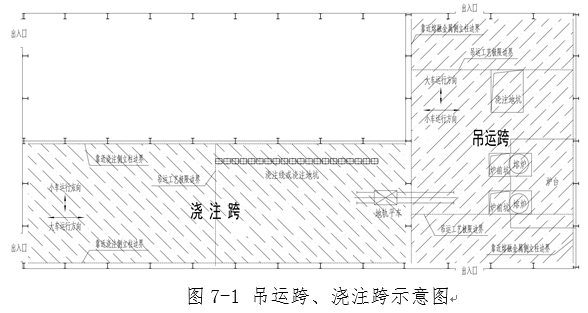
  (3) "Floor area" refers to the positive and negative zero area in the workshop bounded by the side lines of the columns on both sides of the molten metal lifting span or pouring span near the lifting side of the molten metal, and bounded by the walls at both ends of the lifting span or pouring span in the longitudinal direction. Among them, "transverse" refers to the running direction of the trolley for lifting molten metal crane; "Longitudinal" refers to the running direction of the crane for lifting molten metal (Figure 7-2); "Positive and negative zero area" does not include the blocked area directly below the overhead platform.
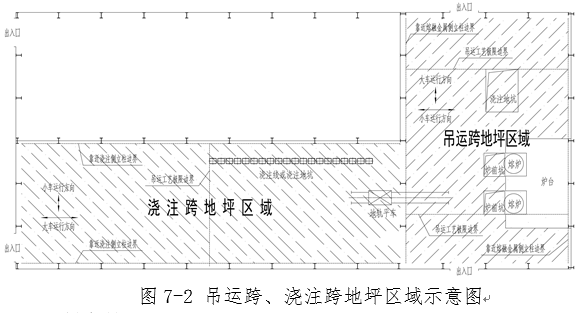
  2. Judgment situation:

  (1) The meeting room, activity room, lounge, dressing room and shift room are set in the floor area directly below the molten metal lifting span. Note: The "floor area directly below" refers to the floor area with the boundary line of the column near the molten metal lifting side on both sides of the lifting span as the transverse boundary and the limit boundary of the molten metal lifting process as the longitudinal boundary (Figure 7-3).
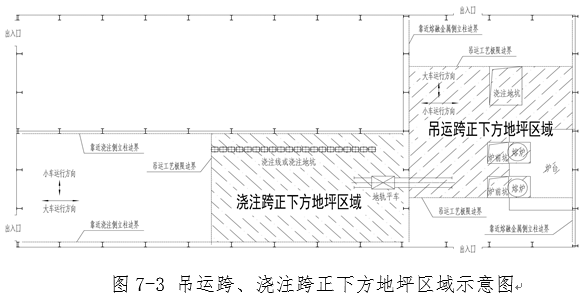
  (2) The meeting room, activity room, lounge, dressing room and shift room are set in the terrace area directly below the molten metal pouring span. (3) The meeting room, activity room, lounge, changing room and shift room, which are located below the platform of molten metal lifting overhead floor, within the boundary of columns on both sides of the lifting span or pouring span, face the lifting side of molten metal, and are not completely enclosed by solid walls. Note: "Solid wall" refers to brick wall, concrete wall or wall built with refractory materials.

  (two) the smelting furnace, refining furnace and holding furnace for casting are not equipped with emergency discharge and emergency storage facilities.

  [Interpretation]

  1. Judgment situation:

  (1) The smelting furnace, refining furnace and holding furnace for casting are not equipped with emergency discharge and emergency storage facilities. (2) The capacity of emergency storage facilities of smelting furnace, refining furnace and holding furnace for casting is less than the maximum capacity of furnace body. (3) Two or more smelting furnaces, refining furnaces and holding furnaces share emergency storage facilities, and their capacity is less than the sum of the capacities of the furnaces, refining furnaces and holding furnaces.2. Exceptions:The side furnace for nonferrous alloy casting is not equipped with emergency discharge and emergency storage facilities.

  (3) During the production period, there are accumulated water in the bottoms, pits and accident pits of smelting furnaces, refining furnaces and holding furnaces for casting, as well as the platform in front of the furnace, furnace base area, modeling pits, pouring pits and molten metal transfer channels within the influence range of molten metal leakage and splashing.

  [Interpretation]

  1. Judgment situation:

  (1) During the production period, there is water in the bottom, pit and accident pit of smelting furnace, refining furnace and holding furnace for casting, as well as in the front platform and furnace base area affected by molten metal leakage and splashing. (2) During the production period, there is water accumulated in the modeling pit and pouring pit. (3) During the production, there is accumulated water in the plane directly below the molten metal transfer channel and in the area of 3 meters around it. (4) When molten metal is transported by the overhead layer through the fixed track, there is water on the surface of the overhead layer.2. Exceptions:(1) During production, the accident pit, the platform in front of the furnace, the modeling pit, the pouring pit and the molten metal transfer channel within the influence range of molten metal leakage and splashing are wet. (2) During the production period, it is set in the smelting, refining and casting production areas, and used for collection, external maintenance, equipment failure and water leakage, and the accumulated water in the drainage ditch (tank) of process cooling water keeps flowing.

  (4) The cooling water systems of smelting furnaces, refining furnaces, die casting machines and oxygen lances for casting are not equipped with monitoring and alarm devices for outlet water temperature and inlet and outlet water flow difference, or the monitoring and alarm devices are not interlocked with the molten metal heating and conveying control system.

  [Interpretation]

  1. Judgment situation:

  (1) The cooling water systems of smelting furnaces and refining furnaces for casting are not equipped with water temperature monitoring and alarm devices, or the water temperature monitoring and alarm devices are not interlocked with the molten metal heating system. (2) The cooling water systems of the smelting furnace and refining furnace for casting are not equipped with the monitoring and alarm device for the flow difference between inlet and outlet water, or the monitoring and alarm device for the flow difference between inlet and outlet water is not interlocked with the molten metal heating system. (3) The cooling water system used for mold temperature control of the die casting machine is not provided with an outlet water temperature monitoring and alarm device, or the outlet water temperature monitoring and alarm device is not interlocked with the molten metal conveying control system. (4) The cooling water system used for mold temperature control of the die casting machine is not equipped with the monitoring and alarm device for water flow difference between inlet and outlet (or equivalent leak detection and alarm device, such as water pressure monitoring and alarm device), or the monitoring and alarm device for water flow difference between inlet and outlet (or equivalent leak detection and alarm device, such as water pressure monitoring and alarm device) is not interlocked with the molten metal conveying control system. (5) The cooling water system of oxygen lance is not equipped with water temperature monitoring and alarm device, or the water temperature monitoring and alarm device is not interlocked with the oxygen delivery control system. (6) The cooling water system of the oxygen lance is not equipped with the monitoring and alarm device for the flow difference between inlet and outlet water, or the monitoring and alarm device for the flow difference between inlet and outlet water is not interlocked with the oxygen delivery control system.2. Exceptions:(1) The machine-side melting and protecting integrated furnace for nonferrous alloy casting is not equipped with a monitoring and alarm device for outlet water temperature and inlet and outlet water flow difference, or the monitoring and alarm device is not interlocked with the molten metal heating and conveying control system; (2) The die casting machine used for die casting of non-magnesium alloy with a clamping force of less than 2,000 tons (inclusive) and a safety door or safety baffle in the mold opening and closing area, and the cooling water system used for mold temperature control is not provided with a monitoring alarm device for outlet water temperature and inlet and outlet water flow difference, or the monitoring alarm device is not interlocked with the molten metal conveying control system.

  (5) The gas main of a combustion device using gas (natural gas) is not provided with a pipeline pressure monitoring alarm device, or the monitoring alarm device is not interlocked with an emergency automatic cut-off device, or the combustion device is not provided with a flame monitoring and flameout protection system.

  [Interpretation]

  1. Description:

  "Gas main pipe of combustion device" refers to the gas (natural gas) inlet main pipe of single equipment such as roaster, smelting furnace, refining furnace, holding furnace, heating furnace, annealing furnace and heat treatment furnace with gas (natural gas) as fuel.

  2. Judgment situation:

  (1) The gas main of the combustion device using gas (natural gas) is not provided with a pipeline pressure monitoring alarm device. (2) The pressure monitoring alarm device of the gas main of the combustion device using gas (natural gas) is not interlocked with the emergency automatic cut-off device. (3) The combustion device using gas (natural gas) is not equipped with flame monitoring and flameout protection system.

  (6) Failing to take measures to prevent flammable gas from accumulating in the surrounding closed or semi-closed space when using flammable organic solvents to clean equipment, facilities, tools and appliances and the ground.

  [Interpretation]

  Judgment situation:

  (1) When using flammable organic solvent to clean equipment, facilities, tools and appliances, and the ground, measures such as mechanical ventilation are not taken to prevent flammable gas from accumulating in the confined space or semi-enclosed space. (2) When using flammable organic solvent to clean equipment, facilities, tools and appliances, and the ground, measures such as isolation and plugging were not taken to prevent flammable gas from escaping into the surrounding closed or semi-closed space.

  (seven) the paint mixing room and spray booth using non-aqueous paint are not equipped with fixed flammable gas concentration monitoring and alarm devices or ventilation facilities.

  [Interpretation]

  1. Description:

  "Waterborne paint" refers to a kind of paint whose main component is water.

  2. Judgment situation:

  (1) The paint mixing room and spray booth using non-aqueous paint are not equipped with fixed combustible gas concentration monitoring alarm. (2) The paint mixing room and spray booth using non-aqueous paint are not equipped with ventilation facilities. (3) The ventilation times of paint mixing room and spray booth using non-aqueous paint are less than 15 times/hour. Note: "Air exchange times" refers to the number of indoor air changes per unit time, that is, the ratio of ventilation volume to room volume.

  Eighth light industrial enterprises in any of the following circumstances, it should be judged as a major accident hazard:

  (1) The baking and frying equipment of a food manufacturing enterprise is not equipped with an anti-overheating automatic cut-off device.

  [Interpretation]

  1. Description:

  "Anti-overheating automatic cut-off device" refers to a device that can automatically cut off the heating source such as power supply or gas when the heating temperature exceeds the requirements.

  2. Judgment situation:

  (1) The baking equipment of food manufacturing enterprises is not equipped with an anti-overheating automatic cut-off device. (2) The frying equipment of the food manufacturing enterprise is not equipped with an anti-overheating automatic cut-off device.

  (2) Stationary monitoring and alarm devices for alcohol vapor concentration are not installed in liquor blending and filling places and wine depots, or the monitoring and alarm devices are not interlocked with ventilation facilities.

  [Interpretation]

  1. Description:

  "Wine cellar" refers to an indoor place where containers such as pottery jars, oak barrels or metal storage tanks are used to store liquor, including artificial cave wine cellars.

  2. Judgment situation:

  (1) There is no fixed monitoring and alarm device for alcohol vapor concentration in liquor blending and filling places and wine depots of liquor production enterprises. (2) Liquor blending, filling places and wine depots of liquor production enterprises are not equipped with mechanical ventilation facilities. (3) Stationary ethanol vapor concentration monitoring and alarm devices in liquor blending and filling places and wine depots of liquor production enterprises are not interlocked with ventilation facilities.3. Exceptions:A wine warehouse used for temporary storage or transit in the wine making (brewing) workshop; Semi-open wine cellar.

  (three) pulp manufacturing and paper making enterprises use steam and open flame to directly heat steel cylinders to vaporize liquid chlorine.

  [Interpretation]

  Judgment situation:

  (1) Pulp manufacturing and papermaking enterprises use steam to directly heat steel cylinders to vaporize liquid chlorine. (2) Pulp manufacturing and paper making enterprises directly heat steel cylinders to vaporize liquid chlorine with open flame.

  (4) The gas main pipe of the gas kiln (except the heat generator gas kiln) in which the daily-use glass and ceramic manufacturing enterprises adopt premixed combustion mode is not provided with a pipeline pressure monitoring and alarm device, or the monitoring and alarm device is not interlocked with the emergency automatic cut-off device.

  [Interpretation]

  1. Description:

  "Gas main" refers to the pipeline that supplies all the gas of the single gas furnace.

  2. Judgment situation:

  (1) There is no pipeline pressure monitoring and alarm device for the gas main pipe of the gas kiln with premixed and partially premixed combustion mode in daily-use glass and ceramic manufacturing enterprises. (2) The gas main pipe of the gas kiln is not equipped with an emergency automatic cut-off device. (3) The pipeline pressure monitoring and alarm device of the gas main pipe is not interlocked with the emergency automatic cut-off device.3. Exceptions:

  Gas kiln with diffusion combustion mode; Heat generator gas kiln.

  (five) the cooling protection system of the glass furnace of the daily-use glass manufacturing enterprise is not equipped with a monitoring alarm device.

  [Interpretation]

  Judgment situation:

  (1) Glass kilns in daily-use glass manufacturing enterprises are not equipped with cooling protection system. (2) If the glass kiln of the daily-use glass manufacturing enterprise uses the water cooling protection system, neither the water flow monitoring alarm device nor the pressure monitoring alarm device is set in the water inlet main pipe. (3) If the glass kiln of the daily-use glass manufacturing enterprise uses the air-cooled protection system, the fan shutdown monitoring and alarm device is not set.

  (six) the paint mixing room and spray booth using non-aqueous paint are not equipped with fixed flammable gas concentration monitoring and alarm devices or ventilation facilities.

  [Interpretation]

  1. Description:

  "Waterborne paint" refers to a kind of paint whose main component is water.

  2. Judgment situation:

  (1) The paint mixing room and spray booth using non-aqueous paint are not equipped with fixed combustible gas concentration monitoring alarm. (2) The paint mixing room and spray booth using non-aqueous paint are not equipped with ventilation facilities. (3) The ventilation times of paint mixing room and spray booth using non-aqueous paint are less than 15 times/hour. Note: "Air exchange times" refers to the number of indoor air changes per unit time, that is, the ratio of ventilation volume to room volume.

  (seven) the lithium ion battery storage warehouse did not take effective physical isolation measures for the faulty battery.

  [Interpretation]

  1. Description:

  (1) "Faulty battery" refers to a battery whose single battery voltage is greater than 3 volts and has safety defects such as flatulence, short circuit, breakage and overcharge, excluding batteries that are continuously immersed in water. (2) "Physical isolation measures" refer to measures to isolate the faulty battery from the non-faulty battery by means of solid walls, explosion-proof cabinets, iron cabinets, separate containers, fire shutters, etc.

  2. Judgment situation:

  When the lithium-ion battery storage warehouse stores the faulty battery, no physical isolation measures are taken for the faulty battery.

  Article 9 Textile enterprises in any of the following circumstances shall be judged as major accidents:

  (1) The vaporization chamber, gas storage tank, oil storage tank and heat medium furnace of the heat setting process such as singeing, opening and drying for yarn, thread and fabric processing are not separated from the gathering places of production and processing personnel or set separately.

  [Interpretation]

  1. Description:

  (1) "Isolation" means that equipment and facilities with high safety risks, such as vaporization room, gas storage tank, oil storage tank and heat medium furnace, are set in independent rooms in the production plant, which are separated from the places where people gather. (2) "Independent installation" means that equipment and facilities with high safety risks such as vaporization chamber, gas storage tank, oil storage tank and heat medium furnace are located outside the production plant and separated from the gathering place of personnel in the production plant.

  2. Judgment situation:

  The vaporization chamber, gas storage tank, oil storage tank and heat medium furnace for the heat setting process such as singeing, opening and drying of yarn, thread and fabric processing are not separated from the gathering places of production and processing personnel or set separately.

  (2) The powder of insurance, hydrogen peroxide, sodium hypochlorite, sodium chlorite, carved white powder (white block) are mixed with taboo materials for storage, or the storage place of the powder of insurance has not taken waterproof and moisture-proof measures.

  [Interpretation]

  1. Description:

  "Taboo materials" refer to articles that are prone to chemical reactions or have different fire extinguishing methods. When sodium hydrosulfite (sodium hydrosulfite) and carved white powder (sodium formaldehyde bisulfate) come into contact with acids and oxidants, or when hydrogen peroxide (aqueous hydrogen peroxide solution), sodium hypochlorite and sodium chlorite come into contact with reducing agents, a strong redox reaction will easily occur, releasing heat and toxic substances.

  2. Judgment situation:

  (1) Sodium hydrosulfite, hydrogen peroxide, sodium hypochlorite, sodium chlorite, carved white powder (hanging white block) and taboo materials are mixed and stored. (2) Insurance powder is piled up in the open air. (3) No waterproof and moisture-proof measures have been taken in the indoor places where the insurance powder is stored.Tenth tobacco enterprises in any of the following circumstances, it should be judged as a major accident:(a) the fumigation workplace is not equipped with phosphine gas concentration monitoring and alarm instruments, or is not equipped with gas masks, or it is not confirmed that all irrelevant personnel have been evacuated from the fumigation workplace before fumigation and insecticidal operations.

  [Interpretation]

  1. Description:

  "Fumigation workplace" refers to the workplace where aluminum (magnesium) phosphide is used to control tobacco pests by fumigation.

  2. Judgment situation:

  (1) During fumigation, phosphine gas concentration monitoring and alarm instruments were not equipped and used.

  (2) When fumigating, applying drugs, checking and diffusing gas, gas masks matching the properties of phosphine gas were not equipped and used.

  (3) Before fumigation and pesticide application, it is not confirmed that all irrelevant personnel are evacuated from the fumigation workplace.

  (two) the production lines and places that use liquid carbon dioxide to make expanded tobacco are not equipped with fixed monitoring and alarm devices for carbon dioxide concentration, or the monitoring and alarm devices are not interlocked with the facilities in emergency ventilation.

  [Interpretation]

  1. Description:

  "Production line and place" refers to the areas where the impregnators and compressors that use liquid carbon dioxide to make expanded cut tobacco, and the storage tanks, process tanks and recovery tanks that store liquid carbon dioxide are located.

  2. Judgment situation:

  (1) Production lines and places that use liquid carbon dioxide to manufacture expanded cut tobacco are not equipped with fixed carbon dioxide concentration monitoring and alarm devices.

  (2) The production lines and places that use liquid carbon dioxide to make expanded cut tobacco are not equipped with emergency ventilation facilities.

  (3) The fixed CO2 concentration monitoring and alarm device is not interlocked with the facilities in emergency ventilation.

  Eleventh industrial and trade enterprises with the risk of dust explosion in any of the following circumstances, it should be judged as a major accident hazard:

  (1) The hazardous place for dust explosion is set in a multi-storey building (structure) with non-frame structure, or there are places for gathering staff such as dormitory, conference room, office and lounge in the hazardous place for dust explosion.

  [Interpretation]

  1. Description:"Dust explosion dangerous place" refers to the place where combustible dust and gaseous oxidant (mainly air) exist.

  2. Judgment situation:

  (1) The dangerous places of dust explosion are set in multi-storey buildings (structures) with non-frame structure such as brick-concrete, brick-wood, brick arch, etc. (2) Staff dormitories, conference rooms, offices, lounges, etc. where people may gather are set up in the hazardous places of dust explosion.

  (2) Different types of combustible dust, combustible dust, combustible gas and other media that are likely to aggravate the explosion risk share a dust removal system, or different buildings (structures) and different fire zones share a dust removal system and the dust removal systems are interconnected.

  [Interpretation]

  1. Description:"Fire zone" refers to a local space separated by firewalls, floors and other fire separation facilities in a building, which can prevent the fire from spreading to the rest of the same building within a certain period of time.

  2. Judgment situation:

  (1) Different types of dust that may aggravate the explosion hazard after mixing share a set of dust removal system. (2) Combustible dust and combustible gas (including steam) share a dust removal system. (3) The dust producing points in two or more independent buildings (structures) share a set of dust removal system. (4) The dust producing points in different fire zones of the same building (structure) share a set of dust removal system. (5) Dust removal systems of different buildings and structures and different fire zones are connected through dust removal pipes, air outlet pipes and fans. Note: Wood products processing enterprises are used for dust removal, and square pipes with scraper function are regarded as dust removal air ducts.3. Exceptions:(1) Due to the production process, combustible dust and combustible gas in the same position coexist and accompany each other. (2) In industrial and trade enterprises, due to the needs of production processes such as grain grinding, starch and feed processing, the dust removal system vertically spans different fire zones but is independently set according to the process flow. (3) The dust removal systems of two or more fire zones are equipped with air lock and ash unloading devices which are communicated with each other through ash conveying pipelines. (4) Two or more dust removal systems in fire protection zones share an exhaust chimney behind fans.

  (three) the dry dust removal system did not take any explosion prevention and control measures such as explosion venting, inerting and explosion suppression.

  [Interpretation]

  1. Description:"Dry dust removal system" refers to the dry dust removal system using bag filter or cyclone filter.

  2. Judgment situation:

  (1) No explosion control measures such as explosion venting, inerting and explosion suppression have been taken in the dust collector box of dry dust removal system. (2) Dry dust removal system only uses observation window, cleaning hole and manhole as explosion relief measures. (3) When gas inerting measures are taken in dry dust removal system, oxygen content online monitoring and alarm measures are not taken. (4) When explosion suppression measures are taken in the dry dust removal system, the explosion suppressant used in the explosion suppression device is not applicable to the treated dust.3. Exceptions:(1) Dust removal device arranged on the main body of production equipment and facilities. (2) Sand blasting machine, shot blasting machine and electrostatic spraying process are cyclone dust collectors specially used for solid-gas separation and collecting sand blasting, steel shot blasting and electrostatic spraying powder. (3) Two-stage and above dry dust removal systems with explosion control measures are used as primary cyclone dust collectors for collecting larger particle dust.

  (4) When the dust removal system of metal dust such as aluminum and magnesium adopts positive pressure dust removal, or other combustible dust removal systems adopt positive pressure dust blowing, measures such as spark detection and elimination are not taken to prevent ignition sources.

  [Interpretation]

  Judgment situation:

  (1) The dust removal system for combustible dust generated by metals such as aluminum, magnesium, zinc and titanium or metal alloys adopts positive pressure dust removal. (2) When other combustible dust removal systems use positive pressure to blow dust, measures to prevent ignition sources such as spark detection and elimination are not taken between the fan and the dust collector box.

  (five) the dust removal system adopts gravity settling chamber for dust removal, or adopts dry roadway structure as dust removal air duct.

  [Interpretation]

  1. Description:"Gravity settling chamber" refers to an inertial dust collector in which dust is settled and separated under the action of gravity.

  2. Judgment situation:

  (1) The dust removal system adopts gravity settling chamber for dust removal. (2) The dry roadway built by brick or concrete is used as the dust removal air duct in the dust removal system.3. Exceptions:

  Dust removal trench adopted by textile enterprises.

  (six) the dry dust removal system of aluminum, magnesium and other metal dust and wood dust is not equipped with a gas lock and ash discharge device.

  [Interpretation]

  1. Description:"Air lock ash unloading device" refers to the equipment installed at the bottom of the ash bin of the dust collector to discharge ash for the dust collector. The widely used air lock ash unloading devices include star ash unloading valve and double-layer gate valve.

  2. Judgment situation:

  (1) The dry dust removal system for combustible dust generated by metals such as aluminum, magnesium, zinc, titanium or metal alloys is not provided with an air lock and ash discharge device. (2) The wood dust dry dust removal system is not equipped with an air lock and ash unloading device.

  (seven) the electrical equipment in the dust explosion dangerous places divided into 20 zones, such as dust collectors and dust collection bins, does not meet the explosion-proof requirements.

  [Interpretation]

  1. Description:"Zone 20" refers to the area where explosive dust environment appears continuously, for a long time or frequently.

  2. Judgment situation:

  (1) No suitable dust explosion-proof electrical equipment is used in the dust explosion dangerous places such as dust collectors and dust collection bins which are divided into 20 zones. (2) The installation of explosion-proof electrical circuit in Area 20 does not meet the explosion-proof requirements.

  (eight) before the crushing, grinding, granulating and other process equipment that is easy to produce mechanical ignition sources, there is no iron, stone and other sundries removal device, orThere is no spark detection and elimination device in the air duct connected with the sander in the wood processing enterprise.Yes.

  [Interpretation]

  1. Description:Debris removal devices mainly include permanent magnets, permanent magnet cylinders, electromagnets, screens, pneumatic separators, stone removal machines, stone removal screens, air separators, etc.

  2. Judgment situation:

  (1) Before the process equipment such as crushing, grinding, granulating, etc., which are easy to generate mechanical ignition sources, there is no impurity removal device such as iron and stone. (2) There is no spark detection and elimination device in the air duct connected with the sander in the wood processing enterprise. Note: the spark detection and elimination device should be installed in the main air inlet pipe of the dust collector connected with the sander, or in the branch air pipe connected with each sander.

  (9) Failing to take ventilation and other measures to prevent hydrogen accumulation in the collection, stacking and storage places of spontaneous combustion metal dust when wet, or failing to take waterproof and moisture-proof measures in the dry collection, stacking and storage places.

  [Interpretation]

  Judgment situation:

  (1) The collection, stacking and storage places of aluminum powder, magnesium powder, aluminum-magnesium alloy powder and other metal dust that spontaneously ignite when wet have not taken ventilation and other measures to prevent hydrogen accumulation. (2) Aluminum powder, magnesium powder, aluminum-magnesium alloy powder and other metal dust that spontaneously ignites when wet are not collected, stacked and stored in waterproof and moisture-proof measures.

  (ten) did not implement the dust cleaning system, resulting in serious dust on the job site.

  [Interpretation]

  Judgment situation:

  The dust cleaning system is not formulated, or the dust is not cleaned in time according to the requirements of the cleaning system, resulting in serious dust accumulation on the job site.

  Twelfth industrial and commercial enterprises using liquid ammonia refrigeration in any of the following circumstances, it should be judged as a major accident:(a) the air conditioning system of the packaging, dividing and product sorting places adopts ammonia direct evaporation refrigeration.

  [Interpretation]

  Judgment situation:

  (1) The air conditioning system of the packaging room, the dividing room and the product finishing room adopts ammonia direct evaporation refrigeration.

  (2) Refrigerator, hall and closed platform for ammonia direct evaporation refrigeration are used as working places for processing, sorting and packaging.

  (two) the rapid freezing device is not set in a separate workshop, or the number of workers in the workshop of the rapid freezing device exceeds 9.

  [Interpretation]

  1. Description:"Independent operation room" refers to an independent operation area with only a quick freezing device and a material conveying device, and effective isolation measures are adopted to prevent ammonia diffusion.

  2. Judgment situation:

  (1) The quick freezing device is not set in a separate workshop.

  (2) The quick freezing device is set in a separate workshop, but the number of workers in the separate workshop exceeds 9.

  Thirteenth industrial and trade enterprises operating in limited space with the risk of hydrogen sulfide, carbon monoxide and other poisoning shall be judged as major accidents in any of the following circumstances:

  (a) the limited space is not identified, the safety management ledger is not established, and no obvious safety warning signs are set.

  [Interpretation]

  1. Description:"Limited space with poisoning risks such as hydrogen sulfide and carbon monoxide" refers to the limited space such as sewage treatment facilities, pulp ponds, pickling ponds and fermentation ponds where toxic gases such as hydrogen sulfide, carbon monoxide, phosphine and hydrogen cyanide may exist and poisoning accidents may easily occur.

  2. Judgment situation:

  The limited space with poisoning risks such as hydrogen sulfide and carbon monoxide was not identified, a safety management account was not established, and obvious safety warning signs were not set in the limited space.

  (2) Failing to implement the examination and approval of confined space operation, or failing to implement the requirements of "ventilation first, inspection second, operation second", or failing to set up a supervisor at the operation site.

  [Interpretation]

  Judgment situation:

  (1) Before the confined space operation, the confined space operation was not approved.

  (2) Before confined space operation, ventilation and gas concentration detection were not carried out, or confined space operation was carried out under the condition that toxic gas concentration detection was unqualified.

  (3) There is no special supervisor at the confined space operation site, or the supervisor enters the confined space to participate in the confined space operation, or the supervisor does not supervise the whole process.

  Article 14 The facilities, equipment and devices such as monitoring, alarm and protection directly related to production safety listed in this standard shall ensure normal operation and use, and failure or ineffectiveness shall be judged as major accident hazards.

  [Interpretation]

  Due to inadequate detection, maintenance and repair, or through shutdown, destruction or tampering, the facilities, equipment and devices directly related to production safety listed in this standard are in a state of non-power-on, non-activation, non-interlocking, data distortion and other abnormal operation and use, which are judged as major accident hazards.

  Fifteenth this standard shall come into force as of May 15th, 2023. The Criteria for Judging the Hidden Dangers of Major Production Safety Accidents in Industry and Trade Industry (2017 Edition) (No.129 [2017] of the General Manager of Work Safety) shall be abolished at the same time.
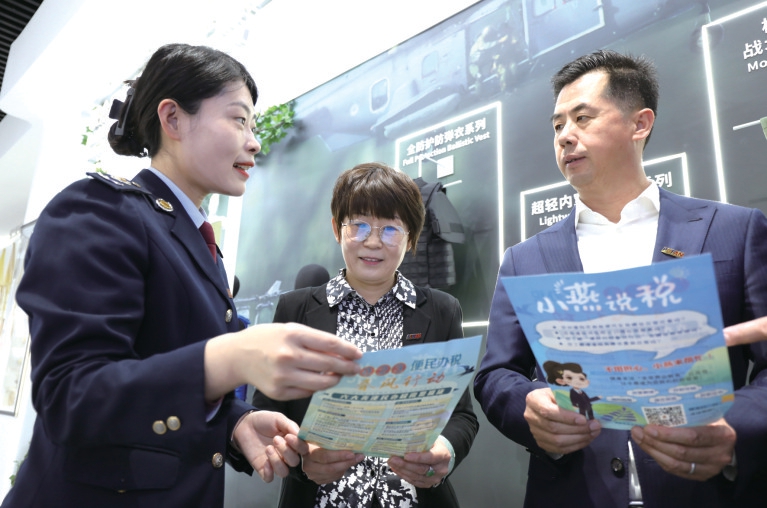

Beijing-Tianjin-Hebei tax cooperation opens up a new situation

  Original title: Beijing-Tianjin-Hebei tax cooperation opens up a new situation

The cadres of Yanshan District Taxation Bureau provided on-site counseling for Beijing Pufan Protection Technology Co., Ltd., which is operated across Beijing and Hebei, and introduced the new measures of the Spring Breeze Action of Convenience Taxation.

The cadres of Yanshan District Taxation Bureau provided on-site counseling for Beijing Pufan Protection Technology Co., Ltd., which is operated across Beijing and Hebei, and introduced the new measures of the Spring Breeze Action of Convenience Taxation.

  On the morning of August 18th, the joint meeting of Beijing-Tianjin-Hebei tax cooperation was held in Beijing. The tax bureaus of the three provinces and cities jointly planned relevant measures to help Beijing-Tianjin-Hebei coordinated development in the new period, further optimized the joint meeting system of tax cooperation, and actively constructed a new pattern of tax assistance to Beijing-Tianjin-Hebei coordinated development in the new period.

  The meeting reviewed and approved the Notice on Establishing and Deepening the Joint Meeting System of Beijing-Tianjin-Hebei Tax Cooperation and the Notice on Deepening the Coordinated Development of Beijing-Tianjin-Hebei with Tax Support. It is required that the tax authorities of the three provinces and cities of Beijing, Tianjin and Hebei should further deepen their understanding, upgrade their positions, give full play to the role of the joint meeting system, jointly promote the implementation of various tax tasks with high quality, continuously enhance the synergy of tax work, and push the tax cooperation between Beijing, Tianjin and Hebei to a new level.

  During the joint meeting, a special working group meeting of Beijing-Tianjin-Hebei tax cooperation was held to discuss the establishment of a unified consultation mechanism for tax law enforcement standards, help the Beijing-Tianjin-Hebei tax source to coordinate construction, and strengthen the integration of Beijing-Tianjin-Hebei tax business environment, and deployed tax support to further promote the coordinated development of Beijing-Tianjin-Hebei.

  The coordinated development of Beijing-Tianjin-Hebei is an important decision made by the CPC Central Committee and the State Council to promote regional coordinated development. Beijing Municipal Taxation Bureau, together with Tianjin Taxation Bureau and Hebei Provincial Taxation Bureau, took the initiative to serve the front and successively introduced a series of pragmatic tax measures, fully serving the coordinated development of Beijing, Tianjin and Hebei, and contributed tax power to building a pioneering and demonstration area of Chinese modernization.

  Tax and fee concessions help enterprises develop.

  Continue to focus on the key points and characteristics of regional development, further implement the tax policies that support and encourage the development of enterprises, increase support for high-tech enterprises and small and micro enterprises, and promote the high-quality development of Beijing-Tianjin-Hebei region. Focusing on the function of Beijing’s non-capital, we will focus on strengthening collaborative innovation and industrial cooperation, and continue to conduct on-the-spot visits and fine services to related enterprises. Strengthen the implementation of supporting scientific and technological innovation policies such as R&D expenses plus deduction, and carry out multi-level and multi-field regional joint analysis to further enhance the accuracy and effectiveness of coordinated service development.

  Consistent standards to improve the handling experience

  Continue to deepen "colleagues with the same standard". For high-frequency tax-related government services, the tax authorities of Beijing, Tianjin and Hebei have sorted out the list of "colleagues with the same standard", involving 10 categories of business and 100 tax-related payment items. At the beginning of 2023, the three places jointly issued the Notice of State Taxation Administration of The People’s Republic of China, Beijing Taxation Bureau, State Taxation Administration of The People’s Republic of China, Tianjin Taxation Bureau and State Taxation Administration of The People’s Republic of China, Hebei Taxation Bureau on Updating the List of Tax Matters in Beijing, Tianjin and Hebei, and the list was further expanded to 150 tax-related matters. In the next step, the tax authorities of the three places will proceed from the actual needs of enterprises and the masses, continue to sort out and expand the scope of tax-related "colleagues with the same standard" and "running at most once" in Beijing, Tianjin and Hebei, update the "tax guide" common in the three places in time, further improve the standardization of government services, and continue to enhance the indiscriminate tax experience.

  Unify and standardize consulting services. At present, Beijing, Tianjin and Hebei have realized the sharing of local knowledge content in 12366 knowledge base. In the next step, we will continue to promote the standardization of regional knowledge base, enrich the content, carry out targeted business training for 12366 seats in Beijing, Tianjin and Hebei, and provide unified and accurate consulting services for taxpayers and payers. Explore the exchange and exchange of business backbones.

  Cross-regional office to promote tax convenience

  Continue to explore cross-regional self-service tax and fee services. At present, the self-service tax terminal has been used to realize the common business such as personal income tax record inquiry in some areas of Beijing, Tianjin and Hebei, which is convenient for enterprises to handle business across regions. In the next step, we will continue to explore and expand the scope and handling matters of self-service tax terminals.

  Continue to explore cross-regional cooperation. At present, Beijing, Tianjin and Hebei have developed supporting functional modules such as "cross-regional tax-related matters report", "cross-regional tax-related matters inspection application" and "cross-regional tax-related matters information feedback" in the electronic taxation bureau, so as to realize the convenient handling of taxpayers’ cross-regional business matters. The first batch of nine inter-provincial and inter-city transactions, including deposit account account report, were launched to realize cross-provincial electronic tax payment. In the Beijing-Tianjin-Hebei region, the tax authorities in the emigration area do not need to cancel, and the tax authorities in the emigration area "receive" the taxpayer’s tax-related information with one click. The tax authorities of Beijing, Tianjin and Hebei will continue to optimize the cross-regional communication work, explore the scope of matters that can be realized across regions, facilitate the handling of tax and fee matters, and reduce the burden on enterprises.

  Zhang Yougan, Party Secretary and Director of Beijing Municipal Taxation Bureau, said that Beijing-Tianjin-Hebei is one of the regions with the most dynamic economy, the highest degree of openness and the strongest innovation ability in China. Promoting the coordinated development of Beijing, Tianjin and Hebei is a major decision-making arrangement made by the CPC Central Committee with the Supreme Leader as the core under the new era conditions, and a major national strategy to promote coordinated regional development and form a new growth pole. The Beijing Municipal Taxation Bureau will always keep in mind the requirement that "Beijing must be viewed from the political perspective first", and join hands with the tax authorities of Tianjin and Hebei to further enhance the political consciousness and responsibility of serving the coordinated development of Beijing-Tianjin-Hebei, closely focusing on the major issues such as fully supporting and serving the coordinated development of Beijing-Tianjin-Hebei, promoting greater breakthroughs in the construction of Beijing’s sub-centers, and promoting the construction of xiong’an new area with high standards and high quality, and focusing on promoting, making sustained efforts and seeking practical results.

Those who choose SAIC Volkswagen ID.3 are girls who don’t understand cars? Big data tells you the truth

As a male owner of SAIC Volkswagen ID.3, every time I hear someone say that all the people who buy SAIC Volkswagen ID.3 are girls who don’t understand cars, it is really helpless. After all, from the appearance, SAIC Volkswagen ID.3 is really more like a pure electric car specially built for girls. However, friends who have driven the SAIC Volkswagen ID.3 know that it is no problem to say that it is a pure electric small steel gun. The control experience comparable to Porsche is even more addictive. However, many people are hearsay and have not really driven the SAIC Volkswagen ID.3.

However, not long ago, an ID. User portrait finally made us male car owners have something to say. According to the data, the overall average age of ID users is 39.6 years old, and the overall proportion of male users is 52%. Of course, this includes the user data of ID.4 X and ID.6x.. Among them, the users of SAIC Volkswagen ID.3 are the youngest, and the proportion of men is 42%. Although there is no higher proportion of women, it is enough to show that this pure electric car is not exclusive to women.

Moreover, it can be seen from big data that consumers who choose products at this price often compare SAIC Volkswagen ID.3 with products such as Model3, Model Y and BYD Dolphin. But in the end, they chose SAIC Volkswagen ID.3, which is enough to show that this pure electric car has extraordinary advantages.

Of course, many netizens may be curious. The competitors of SAIC Volkswagen ID.3 are not bad. Why can SAIC Volkswagen ID.3 stand out? In fact, we can see one or two things from the comparison of ID. Users’ purchase decisions. The three aspects that consumers are most concerned about are nothing more than the use cost, design and driving quality, and these three aspects happen to be the absolute advantages of SAIC Volkswagen ID.3

First of all, in terms of use cost, the cost of a pure electric vehicle is basically insurance, maintenance and electricity. The premium of SAIC Volkswagen ID.3 is basically the same as that of a fuel vehicle with the same price, and we ignore it directly. Next, we will talk about maintenance and electricity. Some riders may exchange the ID beans they gave when buying a car for maintenance and electricity, which we throw out, otherwise the cost of SAIC Volkswagen ID.3 will directly become zero.

According to the current maintenance content of my SAIC Volkswagen ID.3, the maintenance cost of 60,000 kilometers in three years can basically be controlled at 2,500-3,000 yuan, and sometimes the maintenance cost will be lower if you participate in some activities, so the annual maintenance cost will average around 800 yuan. As for the electricity bill, the electricity bill of Volkswagen ID.3 for 20,000 kilometers a year often only needs about 1,600 yuan. Can this car cost impress you?

Needless to say, the design is not good-looking. If it is not SAIC Volkswagen ID.3, how can it provoke netizens to say that it is more suitable for female drivers? Moreover, from the proportion of female drivers buying cars, it is actually enough to explain their face value. After all, most female drivers buy cars just to look at the design.

Last but not least, it is the driving quality. As mentioned above, SAIC Volkswagen ID.3 is a rare rear-drive vehicle of its class, and the driving experience of this model is often better, for example, it is easier to bring people and vehicles together. Moreover, due to the blessing of SAIC Volkswagen’s new platform, SAIC Volkswagen ID.3 has a lower center of gravity and runs more steadily and solidly. By the way, the chassis compactness of SAIC Volkswagen ID.3 is also better than that of the same price product. Combined with precise pointing, the performance is impeccable regardless of daily driving or high-speed car use.

In addition, SAIC Volkswagen ID.3 also provides B-block and D-block modes, in which B-block mode has a drag feeling brought by energy recovery, but it is not strong, but it brings good endurance growth. In the D mode, SAIC Volkswagen ID.3 is completely transformed into an electric small steel gun, which performs very well and fully satisfies everyone’s driving desire. At this time, do you still think that all the girls who choose SAIC Volkswagen ID.3 are girls who don’t understand cars?

There are 17 compositions with full marks and 700 compositions with zero marks in Guangdong College Entrance Examination.

  The director of Guangshang Admissions Office visited Dayang.com College Entrance Examination yesterday.


  Guangshang admission line: or 30 points lower than the first line.


  (Reporter Xu Jing correspondent Jiang Xiaowei) Yesterday afternoon, the interview with the director of college admissions held by Guangzhou Daily and Dayang.com continued. Yesterday, the guest interview was Yu Xiaozheng, the director of Guangdong Business School. Last year, for the first time, I knew how to fill in my volunteers, and Guangshang unexpectedly had the first volunteer cut off. In this regard, Yu Xiaozheng reminded candidates to fill in their volunteers rationally and not to waste their college entrance examination scores. The college entrance examination score is about 30 points lower than a line, and it is very easy to apply for business.


  Last year, for the first time in Guangdong, volunteers were filled in after graduation, and the conservatism of candidates made it rare for Guangshang to have a broken file last year. According to reports, after recording the second, third and fourth volunteers last year, they had to enter the re-recording stage to recruit enough plans. Although the high-grade candidates still accounted for the vast majority in the end, many candidates with good grades still lost the opportunity to study in Guangshang.


  Yu Xiaozheng said that this is because candidates dare not take risks when filling in their volunteers. How do candidates apply for the exam to be scientific? Yu Xiaozheng suggested that candidates should treat the exam rationally. According to past experience, candidates with a score of about 30 points below a line are more likely to apply for Guangshang.


  According to reports, the total enrollment plan of Guangshang this year is 6,000, which is more than 300 more than the actual enrollment last year. Among them, 5,552 students were enrolled in Guangdong Province, including 2,682 in liberal arts, 2,740 in science and 130 in art. There are 46 enrollment majors in this school this year. Judging from the admission situation in previous years, the majors of accounting, finance, business administration, international economy and trade in Guangshang are the most popular among students. Last year, the average admission scores of accounting, international economy and trade both exceeded one line.


  It is reported that Guangdong University of Commerce has four new majors in 2009, with 8 students from broadcasting and hosting, 32 from radio and television, 50 from sociology and 50 from applied psychology.


  Yu Xiaozheng reminded candidates that when they fill in the major of Guangshang, they should fill in the effective measures to increase their chances of being admitted. He said that students have the opportunity to get a second choice of major, double degree and minor major after entering the school, so there is no need to worry too much.


  Yu Xiaozheng believes that candidates must fill in their volunteers in a normal state. If all candidates can rationally choose schools according to their scores, they can normally divert candidates from each score without accidents such as file breaks. If everyone treats volunteers with a game mentality, it will be chaotic, which may cause schools at all levels to lose both sides. The purpose of filling in the volunteers after the exam is to let everyone apply for the exam rationally according to the scores and divert them.


  Yu Xiaozheng explained that the reference data such as the number of candidates in each score section published by the examination institute is to guide candidates to make comprehensive choices according to their own scores and factors such as interest and region, so everyone must cherish the opportunity.


  You can apply for studying abroad or change your major.


  Netizen asked: Can you introduce the "1+2+1" model of Guangshang in detail?


  Yu Xiaozheng: I studied in Guangdong Business School and applied. If the qualified students pass the examination, they will study in American schools for two years, that is to say, sophomores and juniors are in the United States, and then they will return to Guangdong Business School in the last year, that is to say, they will get two degrees, one from the United States and one from China.


  Netizen asked: Can I change my major after entering the school?


  Yu Xiaozheng: The school implements the second choice system for majors among undergraduates. The second choice of major means that qualified undergraduates have an opportunity to change majors in the second year, and they will transfer from the entrance major to another major and graduate according to the new major between the corresponding majors stipulated by the school.

Editor: Li Erqing

Ariel Lin solemnly clarified the "rich and powerful dispute": he didn’t get up at seven o’clock to take care of his in-laws and didn’t eat raw frogs for pregnancy.

Recently, Ariel Lin’s interview about "getting up at 7 o’clock to take care of her in-laws and sending her father-in-law to work" was turned out again, which made netizens comment that "it’s not easy for a rich family". On the 9 th, she personally posted a document and responded to six key disputes surrounding her:

1. Grandma cooked breakfast for the whole family from beginning to end. In the first two years, I did try to be a "good daughter-in-law", but now I have slept until I woke up naturally for a long time.

2. It is a rumor that the husband takes the tender model home.

3. You can go back to your family at any time.

4. Deny that "I have never farted in front of my husband".

5. Her husband’s family never asked her to eat raw frogs to improve her physique.

6. Marrying is not a "rich family" but a "good family", and not bowing to the demands of others.

It is reported that in October 2014, Ariel Lin got engaged to her husband Lin Yuchao, and in December of the same year, they held a wedding in Taipei. Lin Yuchao is a rich second generation, and his family runs the diving equipment company "Youhan" in Taiwan Province, with branches all over the world. The two are friends who have known each other for a long time, and they are once again sparking because of their reunion at a friend’s wedding.

Ariel Lin was eager to have a child, and in 19 years, she announced that she would stop working for pregnancy. During this period, Ariel Lin made full preparations from "all aspects" and even bought the school district house before the baby came. In the interview, Ariel Lin said that she had tried all kinds of methods, including artificial insemination, to have a baby, but nothing happened.

Ariel Lin’s full text is as follows:

Some things seem to be unclear, and people will judge you are lying when your nose itches and touches your nose! In short, all kinds of news are copied and pasted, and some of them only have self-made subtitles, and there is no my voice at all. These are testing the wisdom and independent thinking and judgment ability of the guards. It is really not easy for everyone to get through this! Just clarify a few major misunderstandings, and I won’t talk about them in particular in the future ~

Mistake 1: Get up at 3/4/5/6 in the morning to make breakfast for my in-laws and then send my grandfather out to work.

Grandma cooked breakfast for the whole family from beginning to end. Our science girl needs a stage to give full play to her creativity. At most, I got one help but none, or when she didn’t want to cook breakfast, she just picked up my mobile phone and made a reservation at all the brunch restaurants in Taipei. I have slept until I woke up naturally for a long time, because my family insisted on my natural dark circles because I didn’t get enough sleep, so I was not allowed to cooperate with their life pace in the morning. In the first two years, I did try to be a "good daughter-in-law" and get up early (at most 7 o’clock) to have dinner with everyone, but my work schedule was really different from my family, so I gave up my arms and surrendered later!

Mistake 2: The husband takes the tender model home.

How do you bring the tender model home when you live with your in-laws? I’m the only one who can barely be called a tender model in the family. I’m really wronged him. There is only one female golden mouse in LA’s tender model.

Ariel Lin solemnly clarified the "rich and powerful dispute": he didn't get up at seven o'clock to take care of his in-laws and didn't eat raw frogs for pregnancy.

Mistake 3: As long as I’m not in Taipei, you can always go back to your mother’s house.

It means to "stay" at my parents’ home. It doesn’t matter if I want to stay for a few days, but can my husband try not to, because he will miss me!

Mistake 4: Ariel Lin has never farted in front of her husband.

I remember I was embarrassed and smiling, right? The result becomes the "default", but in fact (directly quoting Brother Chao here), "Do they not know that you all attack me with your smelly fart? How considerate of you to let me go outside, but I am called a big man? (wronged) "

Five mistakes (big mistake! ! ! My husband’s family asked me to eat raw frogs to improve my health.

My favorite is that frogs lay eggs (pearls/pink balls/boba). I am definitely not a raw frog, and I have never eaten it. I have started to practice vegetarian food once a day, okay? ! It is everyone’s responsibility to reduce carbon emissions! Eat less meat! !

Ariel Lin solemnly clarified the "rich and powerful dispute": he didn't get up at seven o'clock to take care of his in-laws and didn't eat raw frogs for pregnancy.

Mistake 6: The rich daughter-in-law is grovelling.

Everyone I know knows that I am not married to a "rich family", but I am definitely married to a "good family". A kind and hardworking family also needs to work hard for their livelihood instead of idleness, and they love me like their own daughter. If I am the only channel in my family to speak to the outside world, and not saying a word has caused them injustice, then it is necessary for me to say something.

Ariel Lin solemnly clarified the "rich and powerful dispute": he didn't get up at seven o'clock to take care of his in-laws and didn't eat raw frogs for pregnancy.

Not getting married or not having children is a choice. It is also a choice to form your own family and give birth to the next generation. The focus is on your own decisions, rather than succumbing to the demands of others and the general trend of society. I understand this, and I can bear all the results brought by my own choices, and I will not be embarrassed to ask for help when I need help. What is face? Can you eat face? The last thing an actor needs is face! )

Just kidding, but it’s not easy for everyone, and everyone has their own life problems to face, but it’s always helpful to have more kindness around them and give others more space, right?

The academic life of the first batch of liberal arts doctors in New China

  Master Kai Shan — — Interview with the first batch of liberal arts doctors in New China Xu Jinjing and Sun Haiyan by Jiangsu People’s Publishing House.

  Mr. Cheng Qianfan directed Mo Lifeng to study (1980). Pictures are selected from Master Kai Shan.

  In September, 1983, Ge Jianxiong and his tutors, Professor Tan Qixiang (middle) and Zhou Zhenhe (left), conferred a doctorate at Fudan University. The picture was selected from Master Kai Shan.

  [The reader says]

  A good book will have multiple values worth exploring. — Interview with the first batch of liberal arts doctors in New China is no exception. Focusing on the first batch of liberal arts doctors in New China, this book reproduces the hard study process of ten "academic elites" such as Mo Lifeng, Yu Keping, Qian Chengdan, Li Bozhong, Zhuang Kongshao, Ma Min, Luo Gang, Ge Jianxiong, Tao Siyan and Hu Xingliang in the form of interviews, and outlines the reconstruction and revival of liberal arts in New China. It is a valuable material for studying the history of modern reading, higher education and academic thought in China. The great brothers who started the mountain have always responded seriously to the times and always strived for self-improvement. Before the national college entrance examination system was restored, they either plowed and studied in the rain, or worked and studied together, working hard and making positive progress; After waiting for the opportunity to go to college, I can successfully realize my dream of further study, learn from my mentor and fly freely in the professional field. In the past 70 years, they have handled the relationship between individuals and the times well, and have grown up together with the Republic and become respected pioneers. They have greatly promoted China’s liberal arts, promoted the development of the country and society, and become a well-deserved model of this era.

  Have a book to read, be hungry.

  Looking back on the growth process of Master Kai Shan, people may deliberately exaggerate the repression of individuals by the times before the reform and opening up, or criticize the over-standardized education and academic management system by taking advantage of Master Kai Shan’s educational experience. These ideas and practices are not unreasonable, but they are also worthy of vigilance. It is true that the external environment has a great influence on individual growth, but Ge Jianxiong put it well: "A person’s success is first of all a personal talent, second is an opportunity, and third is his own efforts. The previous ones are beyond my control, and my own efforts are optional." Instead of feeling sorry for yourself or lamenting the untimely birth, it is better to be yourself and make progress.

  Reading Master Kai Shan, the most unexpected thing for the author is that the time that others didn’t look so wonderful was not so bad in the eyes of the master brothers. Ma Min said: "Although knowledge was scarce at that time, it was not easy to find some books to read, but as long as you put your heart into it, you can still learn a lot." Qian Chengdan also said frankly, "If you grasp it, you can read a lot.". According to their experience, educated youths who are willing to study will generally not be blocked by malice. There is no such thing as "educated youths who jump the queue love to study in rural areas and find time to study, and poor and middle peasants forbid them to read, beating gongs and drums to make trouble". "At that time, farmers were very supportive of reading". As long as they finished their work, they could "turn a deaf ear to things outside the window and concentrate on reading sage books". When Mo Lifeng was worried that he couldn’t sign up for the college entrance examination because he was too old, the villagers also made suggestions for him and suggested that he should apply as an English special student. The most unfortunate thing is Li Bozhong, who lives on the border of Yunnan and is suspected of treason in learning English. He was also accused for this, but he finally passed the customs. "He worked during the day and came back at night, and he studied under the oil lamp" and "his study never stopped".

  Master Kai-shan’s brothers are "mentally hungry people". Without exception, they are eager to read books, "borrow books everywhere by every means" and "read books basically without stopping". Exchange and borrowing are common ways. "Friends and classmates borrow from each other, and each family will keep some books, some of which have been borrowed from the library before they have time to return them", and some are taken out from the library whose door has been pried open. It is worth noting that they will also take the opportunity of criticizing Water Margin, criticizing Lin and Confucius, and criticizing Confucianism to read relevant books. The most special way comes from Ge Jianxiong and Ma Min. The former learns English through the English version of Quotations from Chairman Mao and Selected Works of Chairman Mao’s Military Affairs. The latter bribed the children of families with books with candy, encouraging them to secretly take out the books collected at home for him to see.

  Have a book to study, hungry, don’t ask the subject and major, regardless of the advantages and disadvantages of the conditions. When others were drinking and singing, Ma Min put cotton in his ears to eliminate interference and concentrate on reading. Mo Lifeng admitted that his ten-year career of jumping the queue was "not completely abandoned" and used his spare time to "recite works at the expense of work" and "recite a lot of things, including thirteen articles of Sun Tzu’s Art of War, about two-thirds of which were recited from beginning to end", and there were "thousands" of poems that could be recited in Tang and Song Dynasties. Although this kind of reading is piecemeal and unsystematic, they read many books on literature, history and philosophy before they became the first master brothers, and they should have laid a relatively comprehensive foundation in knowledge, which is of great benefit to their future professional development and feature formation.

  Reading has not affected their duties as educated youth. Mo Lifeng "read Du Fu and Su Dongpo after farming, and his mood is relatively calm after reading them". He was once rated as "rooted rural activist" for two consecutive years; Tao Siyan was quickly seconded, recruited and recommended to go to college; Yu Keping is a plant protection worker. Rice was in a critical period of growth during the college entrance examination. He didn’t take time off because of review, and directly "got up from the field to take the exam"; Ma Min, who works at the construction site, also "goes to work as usual and can only review at night"; Ge Jianxiong took time off to study, while entering the task force to do investigation and management work. He "spent more than three years mainly working in the public security inspection law". These pioneering masters have a common feature, that is, "whatever you do, you should at least do it as well as possible" and make a difference.

  Have a high vision and a big pattern.

  The greatness of a master elder brother lies not in his age and seniority, but in his broad vision, thinking, pattern and development. After they enter the university, they consciously plan their academic and life. On the one hand, they study hard as always to make up for the shortcomings; On the other hand, under the guidance of their tutors, they actively pursue multidisciplinary integration and integration, seek appropriate research methods and means, "constantly expand their research fields" and "pay attention to forming their own style and characteristics".

  Making a clear personal plan is a key to the success of the mountain masters. The fathers of Li Bozhong and Zhuang Kongshao both believed that "exams will be resumed one day", secretly guided them in their studies, and provided advice on studying that would affect their lives after the college entrance examination system was resumed. Several other senior brothers who started the mountain didn’t have such conditions, but they were able to judge the situation and study with cameras in line with their desire for knowledge and their sense of responsibility for themselves. Hu Xingliang admits that he "does things in a planned way" and "I know very well what to do after eight to ten years." When Ge Jianxiong applied for graduate school, he "decided not to study literature any more, but he chose historical geography because of his good historical geography." Luo Gang "feels that almost all the important thoughts and theories in the 20th century can find their place between the two spectrums of China and West, and left and right", so he wrote "Traditional Illusion: Wang Guowei’s Poetics in Cross-cultural Context" in addition to his doctoral thesis, and co-authored "The Origin of Mao Zedong’s Literary Thought" to discuss "two most important issues of China’s literary theory in the 20th century and even the whole humanities".

  Mo Lifeng was the head of the department and Ma Min was the principal. These jobs inevitably affect professional research, and at this time, their planning consciousness appears again. Mo Lifeng "thought of an idea, and when the paper could not be written, he wrote an essay. Essays can be written wherever they come to mind, and it doesn’t matter if time is fragmentary. In that year, I wrote a book "Mo Lifeng Poetry Talk". Ma Min thought that "a person does things for two people, and often works late into the night", "It takes a lot of time to research detailed historical materials, and I can’t do it, so I studied macro issues, including writing in-depth book reviews, and wrote a lot, pushing back the more exquisite academic work I wanted to do. I use sporadic time to accumulate, and I will do it as soon as I retire. "

  "The horizon should be high and the pattern should be big". Personal career planning needs vision and pattern, so does carrying out specific academic research. "Only by broadening your horizons can you see what others can’t see", which is the consensus of the pioneering masters. When they go to the countryside, they look at whatever they want. As a result, they have a wide range of knowledge and have a certain horizon. After entering the university, under the guidance of the teacher, the senior brothers further expanded their horizons and pursued a bigger pattern. They not only focus on their majors, but also look at other disciplines; Based on both domestic and foreign perspectives. On the one hand, break through the barriers of disciplines and connect the study with the field; While paying attention to the cultural relations between China and foreign countries, learning the research methods of foreign scholars, and constantly trying to study with relatively new methods.

  When introducing western discourses, concepts and related theories and methods, they pay special attention to distinguishing authenticity, distinguishing similarities and differences, considering their applicability, trying to explore suitable research methods and trying to establish their own theoretical framework. Ma Min admits that "it is not enough to be a scholar at home, so we must broaden our horizons and learn the research methods of foreign scholars", but also "don’t completely use western theories to cover China’s things, but explain China’s living things clearly". Mo Lifeng attaches great importance to critical spirit and problem consciousness, and at the same time pays special attention to learning the classical literature research methods of his predecessors from his works, such as Miscellanies of Tang Poems, Notes on Art, Compilation of Guan Cone and Textual Research on Ancient Poems. Yu Keping, who is engaged in political science research, hopes that he can "use all the research tools proved to be useful" and form the habit of "observing and analyzing real politics from multiple perspectives". Zhuang Kongshao attaches importance to "multidisciplinary knowledge base" as well as "problem awareness and process research". He pointed out that "how to allocate process research and how to find academic points is what a doctor should study … … Process research also needs to think about the explanation of correlation and difference across time and space. " Tao Siyan advocates the establishment of a "multi-disciplinary and multi-level composite research method"Take physical, documentary, oral, image and behavioral materials as the fields of investigation, and at the same time pay attention to the expansibility, cross-border and integrity of knowledge. Qian Chengdan used historical materials in his doctoral thesis to correct many wrong views of his predecessors, and at the same time he put forward his own theoretical framework.

  Under the guidance or guidance of the teacher, Master Kai Shan can not only make a reasonable plan for his academic career, but also study hard day and night, and finally master and even create a research method suitable for him, and achieve admirable results and become a family. Mo Lifeng and his literary research in Tang and Song Dynasties are called "the benchmark and model of a generation of scholars" by other scholars. Tao Siyan promoted the progress of folklore research in China, and made this originally backward discipline qualified for equal communication with international counterparts, "even surpassing Japan in some aspects"; Li Bozhong, Qian Chengdan and Yu Keping made unique contributions to the social, economic and political transformation of China. Ma Min, Luo Gang and Ge Jianxiong not only specialize in technical fields, but also hold positions of leadership in colleges and universities for a long time, which have significantly improved the teaching atmosphere, governance level and school-running strength of their respective schools and promoted the development of humanities in China from the system.

  Take every step of life solidly.

  Many of the senior brothers in Kaishan are of the same age in the Republic. In the past 70 years, their experiences have been bumpy, and the times and fate have not given them many opportunities. As Ge Jianxiong said, "There are always people lamenting that there are not many opportunities". In fact, opportunities are fought for and created by individuals. The successful experience of Master Kaishan reminds us that people must have a big vision, big thinking and big pattern, "Don’t aim too high, take every step of life step by step" and "Whatever you do, at least do it as well as possible". In Ma Min’s words, it is "when educated youth is a good educated youth, honestly fix the earth;" Be a good worker when you are a worker, and tighten every screw; Be a diligent college student when you go to college and learn to go boating in the sea; Teaching means teaching well and embroidering knowledge into flowers; When you are a principal, you should be a competent principal, and you should be in charge of your own affairs. Step by step, life will step by step towards success. "

  Today, these big brothers are still moving forward steadily step by step. Mo Lifeng has recently published ten volumes of The Complete Works of Mo Lifeng and hummed, whispered-and then were intermingled, a collection of essays and letters, together with his wife. He said, "As long as I haven’t retired, I will work hard, start classes well, continue to take graduate students, and continue to do some popularization work when I have the opportunity." Tao Siyan, Li Bozhong, Luo Gang and others have also said, "Let’s go on like this" and "Just keep doing it like this". Tao Siyan believes in Marx’s words, "Those who are fortunate enough to engage in scientific research should first serve mankind with their knowledge." Qian Chengdan declared that "the research results should be tested by the public and understood and accepted by the public". Yu Keping believes that "for scholars in the humanities, personal academic life is integrated with the life of the country and the nation, and only in this way can your research be valuable", and advocates "interaction with politics in an academic way", hoping to write some popular articles and popularize political science knowledge. Luo Gang also believes that "for scholars in the humanities, personal academic life is integrated with the life of the country and the nation, and only in this way can your research be valuable". Ge Jianxiong pointed out that,"We should combine the results of academic research with political needs", "out of public interest" and "put national interests first".

  Master Kai Shan is an example worthy of our study, and the interview with Master Kai Shan is also worth reading and thinking about. Reading this book is tantamount to having a direct interview with Master Kai Shan, so that we can deeply understand their attitude towards life, pursuit and practice. If you can be complacent, I’m afraid it’s not only better than studying for ten years, but also more than learning lessons. After the reform and opening up, China ushered in a new era. After 40 years of development, a new era is now ushered in. In this "era of great transformation and great change", we should learn from the senior brothers of Kaishan, draw wisdom and strength from them, interact with the great era, and "be the best of ourselves at every stage of life".

  (Author: Shen Zhangming, Associate Professor, Institute of International and Comparative Education, East China Normal University, Doctor of Literature, Nanjing University)

Sports Information Center of State Sports General Administration

    people.cnChengduNovember 12th (Reporter Cui Can) Since the state approved e-sports as the 78th officially launched sport in China in 2003, e-sports has gone through six years in China. In the WCG2009 World Finals, Ms. Yang Ying, deputy director of the Information Center of the State Sports General Administration, accepted an exclusive interview with People’s Daily reporter in Chengdu.

E-sports: the product of the information age

As a new project originated from society, what exactly is e-sports, what kind of environment and present situation is the development of e-sports in China, what are the problems and the way out? As the management department of e-sports, how should we develop e-sports and support it? With the concerns of these netizens, the reporter started an exclusive interview with Director Yang.

  "Every sport is the product of the development of social productive forces and social change." Director Yang told reporters with a smile, "track and field came into being in the farming age, racing came into being in the industrial age, and e-sports came into being in the information age". Director Yang believes that e-sports is a sport based on video games and sublimated.

    She explained to reporters that e-sports is an intellectual confrontation movement between people using high-tech software and hardware equipment as sports equipment; E-sports uses competition equipment and equipment based on electronic information technology to carry out quantitative and repeatable confrontation competitions; After long-term training, sports skills and rules can be formed; On the premise of advocating the principle of "openness, fairness and justice" and strictly observing the unified rules of the game, it embodies the essence of intellectual movement and technical confrontation.

    Then, Director Yang explained three differences between e-sports and traditional online games:

    First, there are different ways to participate: e-sports mainly use local area network as networking means, while online games use the Internet as networking means;

    Second, e-sports has clear and unified competition rules, and its biggest feature is strict time and round restrictions. However, online games have no unified and clear rules of the game, no time and round restrictions, which are easy to make people addicted;

    Third, e-sports competition is a competition between athletes with a fair and equitable sportsmanship. Through intellectual confrontation between people, the outcome is decided. And video games are mainly man-machine confrontation, not judging the results through the confrontation between people.

The development status of e-sports in China: more than 26 million e-sports enthusiasts

selfSince 2003, there have been 64 e-sports clubs in China, including 5 professional clubs and more than 1,200 registered athletes, including nearly 60 professional athletes. Moreover, China has more than 26 million e-sports fans.

    The main self-owned brand events include the National E-sports Games sponsored by the All-China Sports Federation and the IEST sponsored by Lenovo Group, which began to form the global e-sports event center market.

    In 2008, the output value of China’s e-sports industry reached about $80 million, and self-developed national e-sports products gradually came out, such as "Anti-terrorism Action" developed by Jinshan Company.

    "China’s e-sports projects are still in their infancy. There are still irregularities in the management of e-sports, and there are also relatively imperfect weaknesses in policies and systems. " Director Yang said frankly, "There is still a certain gap between China’s e-sports level and South Korea, Europe and America." She said, but it is gratifying that China’s e-sports has a wide audience and huge market development space. Government organizations at all levels have begun to attach importance to the development of e-sports and the enthusiasm of all sectors of society has been continuously improved, which has formed the conditions for the rapid development of e-sports


Interview with the State Sports General Administration: The future of e-sports in China (2)


China e-sports athletes: national honor is above everything else.


As e-sports is a high-tech competition, China’s e-sports players not only have high IQ, but also have excellent comprehensive quality. In the interview, Director Yang cited an example: He Xuebing, a China player who won the title of "Need for Speed" in the 3rd Asian Games, gave up the interview opportunity of China Bank and resolutely went to Vietnam on behalf of China. He Xuebing said, "I can find another job, but I want to represent the country and win honor for the country!"

    Like He Xuebing, many e-sports athletes in China need to choose between national honor and personal interests, but most of them resolutely choose the former. Director Yang was very moved to tell the reporter, "The main body of sports is athletes. These athletes with excellent quality let us see the hope of e-sports in China. We just want to vigorously cultivate such sports talents!"

E-sports management: government guidance and media guidance

    China needs not only mass sports and national fitness, but also e-sports, a high-tech competition. As a government affair, "e-sports" is guided by the relevant departments of the national government, which is unique in the world.

    In June, 2009, the Information Center of the State Sports General Administration just accepted the management of e-sports projects. However, as the third Asian Indoor Games in Vietnam will be held in November, the Information Center is deeply aware of the great responsibility and arduous task. From team preparation to successful completion of the competition tasks, the Information Center has received the care and support of many departments and people. The relevant departments of the State Sports General Administration actively cooperated with the information center to prepare for the competition, creating many convenient conditions and solving many difficulties. Thanks to the excellent coordination work of the Information Center and the active cooperation of various departments of the State Sports General Administration, the competition ended smoothly, and the China team won high praise and respect from the Vietnamese Organizing Committee.

    The State General Administration of Sport has regarded the vigorous development of e-sports as the top priority, and established the e-sports department to be fully responsible for the daily management of e-sports. A number of matters have been included in the plan, such as organizing domestic experts to conduct theoretical research on e-sports, establishing a theoretical system of e-sports, determining the development direction, and clarifying the development priorities, so as to formulate specific development plans for e-sports; Improve the organization as soon as possible, establish a lean and efficient e-sports management team, set up China e-sports association and branches at all levels in the country, and form a sound management network system as soon as possible; Establish a national e-sports base; Attach importance to the cultivation and support of e-sports market and vigorously support national enterprises and products; Establish an e-sports project evaluation Committee to standardize the e-sports industry system and crack down on the mixed e-sports products in the current society.

    At the same time, the State Sports General Administration is also very active in building China’s own brand of international events. By actively establishing domestic and international e-sports events and promoting the brand of China national e-sports events, China’s position and influence in the world e-sports industry will be improved; Organize athletes to participate in all kinds of domestic competitions, such as the National E-sports Super League, University Games, Enterprise Games, etc., to improve the technical and tactical level of athletes; At the same time, organize and hold more international competitions, such as intercontinental competitions, invitational competitions between countries, adversarial competitions, friendly competitions, international open competitions, grand prix, etc., in order to strengthen exchanges with foreign athletes, increase the experience of participating in international competitions and improve the comprehensive level of e-sports in China; Vigorously promote e-sports projects to enter comprehensive sports games at home and abroad, such as actively striving to enter the national sports conference; With the help of the media, we should correctly guide e-sports events; Strengthen the construction of e-sports management team and the construction and management of e-sports national team.
 
The Future of E-sports Industry in China

    E-sports industry is a composite industry that integrates high-tech, animation, traditional sports, media and other elements. E-sports industry together with upstream and downstream industrial chains can create huge output value. Director Yang cited an example. The State General Administration of Sport envisaged that traditional sports events would be transformed into e-sports events through high-tech processing, and China players could also find long-lost victories in weak traditional sports events.

    In the related field of national software product development, many internationally renowned software companies such as Kingsoft have expressed their willingness to actively participate in the e-sports industry. In addition, the holding of the games will also bring huge benefits. For example, the WCG2009 World Finals will be held in Chengdu, which will greatly boost the development of Chengdu’s tourism industry and bring more business opportunities to the development of Chengdu’s communications, games, IT, media, exhibitions and related industries.

    Director Yang said: "There is still a long way to go for e-sports industrialization in China, but we are glad that China is widely recognized in the international e-sports industry, and the e-sports competition without China athletes lacks international significance. Therefore, there is a young force composed of the e-sports department of the Information Center of the State Sports General Administration and many outstanding e-sports talents to develop and innovate this project, which makes us full of confidence in e-sports in China! "

Provisions of the People’s Procuratorate on Reporting Work

Provisions of the People’s Procuratorate on Reporting Work

  (Adopted at the 58th meeting of the Supreme People’s Procuratorate Procuratorial Committee on July 18th, 1996, revised at the 11th meeting of the 11th Procuratorial Committee in the Supreme People’s Procuratorate on April 8th, 2009, and revised for the second time at the 25th meeting of the 12th Procuratorial Committee in the Supreme People’s Procuratorate on July 21st, 2014).

Notice on Issuing the Provisions of the People’s Procuratorate on Reporting Work

  People’s procuratorates of all provinces, autonomous regions and municipalities directly under the Central Government, military procuratorates and people’s procuratorates of Xinjiang Production and Construction Corps:

  The revised Provisions on Reporting by People’s Procuratorates have been adopted at the 25th meeting of the 12th Procuratorial Committee of the Supreme People’s Procuratorate on July 21, 2014, and are hereby printed and distributed to you, please implement them carefully.

  the Supreme People’s Procuratorate

  September 30, 2014

  Catalogue

  Chapter I General Principles

  Chapter II Acceptance of Reporting Clues

  Chapter III Management of Reporting Clues

  Chapter IV Examination and Handling of Reporting Clues

  The fifth chapter does not file a report clue review

  Chapter VI Reporting Reply

  Chapter VII Protection of Informants

  Chapter VIII Reward for Reporting

  Chapter IX Clarification of False Reporting

  Chapter X Accountability

  Chapter XI Supplementary Provisions

  Chapter I General Principles

  Article 1 In order to further standardize the reporting work of people’s procuratorates and ensure the smooth development of reporting work, these Provisions are formulated in accordance with the provisions of the Criminal Procedure Law of People’s Republic of China (PRC) and other relevant laws.

  Article 2 The People’s Procuratorate shall accept reports of crimes of corruption and bribery, crimes of dereliction of duty by state functionaries, crimes of infringing citizens’ personal rights and crimes of infringing citizens’ democratic rights committed by state functionaries by taking advantage of their functions and powers.

  Article 3 The main tasks of the people’s procuratorates’ reporting work are to accept and examine reporting clues, reply, protect and reward informants, promote the investigation and handling of duty crimes, and ensure the smooth progress of anti-corruption work.

  Article 4 People’s procuratorates at all levels shall set up reporting centers to be responsible for reporting.

  The reporting center and the prosecution department are co-located, and the main person in charge of the prosecution department concurrently serves as the director of the reporting center, and the people’s procuratorate at or above the prefecture level is equipped with a full-time deputy director.

  Where conditions permit, a separate reporting center can be set up.

  Article 5 Reporting shall follow the following principles:

  (a) relying on the masses to facilitate reporting; (two) in accordance with the law, timely and efficient;

  (3) Unified management, centralized handling and graded responsibility;

  (four) strictly confidential, protect the legitimate rights and interests of citizens; (5) Strengthen internal cooperation and restriction and accept social supervision.

  Article 6 People’s procuratorates shall take various forms, make full use of modern information technology, and carry out reporting and publicity.

  Article 7 Any citizen, legal person or other organization who reports duty crimes to the People’s Procuratorate according to law shall have their legitimate rights and interests protected by law. The people’s procuratorate encourages real-name reporting according to law.

  If you use your real name or unit name to report, and you have specific contact information and recognize the reporting behavior, it is a real name report.

  Article 8 The People’s Procuratorate shall inform the informant that he enjoys the following rights:

  (1) Apply for withdrawal. Informants have the right to apply for withdrawal if they find that the staff of the reporting center have legal withdrawal.

  (2) Query results. Informants who have not received a reply within a certain period of time after reporting have the right to ask the people’s procuratorate that accepted the report and ask for a reply.

  (3) Appeal for reconsideration. Informants have the right to appeal to the people’s procuratorate at the next higher level after the people’s procuratorate has made a decision not to file a case against the facts reported by them. If the informant is a victim, he may apply for reconsideration to the people’s procuratorate that made the decision not to file a case.

  (4) requesting protection. After reporting, if the personal and property safety is threatened, the informant has the right to request the people’s procuratorate to protect it.

  (5) get a reward. Informants who meet the reward conditions after reporting have the right to request spiritual and material rewards according to the regulations.

  (six) other rights stipulated by laws and regulations. Article 9 The People’s Procuratorate shall inform the whistleblower to report truthfully, and shall not intentionally fabricate facts, forge evidence or falsely accuse or frame others in accordance with the law.

  Article 10 People’s procuratorates shall strengthen the informatization construction, establish and improve the reporting information system, gradually realize the interconnection of reporting information between people’s procuratorates at lower levels and departments, and improve the reporting efficiency and management level.

  Article 11 The People’s Procuratorate shall strengthen its contact and cooperation with discipline inspection and supervision organs, judicial organs and administrative law enforcement organs, and establish and improve the system of transferring report materials.

  Chapter II Acceptance of Reporting Clues

  Article 12 The Reporting Center of the People’s Procuratorate shall accept reports and surrender of criminal suspects in a unified manner.

  Article 13 People’s procuratorates at all levels shall set up special reception places for reporting, and announce to the public the mailing address, postal code, reporting telephone number, reporting website, reception time and place, reporting clue handling procedures, and ways to inquire about reporting clue handling and results.

  Article 14 For those who report for the first time in the form of visiting and the suspects who surrender themselves, the reporting center shall assign two or more staff members to receive the report, inquire about the situation and make a record. After verification, the informants and the surrenders will sign and fingerprint, and when necessary, with the consent of the informants and the surrenders, they can make audio and video recordings; The relevant evidential materials and articles provided by informants and surrenders shall be registered, and a list of accepted evidences (articles) shall be made, signed by informants and surrenders, photographed when necessary, and properly kept.

  If an informant requests an appointment for reception, with the approval of the person in charge of the reporting center, the people’s procuratorate may assign two or more staff members to meet the reporter at the place that he thinks appropriate at the appointed time.

  In the form of collective visits to report the same duty crime, the informants shall be required to elect representatives, and the number of representatives shall generally not exceed five.

  Fifteenth in the form of letters to report, the staff should be opened in a special place. When unsealing, the stamp, postmark, postcode, address and materials in the envelope shall be kept intact.

  To report by fax, it shall be handled with reference to the provisions of the preceding paragraph.

  Sixteenth to report through the 12309 reporting website or the people’s procuratorate portal website, the staff should download the report content in time and import it into the report clue processing system. The contents of the report shall be kept in the original state, and no word processing shall be made.

  Seventeenth to report by telephone, the staff should accurately and completely record the name, address, telephone number and content of the report. If the informant is unwilling to provide personal information such as his name, he shall respect the wishes of the informant.

  Article 18 If the contents of the reporting materials provided by informants with contact information are unclear, the reporting center of the people’s procuratorate with jurisdiction shall contact the informants within seven days after receiving the reporting materials and suggest them to supplement the relevant materials.

  Nineteenth reflect the informants have one of the following circumstances, must take emergency measures, the staff of the reporting center shall immediately put forward opinions and report to the attorney general for approval after receiving the report:

  (1) Being preparing for committing a crime, committing a crime or being discovered immediately after committing a crime;

  (2) attempting to commit suicide or escape;

  (3) It is possible to destroy, forge evidence or collude with others;

  (four) other emergency measures need to be taken. Twentieth duty crime clues to implement hierarchical jurisdiction. The people’s procuratorate at a higher level may directly accept the clues under the jurisdiction of the people’s procuratorate at a lower level, and with the approval of the procurator-general, it may also hand over the clues under its jurisdiction to the people’s procuratorate at a lower level for handling.

  When the people’s procuratorate at a lower level receives a tip-off clue under the jurisdiction of the people’s procuratorate at a higher level, it shall report it to the people’s procuratorate at a higher level for handling. Upon receipt of a tip-off clue under the jurisdiction of the people’s procuratorate at the same level, it shall be promptly transferred to the people’s procuratorate with jurisdiction for handling.

  Twenty-first tips are generally under the jurisdiction of the people’s procuratorate where the informant works. If it is considered more appropriate to be under the jurisdiction of the people’s procuratorate of the reported crime, it may be under the jurisdiction of the people’s procuratorate of the reported crime.

  Where several people’s procuratorates at the same level have jurisdiction, it shall be under the jurisdiction of the people’s procuratorate that initially accepted it. When necessary, it may be transferred to the people’s procuratorate of the main crime place for jurisdiction. Disputes over jurisdiction shall be designated by the people’s procuratorate at the next higher level.

  Twenty-second in addition to the daily reception of the full-time staff of the report center, the people’s procuratorates at all levels shall implement the system of regular reception of reports by the chief procurator and the heads of relevant investigation departments. The reception time and place shall be announced to the public.

  Article 23 Anyone who, in the name of reporting, obstructs the staff of procuratorial organs from performing their official duties according to law and disturbs the normal working order of procuratorial organs shall be criticized and educated. If the circumstances are serious, it shall be handled in accordance with relevant laws and regulations.

  Chapter III Management of Reporting Clues

  Twenty-fourth people’s Procuratorate reporting center is responsible for the unified management of reporting clues. The clues of duty crime cases received by the chief procurator of our hospital, other departments or personnel shall be transferred to the reporting center within seven days from the date of receipt.

  The case clues discovered by the investigation department itself and those transferred by the relevant organs or departments to the people’s procuratorate for examination whether to file a case shall be examined by the investigation department.

  Twenty-fifth people’s procuratorates shall implement a management system of grading and filing for clues of important cases directly accepted. The clues of important cases of cadres at the county and departmental levels shall be reported to the reporting center of the provincial people’s procuratorate for the record. If the amount of suspected crimes is particularly huge or the consequences of crimes are particularly serious, they shall be reported to the reporting center of the Supreme People’s Procuratorate for the record; Clues of important cases of cadres at or above the bureau level shall be reported to the the Supreme People’s Procuratorate Reporting Center for the record.

  Twenty-sixth important clues for the record, should fill in the important clues for the record form case by case. The filing shall be handled within seven days after acceptance; In case of emergency, it shall be reported in time before filing.

  The reporting center of the people’s procuratorate at a higher level that has received the filing shall review the filing materials in time, and if there are different opinions, it shall notify the people’s procuratorate at a lower level that submitted the filing opinions within ten days.

  Article 27 A reporting center shall establish a database of reporting clues, and designate a special person to input the basic information of informants and informants, the main contents of reporting clues and the handling situation into a special computer item by item.

  The clues reported many times, if there are new reports, should be supplemented and improved in the card and transferred to the relevant departments in time; If there is no new report content, the report time shall be recorded in the card, the number of reports shall be indicated, and the repeated reports shall be notified to the relevant departments every month.

  Twenty-eighth reporting center shall clean up the clues once every six months, analyze the investigation and feedback of clues, find out the existing problems, improve the work in time and improve the management system.

  Article 29 The reporting center shall regularly classify and count the reporting clues, comprehensively analyze the outstanding problems strongly reflected by the masses and the characteristics and laws of reporting by the masses, put forward working opinions and suggestions, and report to the reporting center of the people’s procuratorate at a higher level and the chief procurator of our hospital.

  Chapter IV Examination and Handling of Reporting Clues

  Thirtieth reporting center shall identify a special person to review the received clues, and make the following treatment within seven days from the date of receiving the clues according to the specific circumstances and jurisdiction provisions of the clues:

  (a) under the jurisdiction of our hospital, it shall be accepted according to law and transferred to the relevant departments of our hospital respectively; Those under the jurisdiction of the people’s procuratorate but not the jurisdiction of this court shall be transferred to the people’s procuratorate with jurisdiction for handling.

  (2) If it is not under the jurisdiction of the people’s procuratorate, it shall be transferred to the competent authority for handling, and the informant and the person who surrendered himself shall be notified; If emergency measures must be taken without the jurisdiction of the people’s procuratorate, emergency measures should be taken first and then transferred to the competent authority.

  (3) If the nature is unknown and it is difficult to be centralized, necessary investigation and verification shall be carried out, and the case shall be transferred to the competent authority or department for handling within three days after finding out the situation.

  Thirty-first investigation department shall reply to the report center within three months after receiving the report clues transferred by the report center; After receiving the report materials transferred by the people’s procuratorate at a higher level, the people’s procuratorate at a lower level shall reply to the report center of the people’s procuratorate at a higher level within three months.

  Article 32 The investigation department shall reply to the investigation results in writing within the specified time. The reply document shall include the following contents:

  (a) the main problems reflected by the informants; (2) The process of investigation;

  (3) The factual and legal basis for the conclusion.

  After receiving the reply document, the reporting center shall review it in time, and if it thinks that it is not handled properly, it shall put forward the handling opinions and report them to the chief procurator for approval.

  Article 33 The reporting center shall strengthen the management, supervision and tracking of the reporting clues transferred to the investigation department.

  Article 34 The reporting center of the people’s procuratorate at a higher level may, on behalf of our hospital, assign reporting clues to the people’s procuratorate at a lower level.

  Article 35 The reporting center can supervise the reporting clues transferred to the relevant departments of our hospital and assigned to the people’s procuratorates at lower levels by means of on-the-spot supervision, network supervision, telephone supervision and briefing.

  Article 36 The reporting center of the people’s procuratorate at a lower level is responsible for managing the reporting clues assigned by the reporting center of the people’s procuratorate at a higher level. After receiving the report clues assigned by the people’s procuratorate at a higher level, it shall put forward the handling opinions within three days and report them to the chief procurator for examination and approval.

  Article 37 The people’s procuratorate shall handle the tip-off clues assigned by the people’s procuratorate at a higher level within three months. If the situation is complicated and it is really necessary to extend the processing period, it may be extended for three months with the approval of the attorney general. If it is postponed, the reporting center shall report the progress to the reporting center of the people’s procuratorate at a higher level and explain the reasons for the extension. Where there are other provisions in the law, those provisions shall prevail.

  Thirty-eighth case-handling departments shall handle the reporting clues assigned by the people’s procuratorate at a higher level within the prescribed time limit, and reply the results in writing to the reporting center. The results of the reply shall include the reported matters, the handling process, the facts and evidence identified, the handling situation and legal basis, and the risk assessment of law enforcement. The reporting center shall make a report on the investigation and handling of cases assigned by it, and submit it to the reporting center of the people’s procuratorate at the next higher level for review in the name of our hospital.

  Thirty-ninth assigned cases investigation report shall include the following contents:

  (1) the source of the case;

  (two) the basic situation of informants and informants and the main problems reflected;

  (3) the investigation process;

  (four) the facts and evidence;

  (five) the handling situation and legal basis; (six) the reply to the real name report.

  Fortieth the reporting center of the people’s procuratorate at a higher level shall carefully review the report on the investigation and handling of cases assigned by the people’s procuratorate at a lower level. If the facts are clear and properly handled, the case shall be closed; If the facts are unclear, the evidence is insufficient, the nature is inaccurate, and the handling is improper, the opinions shall be put forward and returned to the people’s procuratorate at a lower level for re-handling. When necessary, you can send staff or send a letter to supervise.

  Forty-first reporting center shall conduct initial verification of the reporting clues whose nature is unknown and difficult to be centralized and approved by the procurator-general.

  If the masses repeatedly report clues that have not been investigated, they may ask the investigation department to explain the reasons. If the reasons are not sufficient, they may put forward opinions and report them to the chief procurator for decision.

  Forty-second preliminary verification of reporting clues shall be approved by the chief of the reporting center and reported to the chief procurator for approval.

  Forty-third initial nuclear should generally be completed within two months. If the case is complicated or there are other special circumstances that need to extend the initial nuclear period, it shall be approved by the chief procurator, but the longest period shall not exceed three months.

  Article 44 After the end of the initial nuclear test, the contractor shall make a Report on the End of the Initial Nuclear Test, and put forward opinions on handling different situations according to the facts and evidence verified in the initial verification. After being audited by the person in charge of the reporting center, the report shall be submitted to the chief procurator for decision:

  (1) If the reported criminal facts are considered to be under the jurisdiction of the procuratorial organ, they shall be transferred to the people’s procuratorate with jurisdiction for handling; Belong to the jurisdiction of our hospital, transferred to the investigation department of our hospital for handling;

  (two) that the facts reported are not under the jurisdiction of the procuratorial organs, and shall be transferred to the competent organs for handling;

  (3) If it is considered that the criminal facts involved in the report do not exist, or have one of the circumstances stipulated in Article 15 of the Criminal Procedure Law, and it is not necessary to pursue criminal responsibility, the initial verification shall be terminated and the informant shall be answered. If disciplinary responsibility needs to be investigated, it shall be transferred to the discipline inspection and supervision organ or the relevant unit for handling.

  Article 45 Within 10 days after the conclusion of initial nuclear examination is made, the undertaker shall fill in the Record Form of Initial Nuclear Examination of Reporting Clues, and report it to the Reporting Center of the People’s Procuratorate at the next higher level for the record after being approved by the person in charge of the reporting center.

  If the reporting center of the people’s procuratorate at the next higher level thinks that the handling is improper, it shall notify the people’s procuratorate at the lower level to correct it within ten days after receiving the filing materials.

  The fifth chapter does not file a report clue review

  Article 46 If an informant refuses to accept the decision of the investigation department not to file a case and reports it to the people’s procuratorate under any of the following circumstances, the reporting center shall review the clues of not filing a case, except those handled by the investigation department and the investigation and supervision department according to regulations:

  (a) the report center was transferred to the investigation department, and the investigation department decided not to file a case after the initial investigation;

  (two) the leadership of the leading organ or the leadership of the hospital instructed by the reporting center for review.

  Forty-seventh review clues not filed, in principle, by the people’s Procuratorate reporting center.

  If the reporting center of the people’s procuratorate at the same level thinks that it is more appropriate to be reviewed by the reporting center of the people’s procuratorate at the next higher level, it shall be submitted to the reporting center of the people’s procuratorate at the next higher level for review.

  If the reporting center of the people’s procuratorate at the next higher level considers it necessary to review the clues that the investigation department of the people’s procuratorate at the lower level does not file a report, it may decide to review it.

  Forty-eighth the scope of the review of the clues of not filing a case should be limited to the original report. The reporting center shall promptly transfer the new clues of duty crimes provided by informants to the investigation department of the people’s procuratorate with jurisdiction for examination and handling.

  Forty-ninth during the review period, if the informant refuses to accept the decision not to file a case and applies for reconsideration, the prosecution department shall accept the complaint and conduct the review according to the facts and laws, and may require the informant to provide relevant materials. If it is considered necessary for the investigation department to explain the reasons for not filing a case, it shall promptly transfer the case to the investigation and supervision department for handling.

  The informant’s application for reconsideration does not affect the review of the clues of not filing a case. However, if the undertaker thinks it is necessary to suspend the review, the review may be suspended with the approval of the person in charge of the reporting center.

  After the suspension of the review, the reason why the informant refuses to accept the reconsideration result is established, and it is necessary to continue the review. If it is necessary, the review of the clues without filing a case shall continue.

  Fiftieth after the end of the review of the clues of not filing a case, the review report shall be made and the handling opinions shall be put forward.

  Fifty-first reporting center to review the clues of not filing a case, it should be completed within one month from the date of receiving the reply from the investigation department to decide not to file a case; If the situation is complicated and cannot be settled at the expiration of the period, it may be extended for two months with the approval of the person in charge of the reporting center.

  Article 52 If the reporting center examines the clues of not filing a case, it shall file the case with the reporting center of the people’s procuratorate at the next higher level within seven days after completion.

  If the investigation department makes a new decision to file a case, the reporting center shall report the review report, the decision to file a case and other relevant documents to the reporting center of the people’s procuratorate at the next higher level for the record within ten days after filing the case.

  Article 53 If an informant refuses to accept the reconsideration decision of a people’s procuratorate at a lower level, the people’s procuratorate at the next higher level shall accuse the procuratorial department of accepting it, and conduct an examination according to the facts and laws, and may require the informant to provide relevant materials. If it is considered necessary for the investigation department to explain the reasons for not filing a case, it shall promptly transfer the case to the investigation and supervision department for handling.

  Chapter VI Reporting Reply

  Article 54 A real name report shall be answered one by one. Unless the contact information is unknown, it shall promptly reply to the informant about the handling situation and handling results.

  Fifty-fifth to report in the form of a visit, it should be answered on the spot whether it is accepted; If you can’t reply on the spot, you should reply within fifteen days from the date of receiving the informant.

  Article 56 The reply may be given orally, in writing or in other appropriate ways. If an oral reply is made, a reply record shall be made, which shall specify the time and place of the reply, the participants and the contents of the reply, and the opinions of the informant on the reply. A written reply shall be made. An envelope with the words People’s Procuratorate shall not be used when mailing a reply letter.

  Article 57 The reporting center of the people’s procuratorate and the investigation department are jointly responsible for doing a good job in responding to real-name reports.

  Chapter VII Protection of Informants

  Article 58 People’s procuratorates at all levels shall protect the safety and legitimate rights and interests of informants and their close relatives according to law.

  Article 59 People’s procuratorates at all levels shall take the following security measures:

  (a) the clues to the report shall be entered into a special computer by a special person, and the password shall be strictly managed. Without the approval of the attorney general, other staff members shall not view them.

  (2) Reporting materials shall be placed in confidential places, which shall be equipped with confidential facilities. Without permission, irrelevant personnel are not allowed to enter confidential places.

  (3) When reporting clues to the procurator-general, the relevant materials shall be sealed in confidential bags, and the confidential number shall be filled in, which shall be unsealed by the procurator-general himself.

  (four) it is strictly prohibited to disclose the contents of the report and the personal information such as the name, address and telephone number of the informant, and it is strictly forbidden to transfer the report materials to the reported person or the reported unit.

  (five) when investigating and verifying the situation, it is strictly forbidden to produce the original or copy of the report clue; Except for the needs of investigation, it is strictly forbidden to identify the handwriting of anonymous tip materials.

  (six) other security measures that should be taken. Article 60 The reporting center shall designate a person to be responsible for accepting online reports, strictly manage the user name and password of the reporting website server, and replace them in time.

  Computers that use the procuratorial private network to handle reporting clues should be physically isolated from the Internet.

  When contacting and replying to an informant through the network, the password shall be checked, and the specific content of the report shall not be involved in the reply.

  Article 61 After accepting a real-name report, the people’s procuratorate shall assess the risk of reporting, and if necessary, formulate a plan for the protection of informants to prevent and deal with acts of retaliation against real-name informants.

  Article 62 After the informant reports to the people’s procuratorate under his real name, when the personal and property safety is threatened, the reporting center or investigation department shall quickly find out the situation and report to the procurator-general. If the threat does exist, it shall promptly notify the local public security organ; In case of emergency, the bailiff shall be assigned to take temporary measures of personal protection to protect the informant, and the local public security organ shall be notified in time.

  Article 63 When it is really necessary for an informant to testify in a lawsuit, he shall take the following protective measures:

  (1) Not disclosing personal information such as real name, address and work unit;

  (2) Taking measures such as not revealing appearance and true voice to testify in court;

  (three) prohibit specific personnel from contacting informants and their close relatives;

  (four) to take special protective measures for the person and residence of the informant;

  (5) Other necessary protective measures.

  Article 64 Whoever retaliates or instructs others to retaliate against informants and their close relatives shall be dealt with separately according to the seriousness of the case after investigation and verification:

  (a) if it does not constitute a crime, put forward procuratorial suggestions and transfer them to the competent authorities or departments for handling;

  (2) If a crime is constituted, criminal responsibility shall be investigated according to law.

  Article 65 If an informer suffers personal injury, reputation damage or property loss due to retaliation, he shall be supported to file a claim for compensation according to law.

  Chapter VIII Reward for Reporting

  Article 66 If the tip-off clues are verified and the reported person constitutes a crime, a certain moral and material reward shall be given to the tip-off person who actively provides the tip-off clues and assists in solving the case.

  Article 67 The people’s procuratorate shall determine the reward amount according to the nature of the crime, the amount of the crime and the value of the report materials. The bonus amount of each case is generally not more than 200,000 yuan. Informants who have made significant contributions can be rewarded with more than 200,000 yuan with the approval of the provincial people’s procuratorate, with the maximum amount not exceeding 500,000 yuan. Have a particularly significant contribution, approved by the the Supreme People’s Procuratorate, not subject to the above amount restrictions.

  Sixty-eighth rewards for reporting meritorious service shall generally be carried out after the judgment or ruling takes effect.

  The reward will be announced to the public in due course. If personal information such as the name and unit of the person who reported meritorious service is involved, the consent of the informant shall be obtained.

  Article 69 If an informer who meets the reward conditions dies, is declared dead or loses capacity during the investigation of a case, the procuratorial organ shall give a corresponding reward to the heir or guardian determined according to law.

  Article 70 The reward for reporting shall be specifically undertaken by the reporting center.

  Chapter IX Clarification of False Reporting

  Article 71 The People’s Procuratorate shall follow the principle of seeking truth from facts, being legal and sound, and carry out the work of clarifying the report’s inaccuracy.

  Article 72 If it is verified that the report is untrue and has one of the following circumstances, and the accused person has asked for clarification or has not asked for clarification, but the court thinks it is necessary to make clarification, after seeking the consent of the accused person, it shall be reported to the procurator-general for approval, and the investigation department shall clarify the facts in an appropriate way:

  (a) causing great social impact;

  (two) because the report is untrue, it affects the normal work, production and life of the reported person.

  Seventy-third report false clarification should be carried out within one month after the end of the initial investigation. If the reporting center does not file a case for review or reconsideration, it shall conduct it within ten working days after the conclusion of the review or reconsideration is made. The investigation and supervision department shall carry out supervision without filing a case within ten working days after the completion of the supervision procedure.

  Article 74 Clarification of report inaccuracy shall be made in the unit of the reported person, the community where he lives, the people’s procuratorate handling the case or other places agreed by the reported person.

  Article 75 The following methods can be adopted for clarification of false reports:

  (1) Inform the unit where the informer belongs and the competent department at a higher level;

  (2) Holding a clarification briefing within a certain scope; (3) Other clarification methods accepted by the informants.

    Chapter X Accountability

  Article 76 If the reporting center finds that the procurator has violated the law and discipline in the management of reporting clues, it shall make suggestions and transfer them to the discipline inspection and supervision department of our hospital together with relevant materials for handling.

  Article 77 Under any of the following circumstances, the directly responsible person in charge and other directly responsible personnel shall be given disciplinary sanctions in accordance with the regulations on disciplinary actions of procurators and other relevant provisions; If the case constitutes a crime, criminal responsibility shall be investigated according to law:

  (a) the use of tips for extortion, bribery;

  (two) abuse of power, unauthorized handling of clues;

  (three) favoritism, dereliction of duty, causing heavy losses;

  (4) Providing convenience for suppressing, persecuting or retaliating against informants;

  (five) keeping, withholding, concealing or losing clues;

  (six) in violation of the provisions on the protection of informants, deliberately disclose the name, address, telephone number or report content of informants, or transfer the report materials to the informants and the reported units, or formulate the protection plan for informants and take protective measures without formulating or taking them, resulting in retaliation against informants;

  (seven) deliberately delaying, investigating and reporting clues beyond the prescribed time limit, causing serious consequences;

  (eight) concealment, false reporting, failure to report major information within the prescribed time limit, resulting in serious consequences.

  Chapter XI Supplementary Provisions

  Article 78 These Provisions shall come into force as of the date of promulgation. If the provisions on reporting previously issued by the Supreme People’s Procuratorate are inconsistent with these Provisions, these Provisions shall apply.

  Article 79 the Supreme People’s Procuratorate shall be responsible for the interpretation of these Provisions.

    Related links:

    The Supreme People’s Procuratorate issued the newly revised reporting regulations to clarify the specific rights of informants for the first time.

    Answering a reporter’s question: Building a "Four-in-One" Reporting System by Closely Relying on the People