The Rain Boots of Wangza Landing in the Cinema: On the New Wave of Tibetan Movies

Special feature of 1905 film network When you were a child, what did you want most?In the eyes of the little boy Wangza, what he wants most is a pair of rain boots.This is the core story of the film, simple and realistic, with the flavor of childhood.
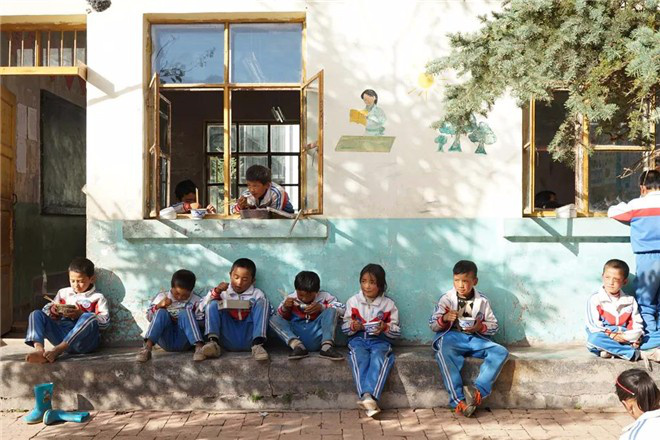
This new film about Tibetan children has recently landed in cinemas, and it is also the first feature film by the new director La Huajia. The producer is his master and director Pema Tseden.
Pema Tseden’s new film has just won two awards: the director and the screenwriter of the media attention unit of the film channel of the 23rd Shanghai International Film Festival.
One and Four, a younger Tibetan newcomer director, was also awarded special attention by the venture capital unit at the Shanghai International Film Festival.
Also, the documentary about Tibetan girls looking for their fathers directed by Kaxianga has been filmed and is waiting to be released.
The first feature film "The Singer" by Dajie Dingzeng, the executive director of "Wangza’s Rain Boots", and the directorial debut by DukarTserang, the recording engineer of "Tallow" are also under production.
Tibetan filmmakers have made collective efforts this year. How did this force, known as the "new wave of Tibetan films", come into being and what does it look like now? We can start with La Huajia and Wangza’s Rain Boots.
Lavaga’s "rain boots"
The voice of the weather forecast came from the TV, and the camera was aimed at a pair of worn-out sneakers that had just been soaked in water.

The opening of Wangza’s Rain Boots is reminiscent of Iran’s classic movies.Wangza is eager to have a pair of rain boots in rainy days like other students. The serious father doesn’t care, and he doesn’t agree when he sees the child’s "vanity".
Mother fulfilled his dream, but it was sunny one after another, so Wangza couldn’t "show off" his beautiful rain boots to his classmates. On the other hand, my father was worried that the coming rainstorm would affect the autumn harvest of wheat and asked the hail suppression division to "block the rain", but Wangzha secretly "obstructed" it.
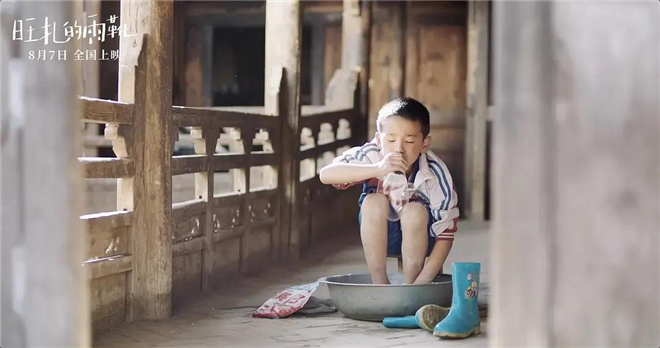
From longing for rain boots to longing for rain, Wangza’s "contradiction" with adults shows his innocence and simplicity.
The film does not have the theme of soul redemption often expressed in Tibetan themes, nor does it overemphasize the color of religious belief. It is more secular, and through the child’s perspective, it builds up our common memories in childhood, about summer, about the little wishes that we can’t get, and about those unforgettable moments of beauty and loss.

As director La Huajia said, the main purpose is to explore the dream and reality, the world of adults and children. "Many children with different cultural backgrounds are also very sympathetic. They want to have a puppy or an Apple mobile phone, but their parents just don’t buy it for them."Such a spotless, clean and pure film is especially valuable in the current film market, and it is hard for director La Huajia to shoot this work.
For the sake of his movie dream, he gave up his admission to the Physics Department of Qinghai University for Nationalities. At the suggestion of Pema Tseden, he went to Northwest University for Nationalities to study Tibetan literature, and then he was admitted to Beijing Film Academy to study directing.In the first year of school, he took a fancy to the short story of Cai Lang’s proprietor and silently made the initial intention of adapting the film. Later, I followed the group one after another and served as the executive director in Tallow, accumulating experience.
"Wangza’s Rain Boots" was started, and Pema Tseden provided a lot of help. Lahua Jia recalled: "I had some influence on the scheduling of live actors, the control of performances and the design of lens language. After all, I followed him for so many years."
The behind-the-scenes team of the film is basically Pema Tseden’s team, and photographer Lu Songye is one of them. Many lens schedules are improvisational designs, and Lu Songye helps the film to establish an objective and calm documentary image style.This film is also like La Huajia’s "rain boots", and in this way, he got involved in this new wave of Tibetan movies.
Fifteen Years of "New Wave of Tibet"
The birth of the "New Wave of Tibetan Films" originated from the director Pema Tseden.
In 2005, Pema Tseden released its first feature film. On the occasion of the centenary of China’s film’s birth, he won the best directorial debut of the 25th Golden Rooster Award for his film about secular and religious life in Tibet."There was a great response at that time, which influenced many young people to want to learn movies. In this process, I have come into contact with some young people with potential and will take the initiative to take them and give them a chance to practice. " Pema Tseden told us.
Referring to the new wave in the film history, such as the new wave of French films, a group of emerging filmmakers emerged and updated, which brought innovation to the film language and put forward relatively unified aesthetic ideas.The new wave of Tibetan movies is different, which is a summary of a collective creation phenomenon. After "Quiet Mani Stone", especially since 2010, Tibetan filmmakers have gradually developed and formed a climate in terms of quantity, content and main creation.
What is this climate like?Judging from the award results, Tallow, Killed a Sheep and Balloon directed by Pema Tseden were all shortlisted.Venice International Film Festival Horizon UnitAmong them, "Killed a Sheep" won the best screenplay award.
Tibetan director Sonthar Gyal’s film was shortlisted for the new generation unit of the 65th Berlin International Film Festival, and won the jury award and the best screenplay award of the 21st Shanghai International Film Festival. Ram and Gabe was also nominated for the Golden Shell Award of the 67th San Sebastian International Film Festival.
In 2018, La Huaga’s Rain Boots of Wangza was nominated for the Crystal Bear Award of the New Generation Unit of Berlin International Film Festival and the Firebird Award of the Rookie Film Competition of the 42nd Hong Kong International Film Festival.Excellent works on Tibetan themes have been affirmed at film festivals at home and abroad, and local images of Tibet have gradually entered the world film industry.
After he entered the Film Academy in Pema Tseden, he consciously wanted to form a film creation team mainly composed of Tibetans, so as to reserve strength for filming Tibetan films in the future. So, in the second year of school, he invited his friend Sonthar Gyal to take the North Film exam, and changed his major from fine arts to studying photography.
Sonthar Gyal has successively served as an artist and photographer of the Pema Tseden film "Quiet Mani Stone". In 2011, he directed his debut. Today, Sonthar Gyal, like Pema Tseden, has set up his own behind-the-scenes team composed of Tibetans.
And DukarTserang, the director of "He and Royaldale", was also advised by Pema Tseden to study film recording, and later he was responsible for the recording of many films in Pema Tseden.
Lahuajia said that this group of Tibetan filmmakers are private friends, familiar with each other, and often exchange creations or visit classes on the set. "If you need help, no matter who you are, we will go all out to help."
Three difficulties: theme+funds+behind-the-scenes talents
11 people, more than 2,000 miles of The Way … In 2017, the box office of movies telling pilgrimage stories exceeded 100 million, creatively breaking the box office record of Tibetan movies.
Fresh topics such as spiritual belief and soul washing have won attention. Directed by a non-Tibetan director, the film is also criticized by outsiders from the perspective of curiosity.The narrative perspective of Tibetan filmmakers is always "self", so their films naturally have no such problems.
With Tibetans as the cast, Tibetan as the mother tongue, and daily life in Tibet as the core of the story, the films of the new wave in Tibet are closer to the lifestyle and way of thinking of Tibetans themselves.
Sonthar Gyal’s four works are all devoted to the observation of family and marriage; Pema Tseden, on the other hand, has been making changes and trying. He pays attention to different propositions such as the spirit and material of Tibet, the conflict between modernity and tradition, and the moral dilemma between family and individual.
"There is a misunderstanding when people watch my movies, as if I only pay attention to realistic creation." Pema Tseden said that his movies have different changes in form and style according to different themes, from Quiet Mani Stone to Old Dog, from Tallow to Killed a Sheep.
Tallow is characterized by black-and-white images and fixed long shots, and Killed a Sheep has surreal dreams and magical colors. "It is difficult for my film to sum up or find a rule," Pema Tseden said.
Pema Tseden also has some thoughts about his creation and films about the new wave in Tibet.Compared with the complicated urban structure, the Tibetan area lacks layering and diversity in framing. "So we will spend a long time to determine the scene, transform the scene and see how to adapt to this story, otherwise it will be monotonous."
The films of the new wave in Tibet have gradually cultivated a number of Tibetan professional actors such as Kimba and Solangwam, but the behind-the-scenes links are still weak.Pema Tseden revealed: "At present, Tibetan young people learn movies with one voice, and they all want to learn directors. There are few professional studies, such as recording, photography, editing, art, etc. Movies are comprehensive creations, and this aspect is still lacking."
Due to the limitation of subject matter, culture, language and creation, the investment cost of Tibetan films is relatively low. Most of the films are active in Tibetan audiences and fans, and the box office and attention have not been high.At present, the highest box office work is "Killed a Sheep" in the early 10 million, while "Wangza’s Rain Boots" was released for three days, with a box office of only 200,000, and now it is close to zero.
With good quality, good reputation and lack of audience, where should the "new wave of Tibetan movies" go?
Where will the "balloon" of the new wave fly?
"There are different types, different themes and different styles of films without losing the original national characteristics." Lahuajia believes that if Tibetan films want to "break the game", they must rely on "diversification".
Pema Tseden also agreed that in order to find more audiences and enhance the public’s acceptance, it is necessary to expand the boundaries of Tibetan films: "There are many ways to explore more themes, explore types of films, match Tibetan with Mandarin and English, and match stars".
Pema Tseden’s latest film "Cordyceps sinensis" combines elements of crime types, and his new work, which is being prepared, will have a broader vision and structure. It is difficult to tell a person’s life in one day, and it will also involve changes throughout the year. It takes a year to shoot.
Lahuajia will continue to complete his "Children’s Trilogy". The second film (tentative name) has been filmed and is currently in the later stage. It is also produced by Pema Tseden and starred by "Wangza" Zhou Laduojie, while the third children’s film will not be adapted from Tibetan novels, but will be an original script.
Sonthar Gyal’s new work is not limited to Tibet. It is understood that he is preparing a film with a mainland theme, and it is possible to join a star actor. For commercial films and non-Tibetan themes, Pema Tseden and Lahuajia also expressed their desire to try, and there are no restrictions on creation.
"Is this still a new wave in Tibet?"For the future, Pema Tseden believes that "this concept will definitely change, including its composition and development, and there are various possibilities, which will become more and more abundant".
At the same time, he will continue to train young filmmakers of different jobs.Pema Tseden receives a lot of scripts every year, and he will do it himself for every new film that can be developed. "Some scripts need to be read more than ten times, twenty times, and the workload is very heavy, which consumes a lot of energy, but I also come here like this, hoping to help young people and try to do something for them."
Fifteen years ago, Quiet Mani Stone set off a new wave of Tibetan movies. The little Lama in the movie was eager to watch the TV series The Journey to the West. Fifteen years later, Wangza’s Rain Boots was released. In the movie, Wangza longed to put on a pair of small rain boots.
What is this wave’s longing for the future?From singleness to pluralism, from limitation to tolerance, and expanding new opportunities, there is any possibility in this wave. China films can’t, won’t and can’t ignore it.