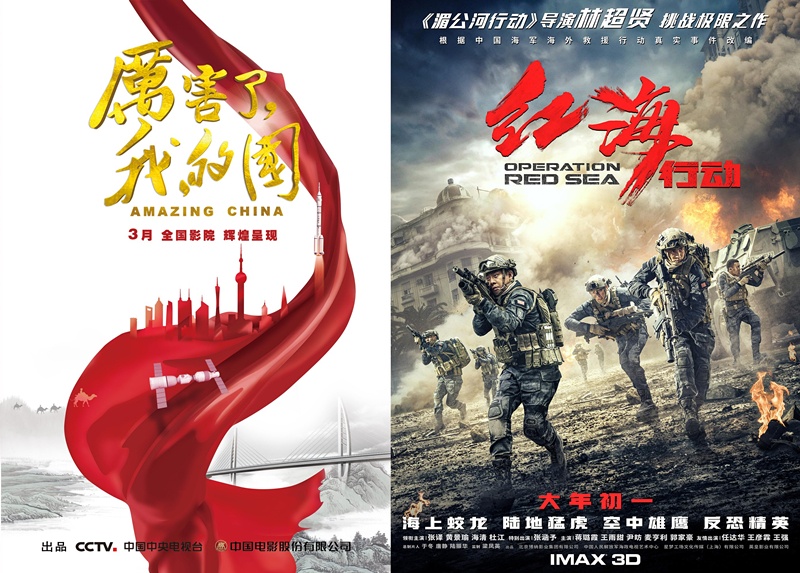
"Operation Red Sea" and "Amazing, My Country" have become high-frequency keywords of the two sessions
1905 movie network feature The Chairperson of the Supreme Leader once said that culture is the soul of a country and a nation. Without a high degree of cultural self-confidence and cultural prosperity, there will be no great rejuvenation of the Chinese nation. And film, as an art of inheriting classic culture in audio-visual language, has always occupied a position that cannot be ignored in cultural development.
In February, our country’s single-month box office record has broken through 10 billion, an increase of 64% year-on-year. In the continuous red market results, we have made a lot of box office contributions to the main theme movies. The reason why these main theme movies can be welcomed by the market shows that on the one hand, the production level of our country’s movies is steadily improving, and on the other hand, it shows that the aesthetic level of our country’s audiences is constantly improving.
At the upcoming first session of the 13th National Committee of the Chinese People’s Political Consultative Conference, members of the literary and art circles headed by Jackie Chan, Feng Xiaogang, Zhao Baogang, Huo Jianqi, Zhang Kaili, Zheng Xiaolong, Feng Yuanzheng, Gong Hanlin, and Chen Li also started from the film industry and expressed their views on hot topics such as "main theme movies", "literary film creation", "Hong Kong directors going north", and "supporting new directors". Everyone offered suggestions and strategies to jointly seek the development of China’s film industry.
Topic 1: The main theme movie is a hit
Opinion: Yin Li and Huo Jianqi "The main theme is not a narrow concept"
Gong Hanlin "Films need to promote national heroes"
Chen Li "Young people should make more main theme movies"
Since the opening of the Chinese People’s Political Consultative Conference, main theme films such as "Operation Red Sea" have become the subject of daily literary and art panel discussions. Committee members said that for a long time, main theme films have left people with the impression of "narrative stereotypes" and "like preaching". But these main theme films shot with the idea of commercial films have given everyone a sense of freshness.
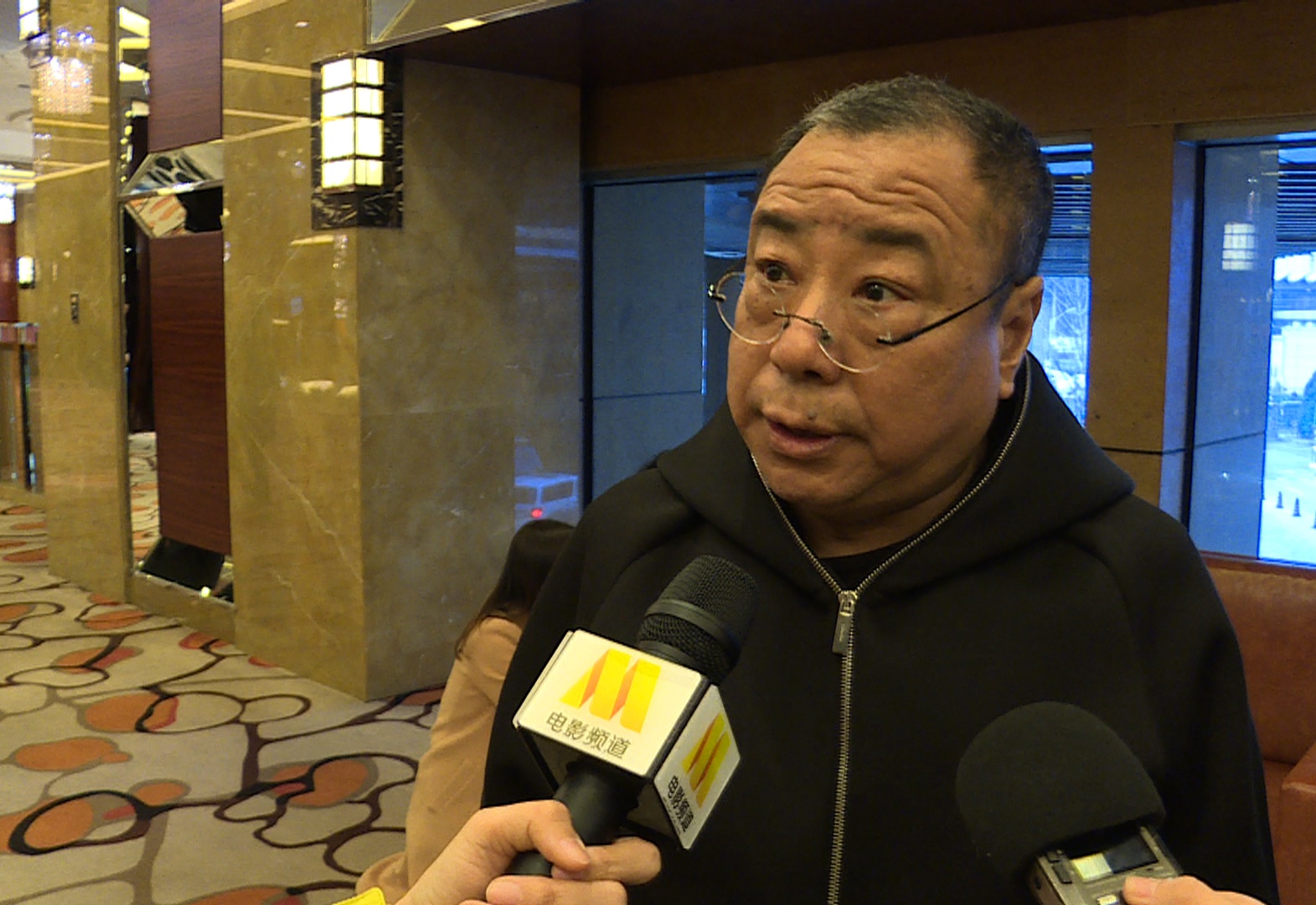
"I think it’s a very successful direction to be able to use commercialization to attract more young audiences in genre films that are popular, and at the same time to educate and entertain," said Mr. Yin, who has shot before. "The main theme is not a narrow concept," Mr. Huo added. "As long as the theme is positive, more exploration can be done in the way of storytelling."
Whether it is "Wolf Warrior 2" or "Operation Red Sea," these films depict brave and mighty national heroes. In this regard, Gong Hanlin believes that "the success of these films shows that our films need to promote the image of national heroes, and the audience also wants to see more national hero stories on the screen."
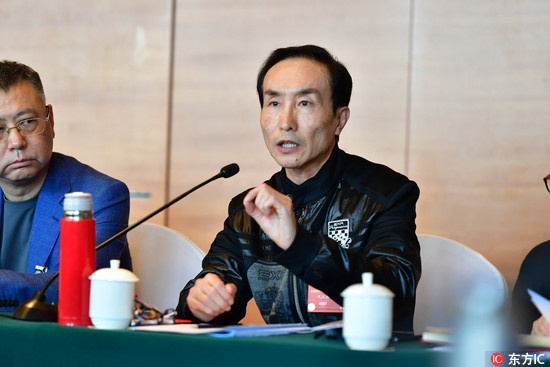
As a member of the committee, Chen Li, who is deeply involved in the theme of the main theme, also said frankly when talking about the future direction of Chinese films, "The popularity of’Wolf Warrior 2 ‘and’Operation Red Sea’ shows that the audience’s aesthetic taste has moved away from the’three vulgarities’. At the same time, political consciousness is also improving. I hope that more young directors will shoot excellent main theme films in the future, because they are in the same context as the current audience, and can arouse more young people’s patriotic feelings."
Topic 2: Chinese films going global
Opinion: Jackie Chan "tells China’s story well from an international perspective"
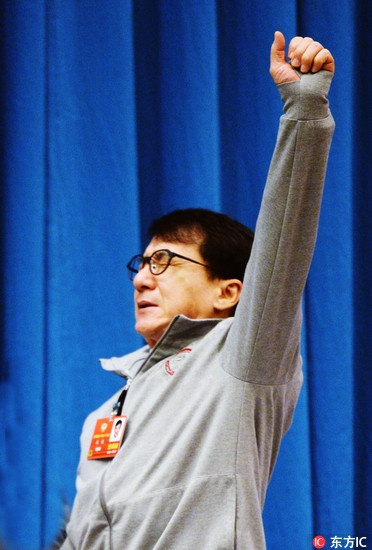
As Jackie Chan, who has been working hard in Hollywood since the 1990s, cultural going out is not an empty talk. He used his experience of breaking into Hollywood to make a successful demonstration of cultural going out.
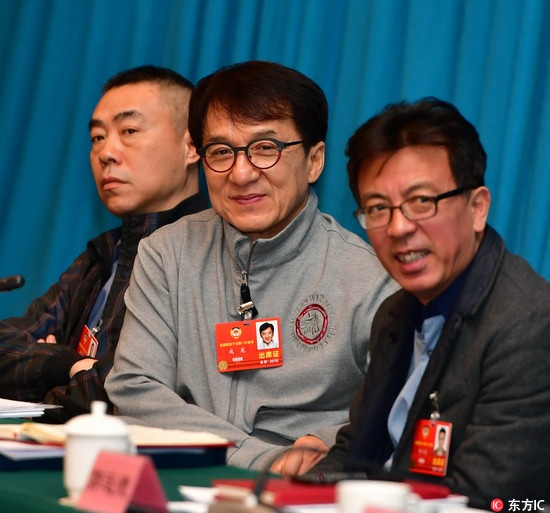
While filming in Hollywood, Jackie Chan also pays close attention to the overseas market performance of Chinese films, but as far as the current situation is concerned, the overseas audience of Chinese films is still dominated by Chinese.
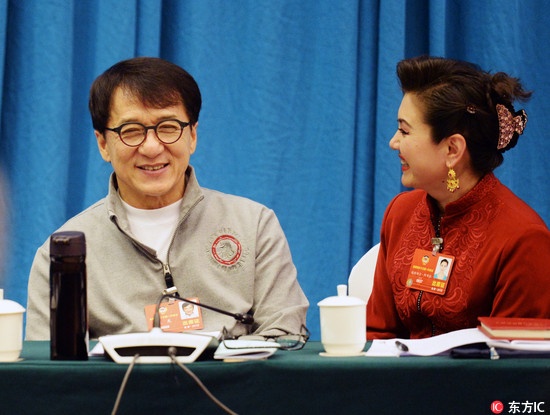
So how to expand the European and American audience? Jackie Chan pointed out that it will take some time for culture to go global. On the one hand, from the beginning of film preparation, it is necessary to tell Chinese stories well from an international perspective; on the other hand, it is also necessary to strengthen the promotion of Chinese culture overseas, so that more overseas audiences can understand Chinese films. For example, "Amazing, My Country" can be accompanied by English subtitles and screened overseas, so that foreigners can better understand China.
Topic 3: Hong Kong directors head north
Opinion: Li Guoxing "The market pulse is accurate and the sensitivity is high enough"
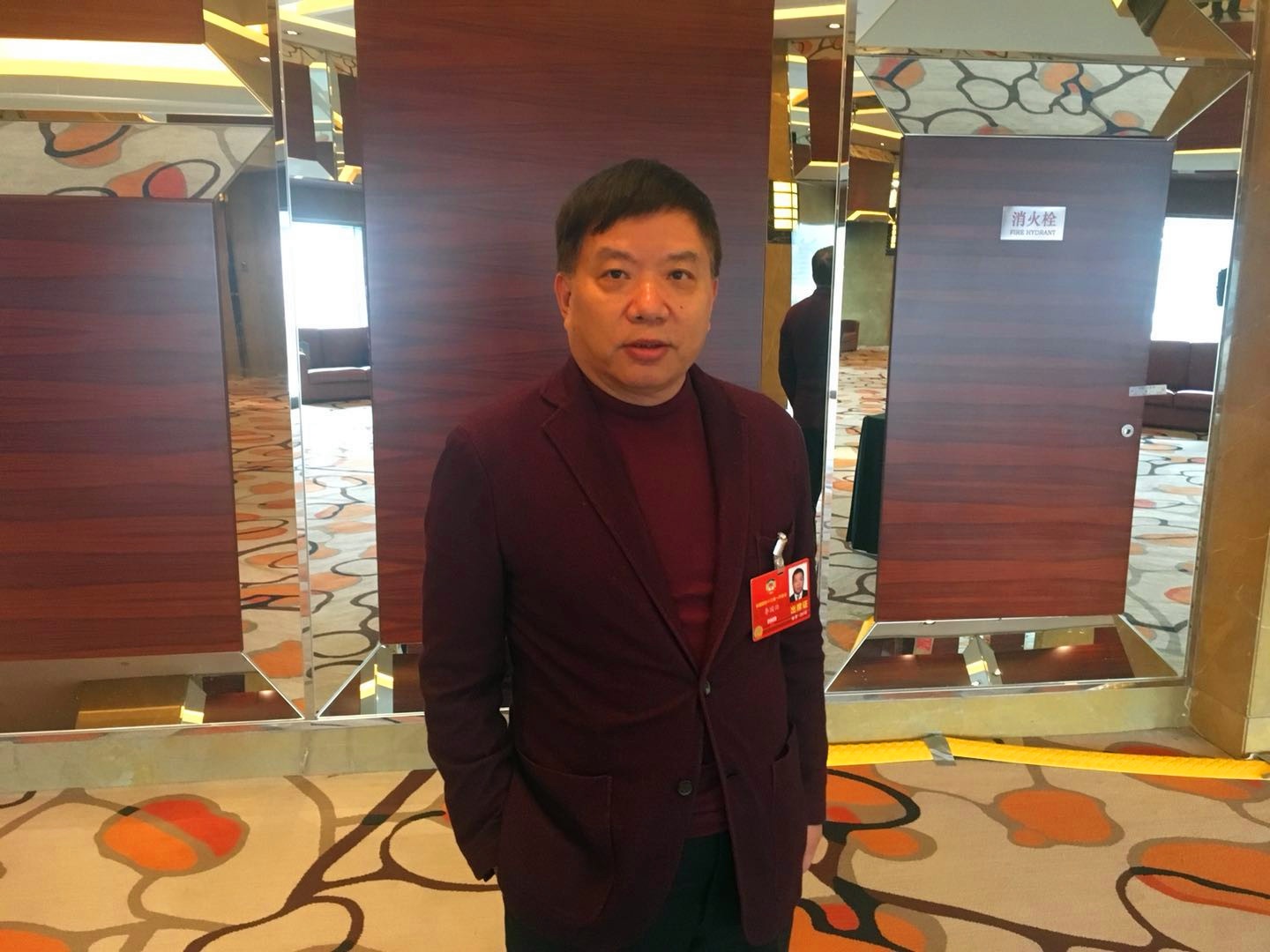
In recent years, Hong Kong directors have made a number of high-quality films, such as Tsui Hark’s and Lin Chaoxian’s "Operation Red Sea". They have brought audiences surprise experiences again and again with their keen market sense and the combination of Chinese and Western technology.
Li Guoxing, a member of the committee who has participated in the production of other masterpieces, took the initiative to bring up the changes in Chinese films in recent years. He said that Chinese films first started in the mainland, such as the early and other classic masterpieces were shot in Shanghai; after that, Chinese films flourished in Hong Kong for a period of time, giving birth to excellent filmmakers such as Stephen Chow and Tsui Hark; now, Hong Kong filmmakers have gone north to make films, which is equivalent to returning to the roots of Chinese films. "Therefore, there are no Hong Kong films or mainland films now, only Chinese films."
What does Mr. Li say about the Hong Kong directors heading north? He cites Lin Chaoxian, the director of the Spring Festival hit Operation Red Sea, as an example to explain the secret of their ability to make excellent co-productions. "First of all, his skills are all developed on the set; secondly, because the competition in Hong Kong films is too fierce, in turn, they must have good market sensitivity; thirdly, they have been exposed to Western filmmaking, especially Lin Qiuxian, Ye Weixin, and Mak Zhaohui. Their market pulse is more accurate, and their films are more down-to-earth."
Topic 4: The Dilemma of Young Filmmakers
Opinion: Feng Xiaogang "Don’t think too much about box office tasks"
Zhang Guangbei "must have artistic pursuit"
Chen Li "Young actors want both virtue and art"
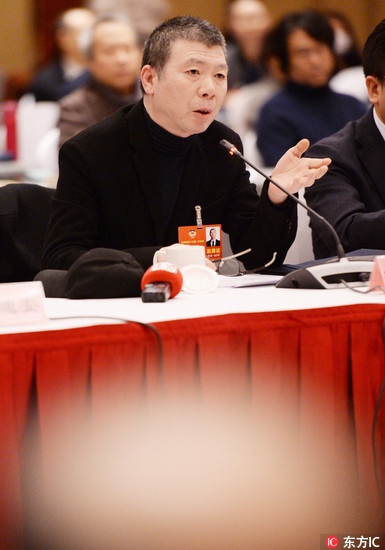
This year, Feng Xiaogang was re-elected as a member of the National Committee of the Chinese People’s Political Consultative Conference, and the proposal he brought was related to "the development of young filmmakers." He pointed out that the current problem of new directors in China is mainly reflected in two aspects. First, students who have been admitted to professional art schools do not only have knowledge of film theory, but they can become excellent directors. Second, completely putting new directors into the market to bear the box office task is actually a way to promote growth. They need the support and help of their predecessors to maintain their original intention on the road of directing.
So how to solve these problems? Feng Xiaogang hopes that the country can turn the training program for young directors into a major project in the film industry from top to bottom. By increasing the support of new directors, China can achieve a leap from a film power to a film power as soon as possible.
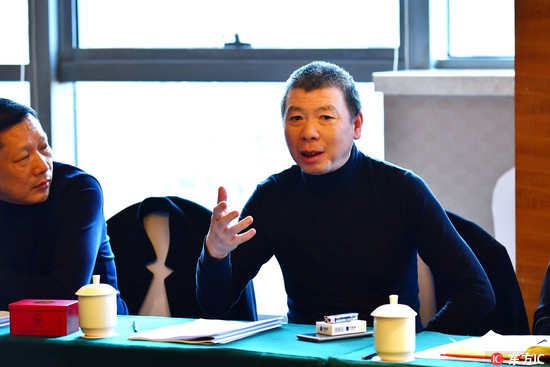
When it comes to the plight of young filmmakers, Zhang Guangbei said frankly that many young filmmakers do not have artistic pursuits, which also reflects the problem of art education. Too many colleges and universities now offer art majors, but the quality of teaching cannot be guaranteed. After these young film and television students leave the campus, they do not have a clear understanding of whether they are suitable for the film and television industry. After graduation, many actors still ask their families for money to rent houses and run the film crew. You ask him why he is doing this, but he doesn’t talk to you about artistic pursuits. He says something else. "Therefore, Zhang Guangbei believes that the current art education should follow the path of elite education and pay attention to quality.
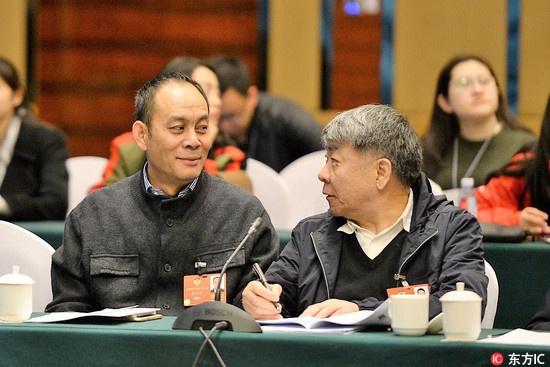
"The quality of an actor is very important, and I hope that young filmmakers will spend more time on the creation of their characters. I once encountered an actor who talked about the hype before joining the group, but after the filming started, it was another kind of virtue. Secondly, now it is a market economy, and many times, their capital has been kidnapped invisibly. For example, I want to invite some actors to star in my movie, but the other party said that they are talking about a TV series with more pay, so I became a spare tire, and I don’t consider your feelings at all."
Topic 5: The current state of the film music market
Opinion: Wang Liguang "needs the support of the post-film industry"
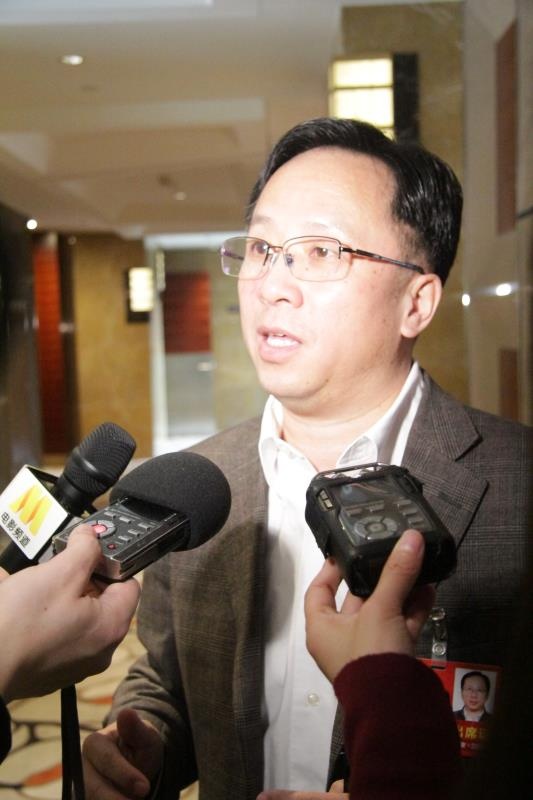
At the panel discussion of the Chinese People’s Political Consultative Conference, Wang Liguang, the president of the China Conservatory of Music, first spoke about the current state of film music in China. He has worked on the music part of three films directed by Feng Xiaogang (), which won the Golden Rooster Award for Best Music in Chinese Film.
Wang Liguang first affirmed the value of film music, "Every time a movie makes people feel emotional, it is the best moment of music in the movie; some movies may have no lines for the first 15 minutes, but it can be expressed through music, making people hold their breath and look forward to the next plot."
However, the domestic film music market is still in the development stage, and there is still a lot of room for improvement in the production and investment level. Wang Liguang said that when he participated in some international projects, he found that these films are very valued by investors because of the support of the perfect post-film industry, so they have a more comprehensive distribution channel, such as the release of film original sound discs. Sales of original sound discs like this are extraordinary all over the world, and the composer’s royalties for a song are also very objective, which may provide some new ideas for the development of domestic film music.
In recent years, many universities have opened film music majors, and many people are full of doubts about this. In this regard, Wang Liguang said that film music should not be cultivated as a major, because composers should have all-round ability in film music, folk music and world music. As for the style, it is the choice of the composer himself, not the choice of music courses.
Topic 6: Changes in the creative environment of literary films
Opinion: Huo Jianqi "Cultural films should also consider commercial appeals"
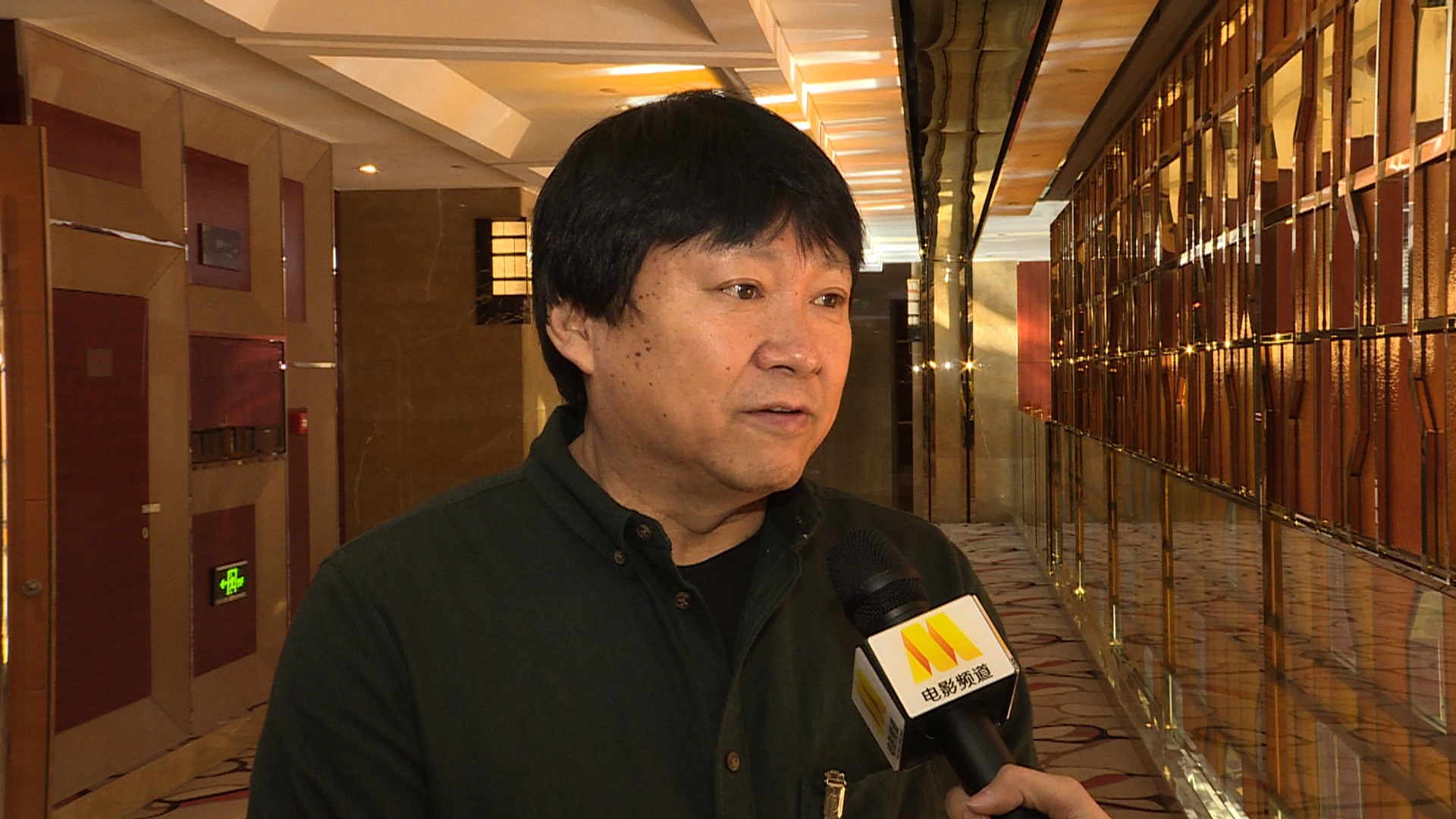
In this year’s list of members of the National Committee of the Chinese People’s Political Consultative Conference, Huo Jianqi, a new member who started making literary films, attracted the attention of Xiao Dianjun. As a film director who started making films in the late 1990s and won major awards for "The Man in the Mountain, That Dog",,, and, no matter how turbulent the market environment is, he has always adhered to his taste for the selection of literary and artistic topics, as well as the shooting habit of polishing a work in two or three years.
At the scene, he took the initiative to talk about the changes in the creative environment of literary films in recent years, "The environment is still quite different. When shooting the first few movies, as long as the story is well expressed, but now the environment has increased commercial requirements, including the theater chain’s appeal for commercial elements has also changed a lot."
But no matter how the environment changed, Huo Jianqi felt that a director’s shooting rhythm could not be easily changed. "From topic selection, preparation, shooting to release, it takes more than a year for a movie to be really meticulous.
Topic 7: Combining drama and film
Opinion: Tian Qinxin "Innovating the viewing experience"
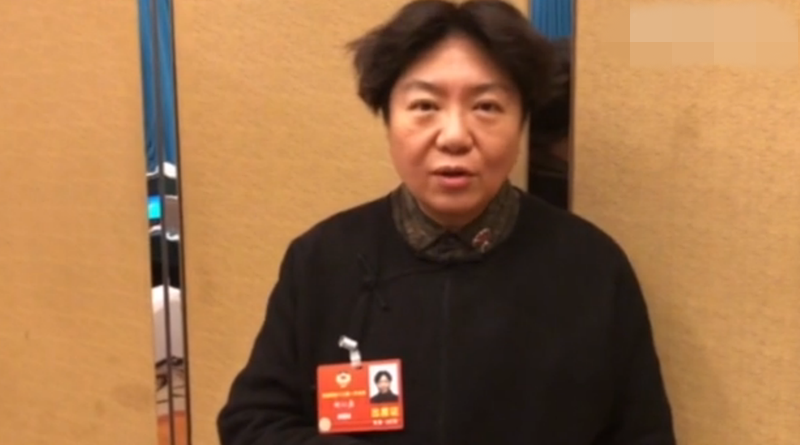
How many possibilities are there for combining drama and film? At the CPPCC panel discussion, National Theatre of China director Tian Qinxin used his work experience to illustrate the feasibility of this proposition.
"I have been using the way of thinking of film to structure the stage form and narrative structure of the drama. For example," The Field of Life and Death "combines cinematic structures such as interludes, flashbacks, parallel montages, etc." In his latest work, "Hurricane", Tian Qinxin also tried a semi-cinematic theatrical approach. "In the past, the audience watching the movie could not see the live performance, and the audience watching the live performance of the drama could not see the editing and shooting of the movie. This play combines them together."
"Hurricane" uses eight cameras to shoot and edit in time, and project in real time. Moreover, there are six screens on the stage, which can be played at the same time. This technological drama with a great sense of wonder has really revolutionized the audience’s viewing experience, making a breakthrough attempt to integrate film and drama.
Topic 8: The film industry chain needs to be improved
Opinion: Yin Li "Solve from the origin and end point"
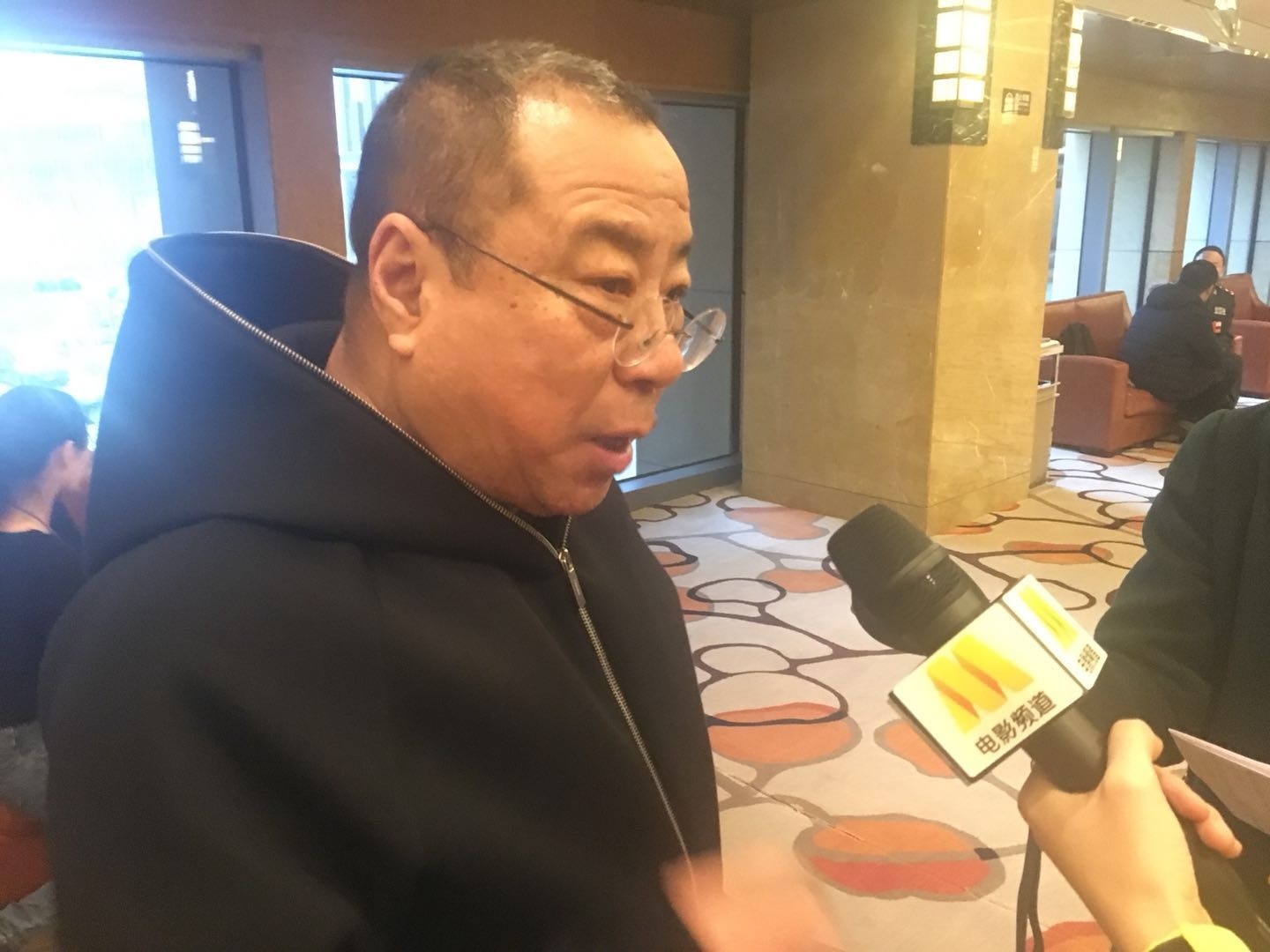
In recent years, China’s film market has achieved rapid development by leaps and bounds, growing from thousands of screens to 50,000, from more than one billion box office to more than 50 billion box office.
But in fact, Chinese film is also facing the situation of insufficient and unbalanced development. Yin Li, a director who has made excellent films such as "Cloud Water Ballad", "Zhang Side" and "Iron Man", said at the meeting that this situation is mainly reflected in two aspects: First, we still rely solely on box office revenue as the income of film production, which has not yet formed a complete industrial chain, such as copyright licensing, theme parks, derivative products, etc.; on the other hand, from the perspective of film screening hardware, we have 4K cinema, IMAX cinema, Dolby Atmos cinema and other hard hardware settings, which in turn has higher requirements for the film itself.
To solve this problem, we must start from both ends of the film, one is the origin and the other is the end point. Whether it is the creator or the theater chain, both sides must put forward strict requirements for the content of the film, constantly develop the theme, shoot films that are close to the people, rooted in life, pointed at the current shortcomings, and speak for the people.