What popular majors are required by the Ministry of Education to promote the construction of "new engineering"?

  CCTV News:A few days ago, the Ministry of Education requested to promote the construction of "new engineering" and identified 612 projects as the first batch of "new engineering" research and practice projects. The concept of "new engineering" quickly became popular in colleges and universities. What is "new engineering"? What are the popular majors?

  The Ministry of Education promotes the construction of "new engineering"

  A few days ago, the Ministry of Education issued the "Action Plan for Artificial Intelligence Innovation in Colleges and Universities", calling for promoting the construction of "new engineering". attach importance toArtificial intelligence and computer, control, mathematics, statistics, physics, biology, psychology, sociology, law.The cross-integration of professional education in other disciplines has formed a new mode of "artificial intelligence +X" compound professional training. By 2020, 100 "artificial intelligence +X" composite specialties will be built, and 50 artificial intelligence colleges, research institutes or interdisciplinary research centers will be established.

  What is "new engineering"?

  The General Office of the Ministry of Education recently issued the Notice on Announcing the First Batch of "New Engineering" Research and Practice Projects (hereinafter referred to as the Notice).612 projects were identified as the first batch of "new engineering" research and practice projects.

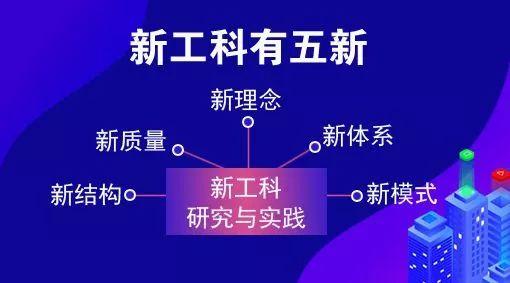
  According to the Circular, the construction of "new engineering" is a strategic action to actively respond to the new round of scientific and technological revolution and industrial transformation. The new economy characterized by new technologies, new industries, new formats and new models calls for "new engineering", the in-depth implementation of a series of major national strategies calls for "new engineering", the industrial transformation and upgrading and the transformation of old and new kinetic energy call for "new engineering", and the promotion of national hard power and international competitiveness calls for "new engineering".

  The notice pointed out that it is necessary to grasp the connotation of the construction of "new engineering" and make overall consideration."New engineering specialty and new requirements of engineering"Accelerate the training of engineering science and technology talents in emerging fields, transform and upgrade traditional engineering majors, and actively lay out the training of talents in future strategic areas. Innovating the organizational form of universities,Promote the combination of "science and engineering" and "industry and engineering" and the intersection of "industry and medicine", "workers and peasants" and "industry and literature".

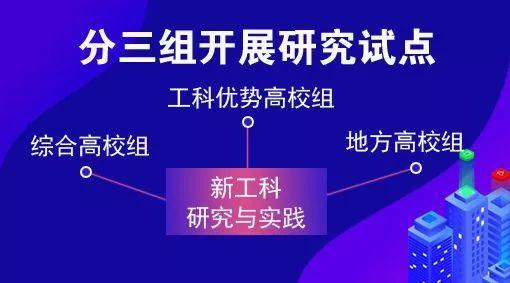
  Universities with engineering advantagesWe should play a main role in engineering science and technology innovation and industrial innovation;

  Comprehensive universitiesIt should play a leading role in promoting new technologies and nurturing new industries;

  Local colleges and universitiesIt should play a supporting role in regional economic development and industrial transformation and upgrading.

  Encourage subordinate universities to co-ordinate the use of special funds for education and teaching reform in central universities; encourage"Double first-class" constructionThe research and practice project of "new engineering" is brought into the overall plan of "double first-class" construction in colleges and universities.

  What majors are included in "New Engineering"?

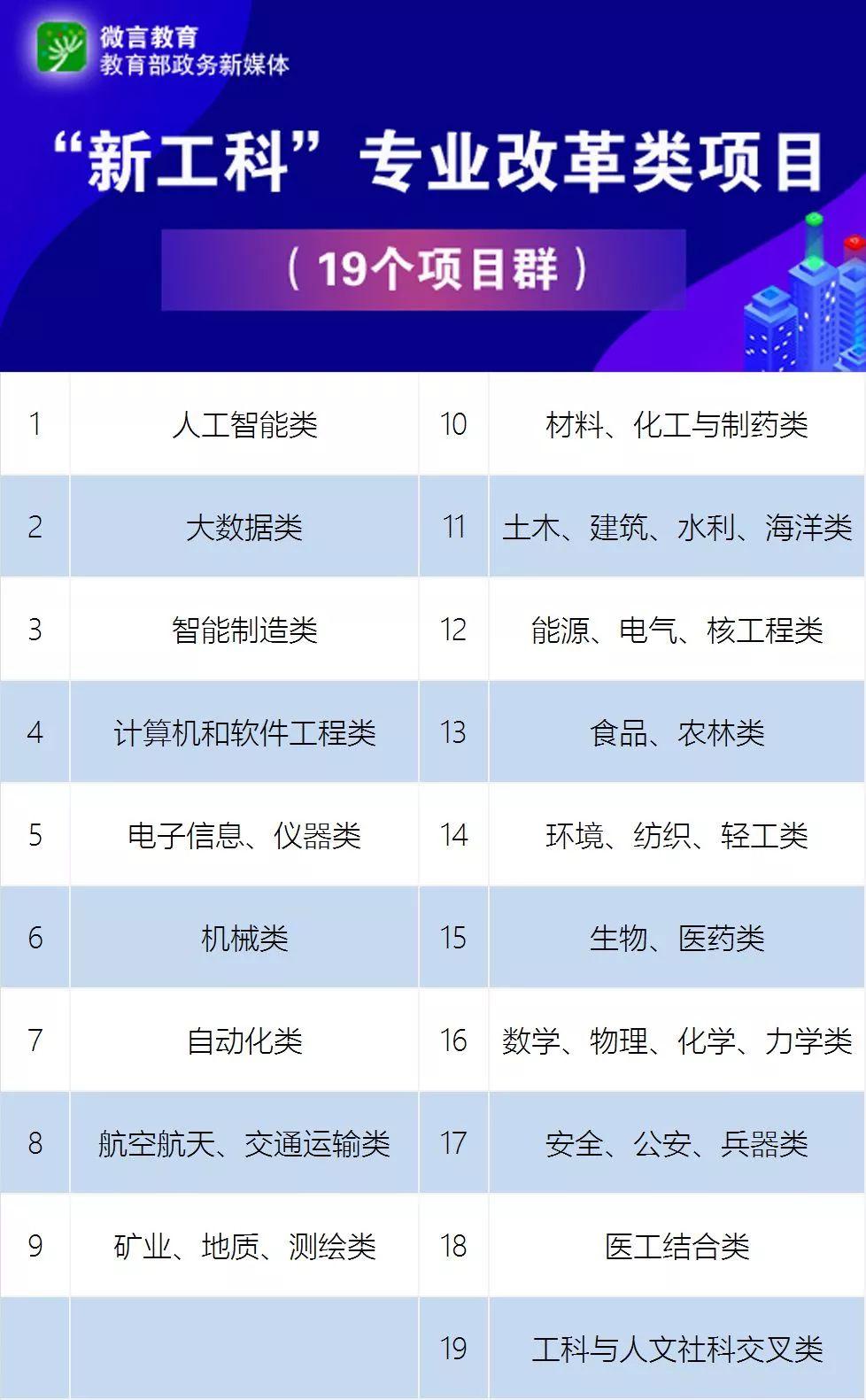
  The list of the first batch of "new engineering" research and practice projects announced recently includes202 "new engineering" comprehensive reform projects and 410 "new engineering" professional reform projects.Among them, the major reform category of "New Engineering" covers 19 project groups.

one

  A quick look at some "new engineering" majors:

  Data Science and Big Data Technology

  Data Science and Big Data Technology, a new major announced by the Ministry of Education in 2015, corresponds to big data in undergraduate major.Data science and big data technology are a new interdisciplinary subject with strong practicality, and three courses of mathematics, statistics and computer are required.On the basis of these background disciplines, colleges and universities cross-integrate other professional knowledge and skills.

  At present, there are three major employment directions for big data: big data system research and development, big data application development and big data analysis. Specific positions such as: big data analyst, big data engineer, etc.

  Robot engineering

  Intelligent robot is the product of many disciplines and technologies, such as new materials, new technology, new energy, global positioning and navigation, mobile Internet, cloud computing, big data, automation and so on.

  According to the development plan of the Ministry of Industry and Information Technology, by 2020, the installed capacity of industrial robots will reach 1 million units, which requires about 200,000 industrial robot application-related employees. This means that,In the future, it is necessary to train more than 30,000 industrial robot application talents every year on average.

  Internet of Things

  The major of Internet of Things Engineering offers two categories: basic courses and professional core courses. Because the Internet of Things is an interdisciplinary subject, involving communication technology, sensor technology, network technology, RFID technology, embedded system technology and many other knowledge, it is very difficult to learn these knowledge in depth at the undergraduate level, and some Internet of Things research institutes require a master’s degree in core technical work, so undergraduate graduates can start with the knowledge related to the Internet of Things, find the correct professional direction, lay a solid foundation, and enhance their practical and application capabilities.

  In addition, excellent foreign language ability is also a prerequisite, because the research and development and application of the Internet of Things are mainly concentrated in Europe and the United States, and students need to read foreign language materials and cope with international exchanges.

  Intelligent science and technology

  Intelligence science and technology’s undergraduate major is an interdisciplinary major that integrates many disciplines such as electricity, computer, sensing, communication, control and so on. It involves robot technology, micro-electro-mechanical system, intelligent system based on new generation network computing, and various intelligent technologies and systems closely related to national economy, industrial production and daily life.

There are 17 compositions with full marks and 700 compositions with zero marks in Guangdong College Entrance Examination.

  The director of Guangshang Admissions Office visited Dayang.com College Entrance Examination yesterday.


  Guangshang admission line: or 30 points lower than the first line.


  (Reporter Xu Jing correspondent Jiang Xiaowei) Yesterday afternoon, the interview with the director of college admissions held by Guangzhou Daily and Dayang.com continued. Yesterday, the guest interview was Yu Xiaozheng, the director of Guangdong Business School. Last year, for the first time, I knew how to fill in my volunteers, and Guangshang unexpectedly had the first volunteer cut off. In this regard, Yu Xiaozheng reminded candidates to fill in their volunteers rationally and not to waste their college entrance examination scores. The college entrance examination score is about 30 points lower than a line, and it is very easy to apply for business.


  Last year, for the first time in Guangdong, volunteers were filled in after graduation, and the conservatism of candidates made it rare for Guangshang to have a broken file last year. According to reports, after recording the second, third and fourth volunteers last year, they had to enter the re-recording stage to recruit enough plans. Although the high-grade candidates still accounted for the vast majority in the end, many candidates with good grades still lost the opportunity to study in Guangshang.


  Yu Xiaozheng said that this is because candidates dare not take risks when filling in their volunteers. How do candidates apply for the exam to be scientific? Yu Xiaozheng suggested that candidates should treat the exam rationally. According to past experience, candidates with a score of about 30 points below a line are more likely to apply for Guangshang.


  According to reports, the total enrollment plan of Guangshang this year is 6,000, which is more than 300 more than the actual enrollment last year. Among them, 5,552 students were enrolled in Guangdong Province, including 2,682 in liberal arts, 2,740 in science and 130 in art. There are 46 enrollment majors in this school this year. Judging from the admission situation in previous years, the majors of accounting, finance, business administration, international economy and trade in Guangshang are the most popular among students. Last year, the average admission scores of accounting, international economy and trade both exceeded one line.


  It is reported that Guangdong University of Commerce has four new majors in 2009, with 8 students from broadcasting and hosting, 32 from radio and television, 50 from sociology and 50 from applied psychology.


  Yu Xiaozheng reminded candidates that when they fill in the major of Guangshang, they should fill in the effective measures to increase their chances of being admitted. He said that students have the opportunity to get a second choice of major, double degree and minor major after entering the school, so there is no need to worry too much.


  Yu Xiaozheng believes that candidates must fill in their volunteers in a normal state. If all candidates can rationally choose schools according to their scores, they can normally divert candidates from each score without accidents such as file breaks. If everyone treats volunteers with a game mentality, it will be chaotic, which may cause schools at all levels to lose both sides. The purpose of filling in the volunteers after the exam is to let everyone apply for the exam rationally according to the scores and divert them.


  Yu Xiaozheng explained that the reference data such as the number of candidates in each score section published by the examination institute is to guide candidates to make comprehensive choices according to their own scores and factors such as interest and region, so everyone must cherish the opportunity.


  You can apply for studying abroad or change your major.


  Netizen asked: Can you introduce the "1+2+1" model of Guangshang in detail?


  Yu Xiaozheng: I studied in Guangdong Business School and applied. If the qualified students pass the examination, they will study in American schools for two years, that is to say, sophomores and juniors are in the United States, and then they will return to Guangdong Business School in the last year, that is to say, they will get two degrees, one from the United States and one from China.


  Netizen asked: Can I change my major after entering the school?


  Yu Xiaozheng: The school implements the second choice system for majors among undergraduates. The second choice of major means that qualified undergraduates have an opportunity to change majors in the second year, and they will transfer from the entrance major to another major and graduate according to the new major between the corresponding majors stipulated by the school.

Editor: Li Erqing

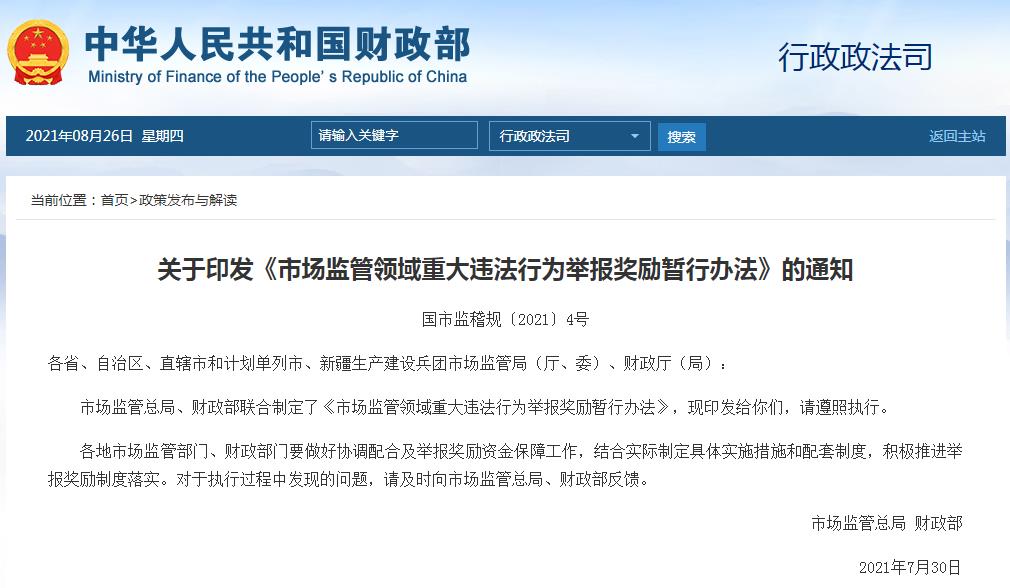
Report major violations in the field of market supervision, with a reward ceiling of 1 million!

  Cctv newsAccording to the website of the Ministry of Finance, the General Administration of Market Supervision and the Ministry of Finance jointly formulated the Interim Measures for Reporting Rewards for Major Violations in the Field of Market Supervision, requiring local market supervision departments and financial departments to do a good job in coordination and cooperation, guarantee the funds for reporting rewards, formulate specific implementation measures and supporting systems in light of the actual situation, and actively promote the implementation of the reporting reward system. For the problems found in the implementation process, please give timely feedback to the General Administration of Market Supervision and the Ministry of Finance.

  Interim Measures for Rewarding Reports of Major Violations in the Field of Market Supervision

  Chapter I General Principles

  Article 1 In order to encourage the public to actively report major illegal acts in the field of market supervision and promote social co-governance, these Measures are formulated in accordance with relevant laws and regulations in the field of market supervision and relevant state regulations.

  Article 2 The market supervision and management departments at all levels shall accept the major illegal acts reported by the public (hereinafter referred to as informants, which shall be natural persons) within their scope of duties, and give corresponding rewards after verification and closing the case. These Measures shall apply.

  The term "major illegal act" as mentioned in these Measures refers to an illegal act suspected of committing a crime or being ordered to stop production or business, ordered to close down, revoked (revoked) the license, and fined a large amount. Local laws and regulations or local government rules have specific provisions on major illegal acts, which can be followed. A large amount of fines and confiscations shall be determined by the market supervision and management department at or above the provincial level in consultation with the financial department of the government at the corresponding level.

  Article 3 If the following major illegal acts are reported and verified, the case will be closed, and corresponding rewards will be given:

  (a) major violations of laws and regulations related to the quality and safety of food, drugs, special equipment and industrial products;

  (2) Major illegal acts with regional and systemic risks;

  (3) Major illegal acts that have great social impact in the field of market supervision and seriously endanger people’s personal and property safety;

  (four) the illegal act of transferring a suspected crime to a judicial organ for criminal responsibility.

  If it is determined by the market supervision and management department according to law that it is necessary to give rewards for reporting, it shall be implemented in accordance with the provisions of these measures.

  Article 4 Informants can report major illegal acts in the field of market supervision to the market supervision departments at all levels through the Internet, telephone, fax, mailing address, window and other channels announced by the market supervision departments to receive complaints and reports.

  Article 5 Informants may report with their real names or anonymously. Real-name reporting shall provide true identity certificate and effective contact information. If an anonymous whistleblower has a claim for reporting reward, he shall promise that it does not fall into the circumstances specified in Article 10, provide information that can identify his reporting identity as an identity code, and make an agreement with the market supervision and management department on the reporting password, reporting processing results and notification methods of reward rights.

  If an anonymous whistleblower receives the notification of receiving the reward and decides to receive the reward, he shall take the initiative to provide information such as identity code and reporting password, so as to facilitate the market supervision and management department to verify his identity.

  Provincial market supervision and management departments can formulate special procedures for the issuance of anonymous tip-offs in light of actual conditions.

  Sixth market supervision and management departments at all levels shall establish and improve the reward management system. Do a good job in the calculation, verification and distribution of reward funds for reporting.

  Seventh reward funds in accordance with the relevant provisions of the state by the people’s governments at all levels into the budget management, and accept the supervision of the financial and auditing departments.

  Chapter II Reward Conditions

  Article 8 A reward for reporting shall meet the following conditions at the same time:

  (1) Having a clear target to be reported, specific illegal facts or clues to illegal crimes, and providing key evidence;

  (two) the contents of the report have not been mastered by the market supervision and management department in advance;

  (three) the contents of the report were investigated and closed by the market supervision and management department and were given administrative punishment, or transferred to judicial organs for criminal responsibility according to law.

  Article 9 The implementation of reward for reporting shall follow the following principles:

  (a) the same case is reported by two or more informants with the same clue, and the first informant is rewarded;

  (two) if two or more informants jointly report the same case, the reward will be distributed according to the same case;

  (three) informants report the same matter, do not repeat the reward; If the same case is reported by two or more informants respectively, the total reward amount shall not exceed the highest standard in the corresponding reward level stipulated in Article 12;

  (four) if the illegal facts finally determined are completely inconsistent with the reported matters, no reward will be given; If the illegal facts finally identified are partially consistent with the reported matters, only the reward amount of the consistent part will be calculated; In addition to reporting matters, other illegal facts are identified, and other illegal facts are not calculated;

  (5) If the cross-regional report accepted by the market supervision and management department at a higher level is finally investigated and handled by two or more market supervision and management departments respectively, the market supervision and management department responsible for the investigation and handling shall reward the verified part of the report within its administrative area respectively.

  Tenth any of the following circumstances, no reward:

  (a) the report of the staff of the market supervision and management department or the personnel with legal supervision and reporting obligations;

  (two) the report of the infringed party and its entrusted agent or interested party;

  (three) the implementation of illegal reporting (except internal informants);

  (4) There is any evidence to prove that the reporter has received any form of remuneration or reward from other market entities for reporting;

  (five) other awards that do not meet the provisions of laws and regulations.

  Chapter III Award Criteria

  Eleventh reward is divided into three levels:

  (a) a reward. The rating standard is to provide detailed illegal facts and direct evidence of the reported party, and the contents of the report are completely consistent with the illegal facts, and the reported items are verified to be particularly serious illegal acts or suspected crimes;

  (2) Two-level reward for reporting. The rating standard is to provide the illegal facts and direct evidence of the reported party, and the contents of the report are completely consistent with the illegal facts;

  (3) Three-level reward for reporting. The rating standard is to provide the basic illegal facts and relevant evidence of the reported party, and the contents of the report are basically consistent with the illegal facts.

  Article 12 For cases with fines and confiscations, the market supervision and management department shall calculate the reward amount according to the following standards, and comprehensively consider the value of the goods involved, the degree of social influence and other factors to determine the final reward amount:

  (a) belongs to the level of reward, reward by 5% of the fines. If the calculation is less than 5,000 yuan, a reward of 5,000 yuan will be given;

  (two) belong to the two reward, reward according to 3% of the fines. If the calculation is less than 3,000 yuan, a reward of 3,000 yuan will be given;

  (three) belong to the three reward, reward according to 1% of the fines. According to this calculation, if 1000 yuan is not enough, 1000 yuan will be awarded.

  In cases with no fines, the reward amount from the first-level reporting reward to the third-level reporting reward shall be not less than 5,000 yuan, 3,000 yuan and 1000 yuan respectively.

  If the insider of the illegal subject reports, the reward standard stipulated in the preceding paragraph shall be appropriately raised with the consent of the financial department of the government at the same level.

  Article 13 The maximum amount of reward for reporting each case is 1 million yuan, and the amount of reward determined according to Article 12 of these Measures shall not exceed this upper limit. If the amount of a single reward reaches more than 500,000 yuan (including 500,000 yuan), it shall be determined by the market supervision and management department that issues the reward funds for reporting in consultation with the financial department of the government at the same level.

  Article 14 Where the market supervision and management department has imposed administrative punishment or has not imposed administrative punishment and transferred it to judicial organs for criminal responsibility, it shall be rewarded according to the provisions of Article 12 of these Measures according to different circumstances.

  Chapter IV Reward Procedures

  Article 15 The market supervision and management department responsible for the investigation and handling of the report and making the final decision shall inform the informant within 15 working days after the report is closed or transferred for criminal responsibility. The reward for reporting is applied by the informant to start the reward procedure.

  Article 16 The reporting reward implementation department shall identify the reporting reward level and reward standard, determine the reward amount, and inform the whistleblower of the reward decision.

  Seventeenth payment of incentive funds, in accordance with the relevant provisions of the centralized treasury payment system.

  Eighteenth informants should be informed of the award decision within 30 working days from the date, by my valid identity certificate to receive the award. If it is entrusted to others, the trustee must hold the power of attorney of the informant and the valid identity certificates of the informant and the trustee.

  Under special circumstances, the time limit for receiving reward for reporting may be appropriately extended, and the maximum time shall not exceed 10 working days. Informants who fail to receive bonuses within the time limit without justifiable reasons shall be deemed to have voluntarily given up.

  Nineteenth informants have objections to the amount of reward, you can inform the reward decision within 10 working days from the date of filing an application for review to the market supervision and management department that implemented the reward report.

  Chapter V Supervision and Administration

  Twentieth market supervision and management departments should strengthen the management of the declaration and distribution of incentive funds, establish and improve the responsibility system for reporting rewards, and strictly enforce financial discipline. Set up report files and do a good job in summary statistics.

  Twenty-first market supervision and management departments shall protect the lawful rights and interests of informants in accordance with the law, strictly keep secrets for informants, and shall not disclose relevant information of informants.

  Twenty-second market supervision and management department staff in the implementation of the reward process, any of the following circumstances, depending on the seriousness of administrative sanctions; Suspected of committing a crime, criminal responsibility shall be investigated according to law:

  (a) forging or abetting, colluding with others to forge reporting materials, and taking the initiative to report reward funds;

  (2) disclosing the information of the informant;

  (3) Informing the reported person to help him escape investigation;

  (four) other acts that should bear legal responsibility according to law.

  Article 23 If an informer forges materials or conceals facts and obtains a reward for reporting, or if it is verified by the market supervision and management department that it does not meet the reward conditions, the market supervision and management department has the right to recover the reward bonus. Informants deliberately fabricate facts to falsely accuse others, or resort to deceit to defraud reward funds, and bear corresponding responsibilities according to law; Anyone suspected of committing a crime shall be investigated for criminal responsibility according to law.

  Chapter VI Supplementary Provisions

  Twenty-fourth the State Council drug supervision and management departments and provincial drug supervision and management departments to implement reward, the application of this approach.

  Article 25 The market supervision and administration departments of all provinces, autonomous regions, municipalities directly under the Central Government, cities with separate plans and Xinjiang Production and Construction Corps may, jointly with the financial department of the government at the corresponding level, formulate detailed rules for the implementation of their respective administrative regions in accordance with these Measures and report them to the State Administration of Market Supervision and the Ministry of Finance for the record.

  Article 26 These Measures shall be interpreted by the State Administration of Market Supervision in conjunction with the Ministry of Finance.

  Twenty-seventh these Measures shall come into force as of December 1, 2021. The Notice of the General Administration of Quality Supervision, Inspection and Quarantine of the State Administration for Industry and Commerce of the Ministry of Finance on Printing and Distributing the Measures for Rewarding Meritorious Persons for Reporting Illegal and Criminal Activities of Making and Selling Fake and Inferior Products (Caihang [2001] No.175) and the Notice of the Ministry of Finance of the Food and Drug Administration on Printing and Distributing the Measures for Reporting Incentives for Food and Drug Violations (Food and Drug Administration [2017] No.67) shall be abolished at the same time.

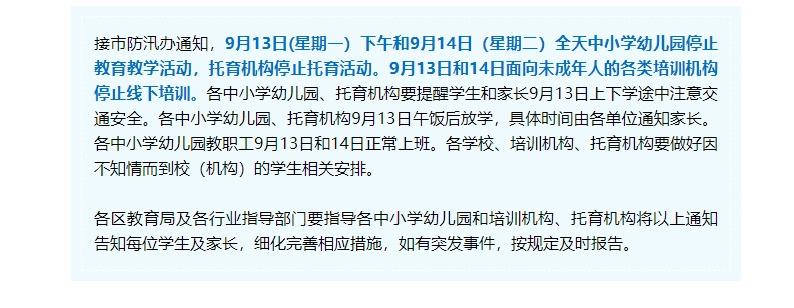
Authoritative release! Shanghai primary and secondary school kindergartens were closed all day on the afternoon of the 13th and 14th.

Cctv newsAccording to the "Shanghai Release" WeChat WeChat official account news, we received the notice from the Municipal Flood Control Office that the education and teaching activities in primary and secondary schools and kindergartens will be stopped all day on the afternoon of September 13th (Monday) and September 14th (Tuesday), and the nursery institutions will stop their nursery activities. On September 13th and 14th, all kinds of training institutions for minors stopped offline training. Kindergartens and nursery institutions in primary and secondary schools should remind students and parents to pay attention to traffic safety on their way to and from school on September 13th. Kindergartens and nursery institutions in primary and secondary schools will leave school after lunch on September 13th, and the specific time will be notified to parents by each unit. Teachers and staff of kindergartens in primary and secondary schools went to work normally on September 13th and 14th. All schools, training institutions and nursery institutions should make relevant arrangements for students who come to school (institution) without knowing it.

District Education Bureaus and industry guidance departments should guide kindergartens, training institutions and nursery institutions in primary and secondary schools to inform each student and parent of the above notice, refine and improve the corresponding measures, and report in time according to regulations if there is any emergency.

After the second Party Congress formally put forward the idea of United front, the third Party Congress did this important thing.

  This year marks the centenary of the Third National Congress of the Communist Party of China (CPC) and the centenary of the establishment of the United front policy of the Communist Party of China (CPC)’s national revolution.

  Great unity and reunification is the unswerving pursuit of the Chinese nation. The General Secretary of the Supreme Leader stressed that it is necessary to continuously consolidate and develop the great unity of the people of all ethnic groups in the country and the Chinese people at home and abroad, fully mobilize all positive factors, and unite the majestic forces of building a strong country and national rejuvenation. This is a great encouragement and important guidance for doing a good job in the United front work in the new era and new journey.

  This year marks the centenary of the Third National Congress of the Communist Party of China (CPC) and the formal establishment of the United front policy of the Communist Party of China (CPC)’s national revolution. Although this United front finally broke down due to subjective and objective reasons, and the vigorous Great Revolution also failed, the establishment of this policy fully demonstrated that the people of China are people with great unity spirit, the Chinese nation is a nation with great unity spirit, and the Communist Party of China (CPC) is the leading force and mainstay to carry forward the great unity spirit and promote the great rejuvenation of the Chinese nation.

  The Communist Party of China (CPC) first proposed the establishment of a revolutionary united front.

  Looking back on the history of the Party in the past century, among the various political forces in modern China, the Communist Party of China (CPC) was the first to call for the establishment of a national revolutionary united front and resistance to imperialist aggression.

  In November, 1921, Mao Zedong published the article "What he hoped for in the labor union" in Labor Weekly, and shouted "Workers all over the world unite!" The slogan. In May 1922, the Declaration of the First National Labor Conference put forward that "workers and oppressed people all over the world should unite and March towards the bourgeoisie and the oppressed class together!" This is the first time that the Party has led the working people of the whole country to put forward a congress with United front ideological documents. The first National Congress of the Socialist Youth League of China held in Guangzhou in the same month clearly stated: "The Socialist Youth League of China recognizes that the problem of liberating the proletariat and the oppressed nation is a world problem. To achieve the goal of socialism, it is necessary for the proletariat and the oppressed nation in the world to unite in revolution." This is the first party group organization to shout out the slogan of United front thought.

  Driven by the above-mentioned organizations and individuals, inspired by Lenin’s national revolutionary thought, in June 1922, the Central Executive Committee of the Communist Party of China (CPC) published "the Communist Party of China (CPC)’s Views on the Current Situation", which clearly stated for the first time in the name of the Central Executive Committee of the Communist Party of China (CPC) (actually, it was not formed at that time): "the Communist Party of China (CPC)’s method is to invite revolutionary Democrats such as the Kuomintang and revolutionary socialist groups to hold a joint meeting to jointly establish a democratic United front on the basis of the above principles. The central leadership began to consider "jointly establishing a democratic United front" with other political parties. This thought has experienced an expansion process from the central leadership to the whole party at the Second National Congress of the Communist Party of China. At the same time, the establishment of the United front is clearly directed at Sun Yat-sen’s Kuomintang, which can be called the bud of the United front thought.

  In July, 1922, the Second National Congress of the Communist Party of China was secretly held in Shanghai, and the idea of a United front was formally put forward. This is not only reflected in the Declaration issued by the Second National Congress of the Communist Party of China, but also reflected in the Resolution on "Democratic United Front". In the "Declaration", not only the idea of establishing a national revolutionary United front was put forward for the first time, but also the slogan of "Down with international imperialism" was clearly shouted. The declaration pointed out: the Communist Party of China (CPC) "wants workers and poor peasants to establish a democratic United front with the petty bourgeoisie" and called on "workers and poor peasants must unite with the petty bourgeoisie again under the banner of the Communist Party of China (CPC)". The Resolution on "Democratic United Front" not only clearly puts forward the idea of "Democratic United Front", but also puts forward the corresponding three-point plan. Once the resolution was passed by the General Assembly, it became the will of the whole party, thus realizing a major change in the strategic policy of the whole party.

  Regarding this important transformation of the Party’s Second Congress, Chen Duxiu, Chairman of the Second Central Executive Committee, pointed out in the report of the Party’s Third Congress: "In the past, our party’s policies were idealistic and unrealistic, and later we began to pay more attention to the current situation of China society and participate in realistic movements." "Since then, our party’s political views have changed greatly". In this regard, Cai Hesen, the second executive member of the Central Committee and Minister of Propaganda Department, also pointed out: "At the First Congress of the Communist Party of China (1921), our party did not decide on any policy … … This proves that it can only be said that it is a propaganda organ, not a political party, because there is no policy resolution on political issues. By the second congress, the party had a policy and began to make political propaganda. In the past, it was completely advocating, and now it is a political proposition. "

  It is worth noting that the above personal remarks and Party documents were published in Shanghai. In particular, the Second National Congress of the Communist Party of China was held in Shanghai, where declarations and resolutions were issued. Shanghai is undoubtedly the place where the Communist Party of China (CPC)’s United front thought was put forward.

  Solve difficult problems and take the lead in establishing the policy of inner-party cooperation between Kuomintang and Communist Party.

  Thought is the forerunner of action. From the idea of United front to the formulation of United front policy, that is, from theory to practice, it is bound to go through a difficult process of debate and even struggle. Undoubtedly, the policy of inner-party cooperation was the only practical policy at that time, which was not only an unprecedented severe test for the the Communist Party of China (CPC) people who practiced their initial intentions and undertook their mission, but also a phoenix-like rebirth opportunity for the Kuomintang people in China.

  The first heated debate took place at the West Lake Conference in Hangzhou in August 1922. According to the changes in the international and domestic situation, under the guidance of the Comintern, our party decided to establish a United front of cooperation between the Kuomintang and the Communist Party through intra-party cooperation. The establishment and recognition of this policy, the Communist Party of China (CPC) has experienced two stages of gradual acceptance from the central level to the whole party. After a heated debate in August 1922, the West Lake Conference finally accepted Chen Duxiu’s policy of conditionally joining the Kuomintang and implementing inner-party cooperation, thus realizing the transformation from the democratic United front to the inner-party cooperation between the Kuomintang and the Communist Party at the central level. After the meeting, Chen Duxiu and Li Dazhao took the lead in joining the Kuomintang.

  The second heated debate took place at the Third National Congress of the Communist Party of China. In June, 1923, the Third National Congress of the Communist Party of China passed the Resolution on the National Movement and the Kuomintang and the Declaration of the Third National Congress of the Communist Party of China (CPC) with a slight advantage, and officially decided that Communist party member would join the Kuomintang in his own name to realize the cooperation between the Kuomintang and the Communist Party, thus determining the policy of the United front of cooperation between the Kuomintang and the Communist Party. The determination of the policy of cooperation between the Kuomintang and the Communist Party is the three most important historical achievements of the Party.

  The third debate is a fierce debate within the Kuomintang. On the one hand, Sun Yat-sen ruled out the resistance and opposition of the old Rightists in the Kuomintang and reinterpreted the Three People’s Principles, so that the new Three People’s Principles were basically consistent with the Communist Party of China (CPC)’s democratic revolutionary program and became the political basis for cooperation. On the other hand, communist party people who joined the Kuomintang also fought against the Kuomintang Rightists, pushing Sun Yat-sen to reorganize the Kuomintang. In January 1924, the First National Congress of the Kuomintang was held in Guangzhou. After fierce struggle, the meeting finally established three major policies of "uniting Russia, uniting the Communist Party and helping the peasants and workers", and adopted the decision of Communist party member and youth league members to join the Kuomintang in their own names, thus marking the formal formation of the Kuomintang-Communist cooperation United front. Since then, the prelude of the national revolutionary United front has been opened, and the great practice of the century-old United front has also been officially opened.

  The United front shows the great unity spirit of the Chinese nation.

  Unity and struggle is the most prominent spiritual symbol of the people of the Communist Party of China (CPC) and China. The spirit of great unity formed is an important part of Chinese excellent traditional culture, a common treasure of Chinese people at home and abroad, and a powerful spiritual support for Chinese people at home and abroad to strive for self-improvement and unity from generation to generation. The United front policy has determined that all the achievements made by the party and the people in the past 100 years are the result of United struggle.

  First of all, the United front has carried forward the great unity spirit of the Chinese nation.. The United front led by the Communist Party of China (CPC) unites all revolutionary classes in China society as never before, gathering them into a historical torrent to promote national independence and people’s liberation, and carrying forward the great unity spirit of the Chinese nation. General Secretary of the Supreme Leader profoundly expounded and summarized the five outstanding characteristics of Chinese civilization at the forum on cultural inheritance and development, namely, continuity, innovation, unity, inclusiveness and peace, among which continuity, unity and inclusiveness embody the spirit of great unity.

  Secondly, the United front has become an important magic weapon for China’s revolution, construction and reform.. Over the past 100 years, the United front has not only become one of the three magic weapons for China’s revolution to win, but also an important magic weapon for China’s construction, reform and national rejuvenation. The history of the party’s hundred years of struggle tells us that unity is strength and struggle to create the future; Only a nation that can unite and struggle can have a future, and a political party that can unite and struggle can be invincible. History also tells us that unity formed around a clear goal of struggle is the strongest unity, and struggle based on close unity is the most powerful struggle. We have created glorious history by United struggle, and we must also open up a bright future by United struggle.

  Thirdly, the spirit of great unity will surely gather the majestic power of the great rejuvenation of the Chinese nation.. In the new era, the Communist Party of China (CPC) will further consolidate and expand the patriotic United front in order to achieve the goal of the second century and achieve the great cause of rejuvenation in the past century. In November, 2021, the Central Committee of the Communist Party of China’s Resolution on the Great Achievements and Historical Experience of the Party’s Hundred Years’ Struggle declared to the world: "As long as we continue to consolidate and develop the great unity of all ethnic groups, the people of the whole country and all Chinese people, and build a strong sense of the Chinese nation community, and form a vivid situation in which all Chinese people at home and abroad are thinking in one place and working hard in one place, we will certainly be able to gather the majestic power to realize the great rejuvenation of the Chinese nation." This fully shows the greatest confidence of the Communist Party of China (CPC)’s high historical self-confidence in the new era.

  (The author is a professor at Shanghai Lixin University of Accounting and Finance and a distinguished researcher at Socialism with Chinese characteristics Thought Research Center, the supreme leader of Shanghai.)

  (This article only represents the author’s personal views)

Team Lu Baoliang of Shanghai Jiaotong University published the latest research results at the machine learning summit ICLR 2024.

Recently, The 12th International Conference on Learning Presentations (ICLR 2024), one of the top conferences in the field of international machine learning, announced the paper recruitment list. Professor Lu Baoliang from the Department of Computer Science and Engineering of School of Electronic Information and Electrical Engineering, Shanghai Jiaotong University, together with Shanghai Zero Unique Technology Co., Ltd., has been selected as the ICLR 2024 Spotlight paper "Large Brain Model for Learning Generic Representations with Tremendorus EEG Data in BCI". There are 7,262 papers submitted worldwide, with an overall acceptance rate of about 31%, of which 5% were selected as Spotlight papers.

Research background

At present, deep learning models based on electroencephalogram (EEG) signals are usually designed for specific data sets or brain-computer interface (BCI) application tasks, which limits the scale of the model and fails to give full play to the representation ability of EEG signals. Recently, Large Language Model (LLM) has made epoch-making progress in text processing. Under this background, Professor Lu Baoliang’s team started to study large-scale EEG model (LEM). Although they are in different fields, they have something in common in the task of data decoding. Researchers use the successful concept of text processing for reference to explore new methods for analyzing EEG signals and building brain-computer interface models, and expand the scientific research vision and application prospects in this field.

However, compared with text data, EEG data sets are usually very small in scale and different in format. The development of large-scale EEG models faces the following challenges:

1) Lack of sufficient EEG data

Compared with natural language and image data, it is extremely difficult to collect large-scale EEG data. In addition, the annotation of EEG data usually requires a lot of energy from domain experts, resulting in only a small number of labeled data sets can be used for specific tasks in BCI, and the EEG signals of these tasks are usually collected from a few subjects, and the duration is usually less than tens of hours. Therefore, there is not a large enough EEG data set to support the training of LEM.

2) Diversified configuration of 2)EEG signal acquisition.

Although there is an international 10-20 system to ensure the standardization of EEG signal acquisition, users can still choose to use EEG caps with different electrode numbers or patch electrodes to collect EEG data according to actual application needs. Therefore, how to process EEG data in different formats to match the input unit of neural Transformer is still a problem to be explored.

3) Lack of effective learning paradigm of EEG representation.

The low signal-to-noise ratio (SNR) of EEG data and different types of noise are very difficult problems. In addition, balancing temporal and spatial features is very important for effective EEG representation learning. Although there are various EEG representation learning paradigms based on deep learning (such as CNN, RNN and GNN) that can be used to process the original EEG data, many researchers still tend to design artificial EEG features because of the above problems.

research results

The goal of this paper is to design a general large-scale EEG model called LaBraM. The model can effectively process various EEG data with different channels and lengths. Through unsupervised training of a large number of EEG data, the research team envisages that the model will have universal EEG representation ability, so that it can quickly adapt to various downstream tasks of EEG. In order to train LaBraM, researchers collected more than 2,500 hours of EEG data of various tasks and formats from 20 public EEG data sets.

Firstly, the original EEG signal is divided into EEG signal channel segments to solve the problem of different electrodes and time lengths. Neural markers with rich semantics are trained by vector quantization neural spectrum prediction to generate neural vocabulary. Specifically, the marker is trained by predicting the Fourier spectrum of the original signal. During the pre-training, some EEG segments will be masked, and the goal of neural Transformer is to predict the masked marks from the visible segments. The research team pre-trained three models with different parameter sizes, 5.8 million, 46 million and 369 million, which is by far the largest model in BCI field. Subsequently, the research team fine-tuned them on four different types of downstream tasks, including classification and regression.

640.png

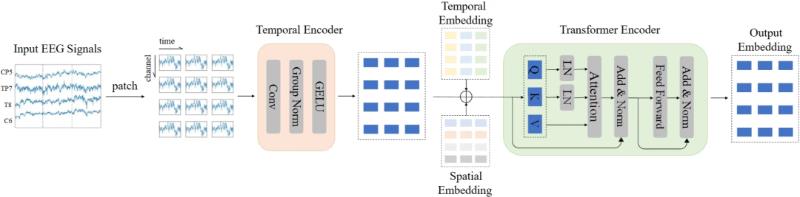
Fig. 1 overall architecture of lab ram. First, all the input EEG signals will be divided into EEG signal segments through a fixed-length time window, and then the time characteristics will be extracted by applying a time encoder to each segment. Then, temporal and spatial embedding is added to segment features to carry temporal and spatial information. Finally, the embedded sequence is transmitted to the Transformer encoder in fragment order to obtain the final output.

In this paper, neural Transformer is introduced, which is a general architecture for decoding EEG signals, and can process any input EEG signals with any number of channels and length of time, as shown in Figure 1. The key operation to achieve this goal is to divide EEG signals into blocks, which is inspired by fragment embedding in images. Because of the high resolution of EEG in time domain, it is very important to extract time features before segment interaction through self-attention. A time domain encoder composed of multiple time domain convolution blocks is used to encode each EEG segment into segments for embedding. Temporal convolution block consists of one-dimensional convolution layer, group normalization layer and GELU activation function. In order to make the model aware of the temporal and spatial information of fragment embedding, the researchers initialized a temporal embedding list and a spatial embedding list. For any fragment, the corresponding temporal embedding and spatial embedding are added to the fragment embedding. Finally, the embedded sequence will be directly input into the Transformer encoder.

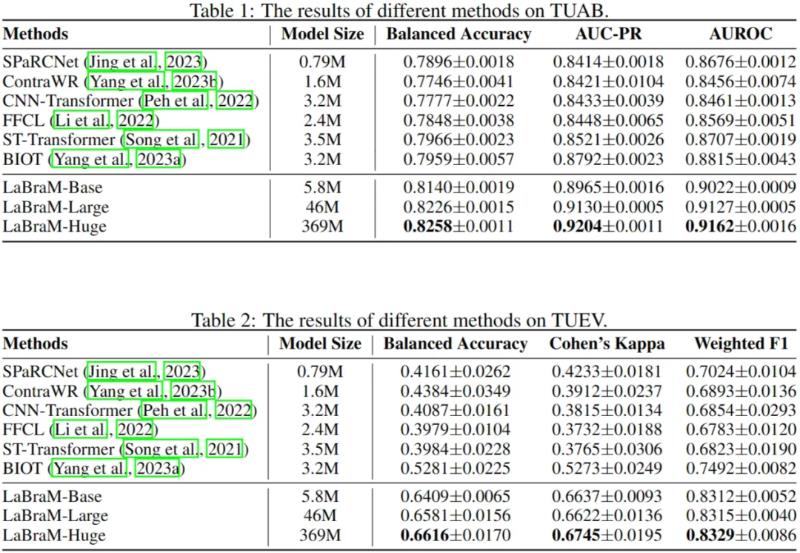
This paper verifies the effectiveness of LaBraM on two downstream task datasets: TUAB and TUEV. We designed three different configurations of LaBraM: LaBraM-Base, LaBraM-Large and LaBraM-Huge. The parameters of LaBraM-Base are 5.8M, LaBraM-Large is 46M and LaBraM-Huge is 369M.

640 (1).png

Tables 1 and 2 above list the best baseline results of TUAB and TUEV and the results of LaBraM. Obviously, LaBraM-Base model is superior to all baseline models in various evaluation indexes of these two tasks. Especially in the more challenging TUEV multi-class classification task, the model has achieved significant performance improvement. It is observed that with the increase of model parameters, LaBraM-Huge model performs best, followed by LaBraM-Large model, and finally LaBraM-Base model. The research team believes that this good performance is attributed to the increase of pre-training data and model parameters. The paper concludes that as long as there is enough EEG data, large-scale EEG models can learn more general EEG representations, thus improving the performance of EEG signals in various downstream tasks.

640 (3).png

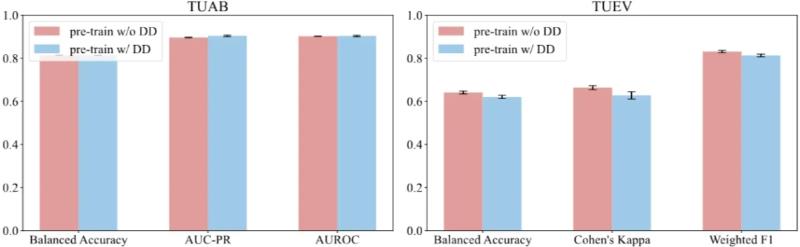
Figure 2 compares the performance of the model on TUAB and TUEV data sets, and whether it is included in the pre-training process.

In the pre-training process, the research team hopes that the model can learn the general EEG representation that is not specific to any specific task. Although tag data is not used in the pre-training, in order to eliminate the influence of pre-training data on downstream tasks, this paper compares whether the downstream task data set is included in the pre-training results. It is worth noting that the records of TUAB and TUEV do not intersect with the records of pre-training data sets. As shown in Figure 2, whether the downstream task data set is included in the pre-training process of the model has little influence on the performance of the model on downstream tasks. This shows that the model has the ability to learn general EEG representation, and provides guidance for collecting more EEG data in the future, that is, researchers do not need to spend a lot of energy labeling EEG data in the pre-training process.

Author information

Jiang Weibang, a Ph.D. student in the Department of Computer Science and Engineering, School of Electronic Information and Electrical Engineering, Shanghai Jiaotong University, is the first author of this paper, and Dr. Zhao Liming from Shanghai Zero Unique Technology Co., Ltd. and Professor Lu Baoliang from the Department of Computer Science, Shanghai Jiaotong University are co-authors of this paper.

02.jpg

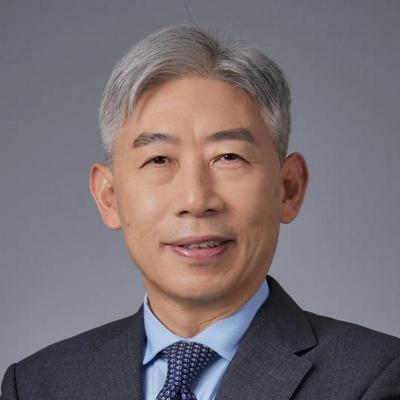
Lv Baoliang, Professor of Computer Science and Engineering Department of Shanghai Jiaotong University, Professor Guangci of Ruijin Hospital affiliated to Shanghai Jiaotong University School of Medicine, doctoral supervisor, IEEE Fellow. He is currently the director of Shanghai Key Laboratory of Intelligent Interaction and Cognitive Engineering of Shanghai Jiaotong University, the executive dean of Qingyuan Research Institute of Shanghai Jiaotong University, the co-director of Brain-Computer Interface and Neural Regulation Center of Ruijin Hospital affiliated to Shanghai Jiaotong University School of Medicine, the director of the joint laboratory of encephalopathy center-Mihayou of Ruijin Hospital affiliated to Shanghai Jiaotong University School of Medicine, and the founder and chief scientist of Shanghai Zero Unique Technology Co., Ltd. He is the editorial board member of IEEE Transactions on Affective Computing, Journal of Neural Engineering, IEEE Transactions on Cognitive and Developmental Systems, Pattern Recognition and Artificial Intelligence and Journal of intelligence science and technology.Won the 2022 Asia-Pacific Neural Network Society Outstanding Achievement Award, ACMM 2022 Top Paper Award, and 2021 IEEE Transactions on Affective Computing Best Paper Award. The first prize of Wu Wenjun Artificial Intelligence Natural Science in 2020 and the Best Paper Award of IEEE Transactions on Autonomous Mental Development in 2018 were selected into Elsevier’s list of highly cited scholars in China in 2020, 2021 and 2022. The main research fields include the theory and model of bionic computing, deep learning, emotional intelligence, emotional brain-computer interface and its application in the diagnosis and treatment of emotional disorders.

Paper linkhttps://openreview.net/forum? id=QzTpTRVtrP

Huawei Mate60 15 cool experiences? No wonder pollen never leaves.

Since the official release of HarmonyOS in 2019, up to now, HarmonyOS has ushered in the fourth iterative version, and HarmonyOS 4 has become another trump card besides self-developed chips.

I have to say that HarmonyOS is very ambitious. Since its birth, it has set its sights on various smart devices, but for most users, it is obvious that everyone should pay more attention to the intelligent experience. Today, HarmonyOS 4 has been fully adapted to the series, and all kinds of easy-to-use and fun functions are emerging one after another. In this issue, we will take stock of 15 cool functions on Huawei Mate60 Pro, and take a look at the blessings of HarmonyOS 4. What are the advantages?

1、Satellite call

The series brings Beidou satellite communication capability. When users are in an environment without ground network, they can still send short messages and location tracks to the outside world through their mobile phones. This function greatly facilitates adventure lovers and outdoor workers and brings them a life guarantee. It can be said that it may not be used at ordinary times, but it can save a life if it is used, which is very meaningful.

Huawei Mate 60 Pro goes further on this basis and brings the function of satellite call.In the absence of terrestrial network signals, users can also make and receive satellite calls calmly. In other words, Huawei Mate60 Pro is not only a smart phone, but also a satellite terminal device, which can be said to be a new breakthrough and a milestone in the whole mobile phone industry.

2, AI remote control

Gestures from a distance are the traditional strengths of Huawei mobile phones. Unfortunately, many smart phones still have no support until today. Gestures from a distance make many tedious operations easier, especially when your hands are inconvenient to brush the screen, you can use gestures to control the screen from a distance, such as when you brush a short video.Simply wave your hand and you can play the video in a sliding way. In addition, you can also take screenshots from a distance.Open your palm, and when the palm icon appears on the screen, you can take a screenshot with your palm clenched, which is fun and convenient.

3. The physical aperture is adjustable in 10 gears.

In addition to Beidou satellite communication, Huawei Mate50 series has also brought a major upgrade, which is the ten-speed variable aperture. Mobile phones are limited by the internal space inside the machine, so it is difficult to achieve a real variable aperture like a camera. However, Huawei mobile phones have made a breakthrough and brought a physical ten-speed variable aperture. At present, this function has been carried by many new Huawei machines and has become a part of Huawei XMAGE images.

Thanks to the blessing of this function, in the automatic mode, Huawei Mate60 series can be based onDifferent scenes intelligently match the aperture size. And inIn the professional mode, the range of depth of field and the degree of blur can be adjusted at will through the ten-speed adjustable physical aperture, thus achieving greater creative space.

4. Super macro

Macro photography is a function that people often use. With the macro photography function on the mobile phone, users can easily photograph the microscopic world that is usually imperceptible. On Huawei Mate60 Pro,Users only need to open the camera application and select the "Super Macro" mode to start shooting. Different from other mobile phones, when using the super macro of Huawei Mate60 Pro, users can also adjust the focal length, making it easier to compose pictures. In addition, during the shooting process, they can also use the "macro picture in picture" function to check the details of things in order to find the right shooting angle and position.

5. Intelligent payment

Like AI gesture from a distance, smart payment is also a smart perception function, and smart payment can be used for users.Shopping and payment provide a convenient and fast operation experience. For example, when the user goes to the checkout counter, he only needs to put Huawei Mate60 Pro.Stop on the desktop, without calling out the payment code, the salesperson can directly scan the code to complete the payment. It should be noted that the camera does not store any data, nor does it involve cloud transmission, and it relies entirely on the local neural network of the mobile phone, so it has high security.

6. Low battery emergency mode

Huawei Mate60 Pro also supports low battery emergency mode. When the mobile phone is at 1% low battery,The system will automatically activate the emergency mode,You can still stand by for 3 hours, talk for 12 minutes orScan the code four times. To put it simply, when the battery is about to run out, Huawei Mate60 Pro will still conduct electronic payment and emergency calls normally to save your "endurance anxiety".

7. Multi-seat

Huawei Mate60 Pro not only has powerful image configuration, but also benefits from HarmonyOS system, and Huawei Mate60 Pro also brings multiple camera mode. Through multi-device interconnection, Huawei Mate60 Pro can call the cameras of mobile phones, tablets and other devices equipped with HarmonyOS system to shoot, and at the same time, users can also shoot.Switch planes at any time, and shift the angle of view to take a close-up, mid-shot, panoramic and other multi-angle pictures at one time. To put it simply, Huawei Mate60 Pro is a pilot station at this time, which can control other devices to record different perspectives.

8, mask face recognition

Huawei Mate60 ProIt adopts a three-hole curved screen and is equipped with a front 3D camera, which has high accuracy in face recognition, even when wearing a mask.Unlock the screen and pay for the face, so as to meet the face recognition needs of users in various complex environments.

9. Universal Card

At present, users’ demand for information and services is becoming increasingly diversified, real-time and fragmented. Universal cards can help users get and use services more lightweight and efficient. With the blessing of HarmonyOS,Cards of the same size can be stacked together, which is convenient for desktop sorting and storage. In addition, the card can be operated by sliding up and down and long pressing and sliding left. The card holder function can classify cards of different sizes and shortcuts of applications at will, and freely assemble and classify them according to their own preferences, which makes the desktop more orderly and effectively improves the operation efficiency.

10. Transfer station

A super transfer station is very similar to a clipboard on a computer. Users can drag pictures, files, words, audio and video, web pages and chat interfaces to the "transfer station" for storage, and then send the contents of these transfer stations to the location you want to send.

11、Calendar countdown

Still regretting missing Valentine’s Day and children’s birthdays? Or are you upset about missing an important event? If you use a Huawei mobile phone, it is recommended to try this calendar countdown function.

Open the calendar and select the "+"sign in the lower right corner to enter "New Schedule". In addition to adding the schedule normally, there is also an important day on the side. After opening, the system will remind you on time not to miss the important day. If you are busy with your work at ordinary times and are not comfortable with your memory, this function can definitely be used.

12、Gaze detection

Worried that SMS messages will be seen by strangers, then you must try the gaze "detection" on Huawei Mate60 Pro, which can better protect privacy. In order to avoid the leakage of important information, HarmonyOS 4 AI information protection function can only display the message details when the owner checks the mobile phone. Once the system detects that many people or non-owners are watching the mobile phone, it will automatically hide the message details, which can effectively avoid user privacy leakage in both social scenes and office scenes.

13、Chat box coding

Sharing is the most common social scene, and sharing chat records can be said to be the most basic operation. However, before sharing, it is necessary to code the avatar and name.

If you use Huawei Mate60 Pro, it will save a lot of trouble. After the screenshot of the chat record, the system will automatically hide important content. The operation is also very simple. In the screenshot chat interface, private information will be coded at the bottom right. Click it to hide the user name and avatar.

14. Follow-up expression

With the release of Huawei Mate60 Pro, the "follow-up expression" has also brought more interesting AOD gameplay. When the user selects his favorite follow-up expression through setting-off screen display-follow-up expression, the cartoon image eyes can move synchronously according to the human eye movement, which is very interesting.

15. Distributed communication

In the HarmonyOS system, there is a very convenient function, which is"Multi-device communication sharing".Even in the absence of Wi-Fi and hot spots, tablet devices can still surf the Internet, make phone calls and send and receive short messages through the communication network of mobile phones, and compared with hot spots, the power consumption of mobile phones should be saved a lot.

The above is the cool experience sharing from Huawei Mate60 Pro. Which function do you think is the most practical and interesting? Welcome to leave a message in the comment area and tell me ~

In automatic mode, Huawei Mate50 series has four smart apertures, which can intelligently match the aperture size according to different scenes. At night, under the condition of insufficient light, use a large aperture to increase the amount of light entering the lens, thus bringing bright shooting effects. When many people take a group photo during the day, using a small aperture can ensure that the front and rear figures are clear and the edges of the picture are rich in details; In the high zoom scene, using a large aperture can further improve the image quality and capture clear and sharp images.

In automatic mode, Huawei Mate50 series has four smart apertures, which can intelligently match the aperture size according to different scenes. At night, under the condition of insufficient light, use a large aperture to increase the amount of light entering the lens, thus bringing bright shooting effects. When many people take a group photo during the day, using a small aperture can ensure that the front and rear figures are clear and the edges of the picture are rich in details; In the high zoom scene, using a large aperture can further improve the image quality and capture clear and sharp images.

In automatic mode, Huawei Mate50 series has four smart apertures, which can intelligently match the aperture size according to different scenes. At night, under the condition of insufficient light, use a large aperture to increase the amount of light entering the lens, thus bringing bright shooting effects. When many people take a group photo during the day, using a small aperture can ensure that the front and rear figures are clear and the edges of the picture are rich in details; In the high zoom scene, using a large aperture can further improve the image quality and capture clear and sharp images.

The macro photography function of Huawei Mate 60 series mobile phones is very simple and easy to use. Users only need to open the camera application, select "More" mode, and then select "Super Macro" mode to start shooting. Users can adjust the zoom factor through the slide bar or volume key on the screen, or focus and take photos through the touch screen. In the process of shooting, users can also use the "macro picture-in-picture" function to display both distant and close-range pictures on the screen, which is convenient for users to find the best shooting angle and position.

mobile.zol.com.cn
true

https://mobile.zol.com.cn/834/8341734.html
report
6680
Since the official release of HarmonyOS in 2019, up to now, HarmonyOS has ushered in the fourth iterative version, and HarmonyOS 4 has become another trump card for Huawei mobile phones besides self-developed chips. I have to say that HarmonyOS is very ambitious. Since its birth, it has set its sights on various smart devices. But for most users, it is obvious that everyone is still experiencing the use of smart phones. …

The attendance rate is one! How true is it that Andy Lau leads Operation Moscow?

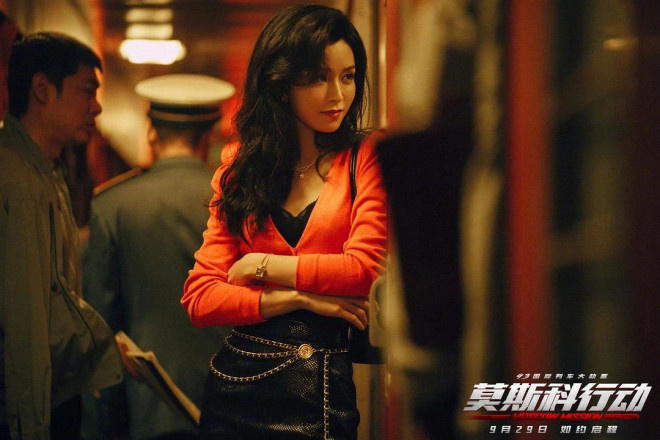
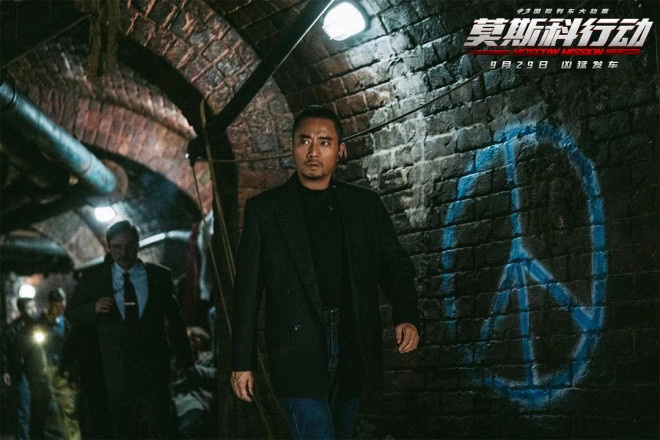
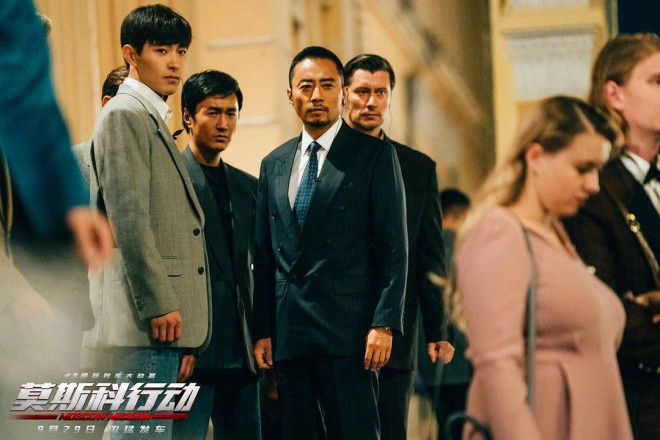
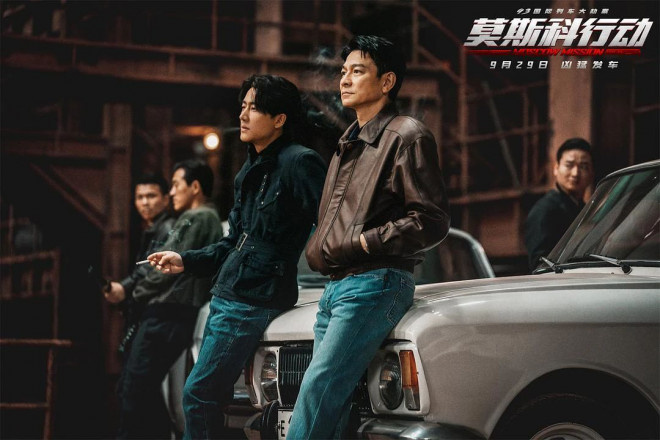
Special feature of 1905 film network The movie "93 International Train Robbery: Moscow Action" starring,,, and is being shown. Compared with other new films on the National Day, this film has been the first in the number of seats for three consecutive days, and it has been more and more supported and loved by the audience.


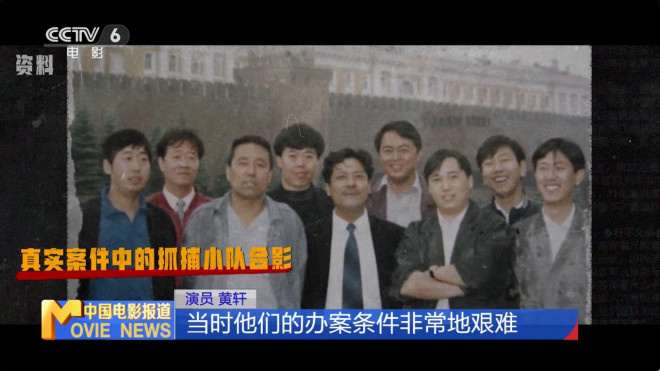
The film is based on the first real case of cross-border pursuit in China. In order to truly restore the history, the crew has spent a lot of thoughts from the early costume design, scene shooting and actor performance.


This issue of National Day is specially planned to bring you the birth of "93 International Train Robbery: Moscow Action".


Strive for Excellence and restore the true texture of the 1990s.


The film "93 International Train Robbery: Moscow Action" brought the Sino-Russian train robbery that shocked the world in 1993 to the screen. In order to pursue the truth to the greatest extent, the founders restored the texture of the 1990 s with all their heart.


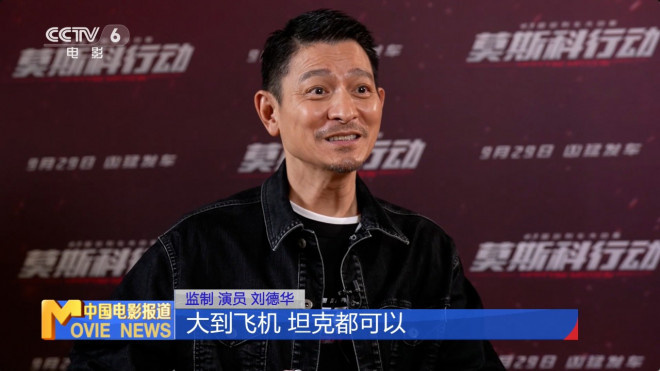
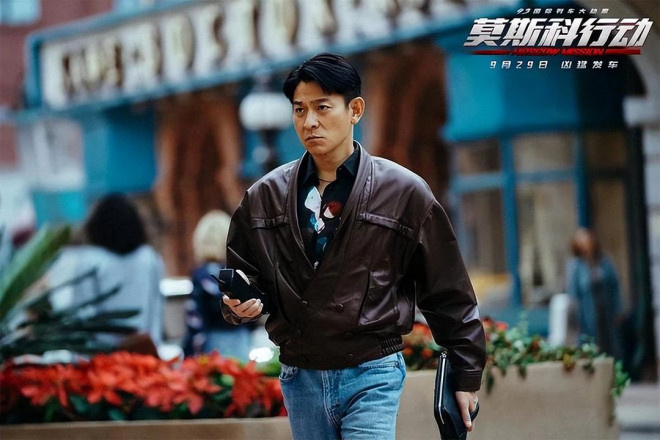
Producer and starring Andy Lau said that he entered the entertainment industry in 1980s, and it has been 10 years since 1990s. At that time, tanks could be bought casually in Russia, and they amplified this feeling. Vasily, his role in the play, can sell anything from lighters and jeans with electric oil to airplanes and tanks.


In terms of clothing, the main creator hopes to design some features to present the world in the 1990s.


Zhang Hanyu said, "At that time, it was not so developed. The police relied entirely on experience. This group of old policemen, Master and his apprentices, relied entirely on experience, so they had their own means of handling cases. This is completely different from the whole concept and state of the police now. In the 1990 s, they (the police) had an obvious feature of the times: mobile phone+black leather bag+BB machine. "


"When you enter such an atmosphere as a whole, everyone is wearing clothes from the 1990s, including extras. Although you are in the studio, when you get on this train together, you suddenly feel immersive and go back to that era." Huang Xuan said.


High bangs, lip lines, shoulder pads … The iconic makeup details in the 1990s also helped Janice Man quickly find the state of performing roles.


Create a 1:1 real scene in Moscow with your heart


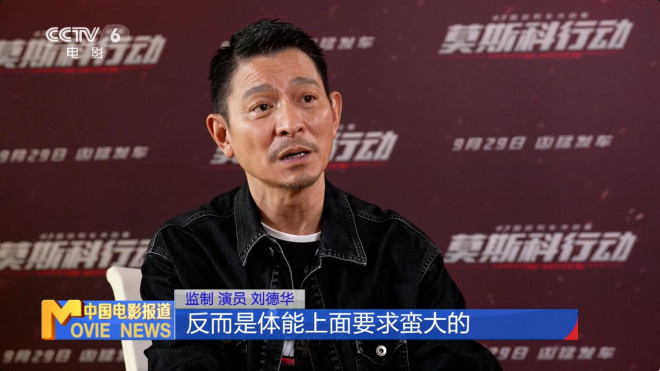
"Subway, sewer and rocket launching base are all important landmarks at that time, and we hope that the process of shooting can appear." Andy Lau said.


The film tries its best to pursue truth in the scene construction and create a sense of immersion for the audience. The Russian Underground Water Palace was built by the crew in a 1: 1 real scene that took more than half a year.


Huang Xuan was particularly touched by this. "Everyone arrived at the scene. Wow, how did this happen? It’ s exactly the same as when you walk in, and there is a water system flowing inside. The turbidity of water is exactly the same as the size of each brick that the teacher studied in the underground waterway of Moscow in the 1990 s. Going to the waterfalls at the water station above and the places where waste water is discharged, it’ s really possible to store several tons of water. When shooting, it will bring you real excitement. "


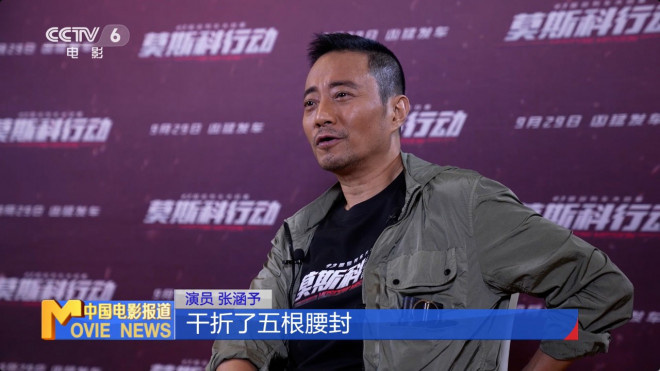
"Although the water is circulating, it stinks after a long time. Later, I said, you can try fishing nets here and see if you can catch fish and insects. We roll and shoot in that sewer every day, because my waist is not good, so I always wear a waist seal, and I broke five waist seals in this sewer scene. "Zhang Hanyu revealed.


In addition to building a grand underground water palace, Andy Lau also requires the rocket base scene to be built according to the industrialized standard of 1:1. It took two and a half months to set up a 4,000-square-meter studio.


Andy Lau revealed, "I just drove the fighter plane, which required Zhang Hanyu’s physical fitness. He climbed on the fighter plane, and I just drove it below. He had to climb around and sway over there with two steel wires."


Deliberate and present the real case of transnational bandits


The film not only has spectacular action scenes, but also maintains a high degree of truth in the story.


Zhang Hanyu said, "The film is about the Beijing police, a arresting team of the Beijing Railway Public Security Bureau, so the characters will have the characteristics of the Beijing police. The Beijing police have their own unique style, and I know these characters quite well because I have many friends in this field."


In the film, Andy Lau and Huang Xuan play the roles of mentor and apprentice who turn against each other, and they constantly adjust on the set to make the characters more vivid.


Regarding the role relationship between Vassili and Miao Qingshan, Andy Lau thinks, "I was his master at that time, so he still respected me very much on the surface, but in fact he knew what I was capable of, and he also controlled (kidnapped) my daughter, so I was used to being bullied in the play, and later I hoped to turn over."


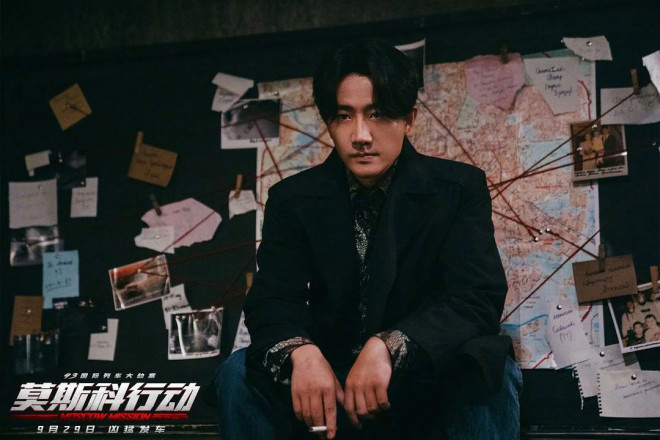
"Miao Qingshan used to follow Hua Ge (Vasily) to recognize him as the master, but in the end they were both caught. After the arrest, Brother Hua (Vasily) gave Miao Qingshan up because he wanted to see his daughter, so this was a great stimulus to Miao Qingshan. He felt that my master, who trusted me so much, had betrayed me, which ignited his more evil criminal motives. " Huang Xuan said.


Stories adapted from real cases are more touching. The main creator of the crew reproduced the bravery and tenacity of the China police with sincere creation.


In Zhang Hanyu’s view, the film shows the quality of China police and their loyalty to the motherland and people. Andy Lau believes that the police’s goal is to save lives with their lives, and they are willing to sacrifice for the people.


As a villain, Huang Xuan felt the powerful strength of the China police. "At that time, the conditions for handling cases were very difficult. How much determination and courage did they have to go abroad to arrest these criminals? I really admire them. Although this name is far away, it will be punished."


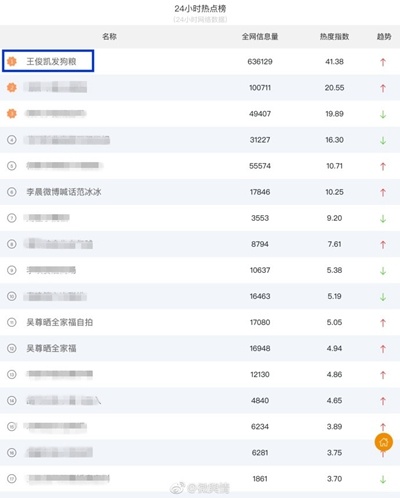
Sweet! I didn’t eat enough this Spring Festival dinner, so the dog food in the entertainment circle came together!


1905 movie network news How did you spend the Spring Festival in the Year of the Dog? While visiting relatives and friends, did you take time to watch the handfuls of dog food scattered in the entertainment circle? This year’s Spring Festival entertainment circle can be described as sweet, and one after another, it is simply a group attack. Not only those who are in love, but also those from married with children, that is to say, they don’t abuse dogs like this. This year is the Year of the Dog, hum!


Lu Han & Guan Xiaotong


Lu Han Guan Xiaotong Valentine’s Day photo.


This first wave of dog food is thanks to Lu Han and Guan Xiaotong. On Valentine’s Day, Guan Xiaotong took a close photo with her boyfriend Lu Han in the ticket circle. In the photo, the two are wearing sweaters and holding roses. Brother Lu holds Guan Xiaotong’s shoulder and plays the role of DuDu, showing great love.

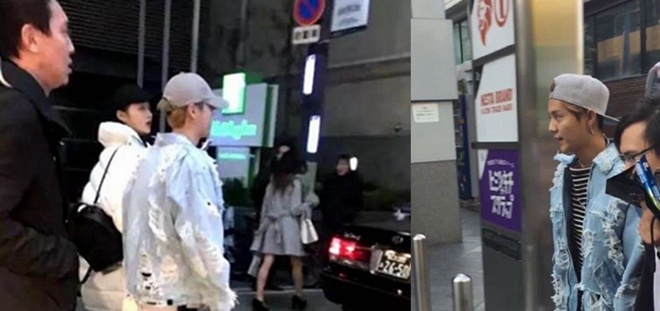
Traveling with Japan was met by chance.

However, how can this dog food be sprinkled? On the 18th, some netizens broke the news that they met a young couple on the plane, and they loved to travel with Japan! This wave of sweet crit is amazing!


Jay Chou & Hannah Quinlivan


Jay Chou takes photos on Valentine’s Day.

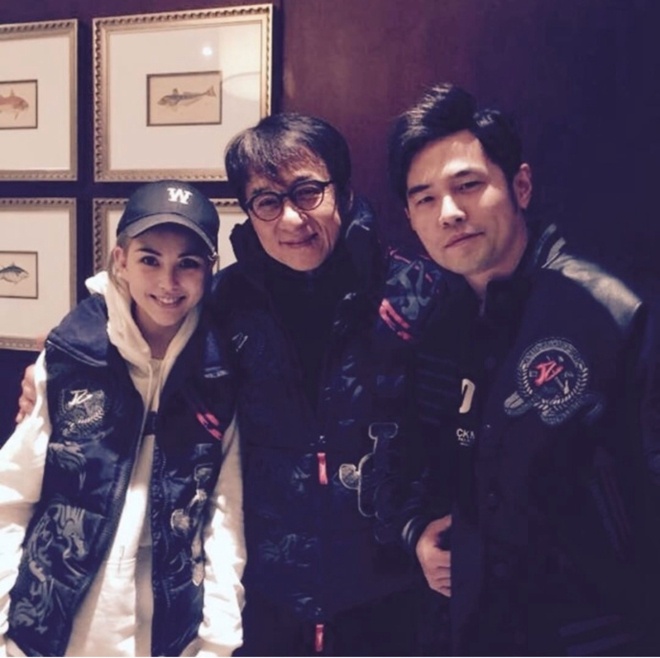
How can Xiu En Ai sprinkle dog food without Jay Chou! On 14th, Jay Chou took a photo with Hannah Quinlivan and Jackie Chan for dinner. In the photo, all three people are wearing the same brand of tidal clothes, and Jay Chou also wrote a text thanking Jackie Chan for his treat and giving gifts to children.

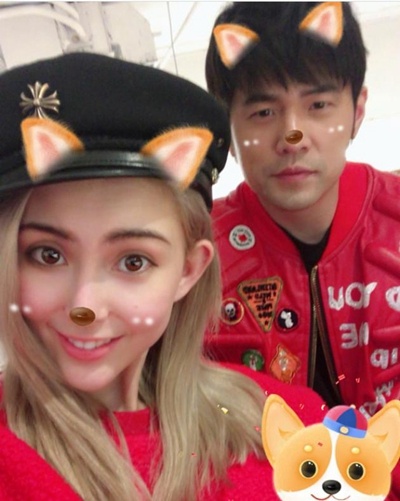
Take a photo with Hannah Quinlivan

Immediately after the second wave of dog food on New Year’s Day, Jay Chou took a lovely photo of the two dogs’ filter. It’s amazing to sprinkle dog food!


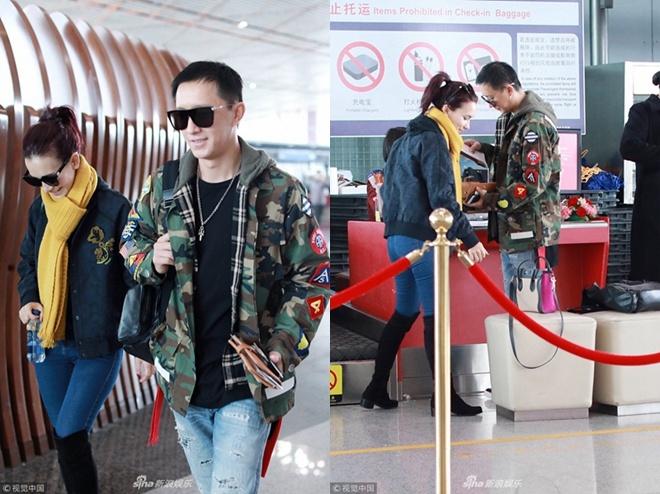
Han Geng & Celina Jade


Han Geng & Celina Jade

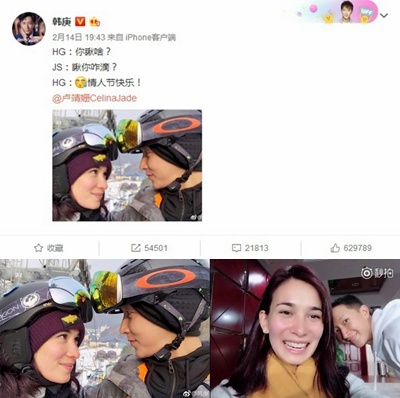
On Valentine’s Day, Han Geng and Celina Jade, who just announced their love affair, also distributed food. On Valentine’s Day, Han Geng not only appeared in Celina Jade’s greeting video to his fans, but also took a photo of them looking at each other sweetly in his Weibo, and added a dose of funny dialogue to increase the sweetness: "What are you worried about? What do you think? Happy Valentine’s Day "is really a dog’s life."

The two returned to their hometown in the northeast.

Then, they were photographed together back to their hometown in Northeast China. It seems that good things are coming. …


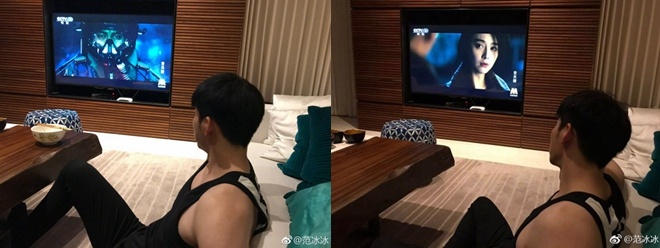
Fan Bingbing & Jerry Lee


Fan Bingbing Sun and Jerry Lee Sweet Everyday

On the second day of the Lunar New Year, the first Weibo in Fan Bingbing is to spread dog food! There are two handfuls of dog food in this set of photos. Fan Bingbing, who is kind and kind, not only cooks dinner for Jerry Lee personally, but even Fan Bingbing’s side face appears in the TV pictures watched by Jerry Lee. This wave of sweetness is enough for everyday life!


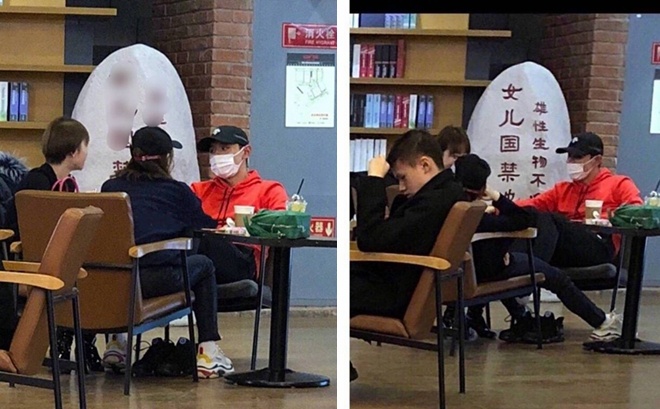
ZhangJike & Jing Tian


ZhangJike Jing Tian went to the movies on a date.

Although ZhangJike and Jing Tian haven’t officially announced their love affair, many real hammers are obvious to all netizens. On the third day of the New Year’s Eve, they were met by netizens to watch movies together. Although both of them wore masks to cover their faces, the pink bubbles that you distributed all over could not be concealed ~


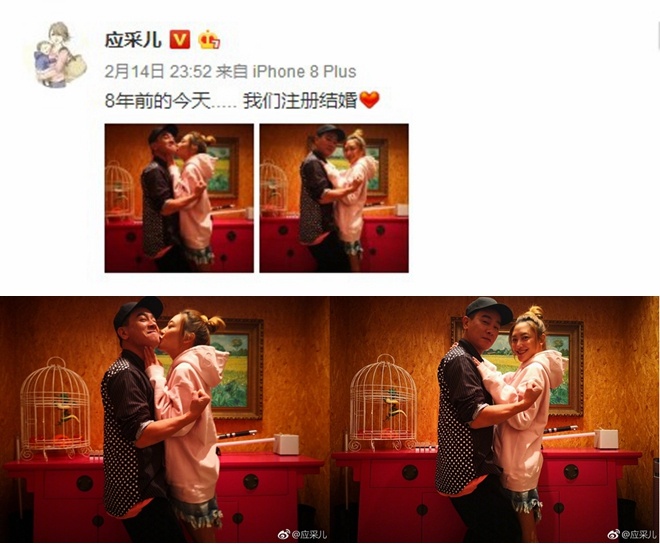
Jordan chan & Cherrie Ying


Jordan chan Cherrie Ying wedding anniversary

February 14th is not only Valentine’s Day, but also the wedding anniversary of Jordan chan and Cherrie Ying. Cherrie Ying also took a photo with Jordan chan in Weibo and wrote: "Today, 8 years ago, we registered to get married!" Brother Koharu’s expression in the photo is very enjoyable!


Jerry & Li XiaoLu


Li XiaoLu & Jerry

Li XiaoLu, who was caught in the suspicion of derailment at the end of 2017, also updated its dynamics during the Spring Festival. The animation screenshots were shot three times in a row, which made the outside world speculate that she and Jerry had made up again?


Chun Wu


Chun Wu basks in family portraits.

Chun Wu, a father, did not miss the ride of this show of love. On Valentine’s Day, not only did Chun Wu get a family photo, but it was also the first time that he took a photo with his wife Lin Liying. In the photo, the sweetness of the two people drinking a cup of drink was overflowing, and he also called his wife a hard partner behind him!


Tian Liang & Ye Yixi


Tian Liang basks in family portraits.

On February 16th, Tian Liang also took out the latest family photo of a family of four in Weibo, and even ridiculed that "the unchanging tradition and POSE change the height and weight", which is full of deep love.


But what is this wave operation?

Micro-public opinion data on February 15th


Actually, there are still people who throw dog food indiscriminately … but this wave is good for not abusing their hearts!

Karry sprinkles dog food on Valentine’s Day.


How many handfuls of dog food did you eat?


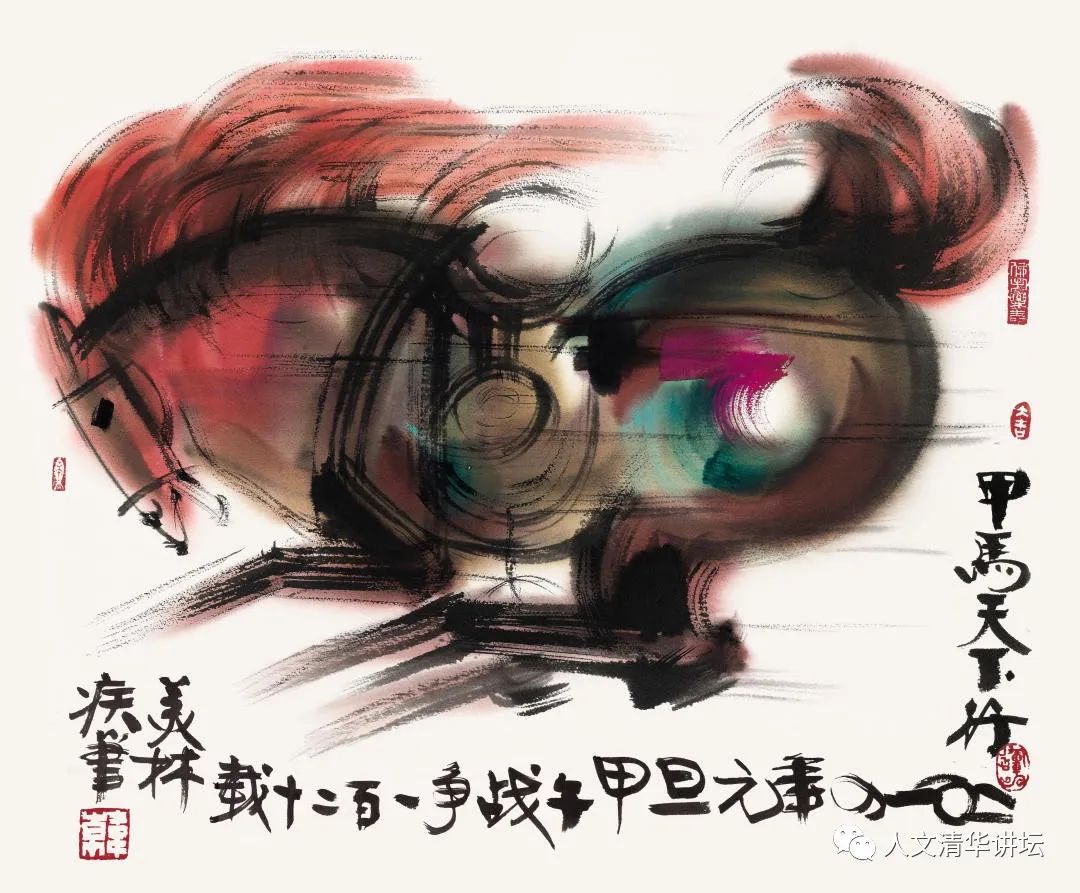
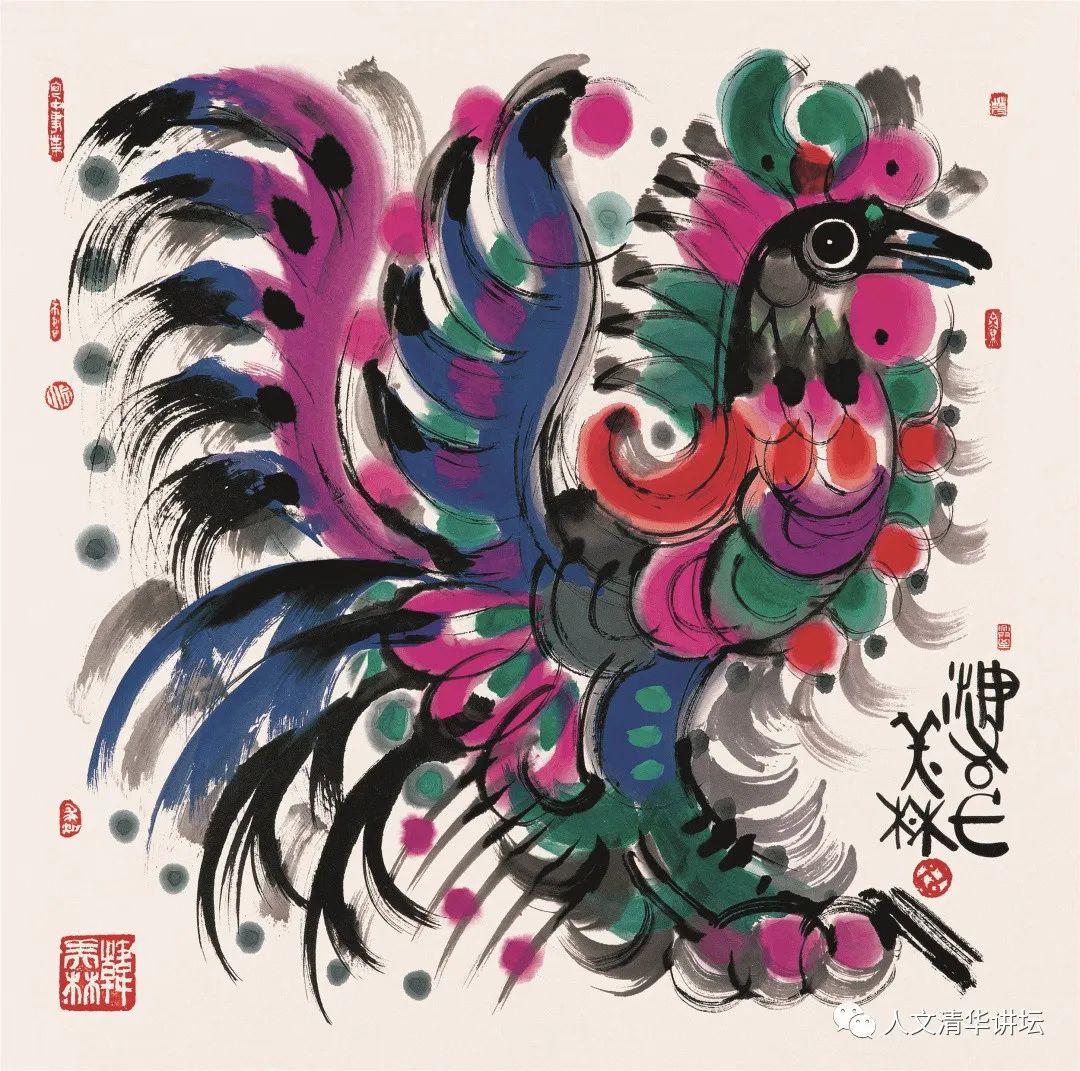
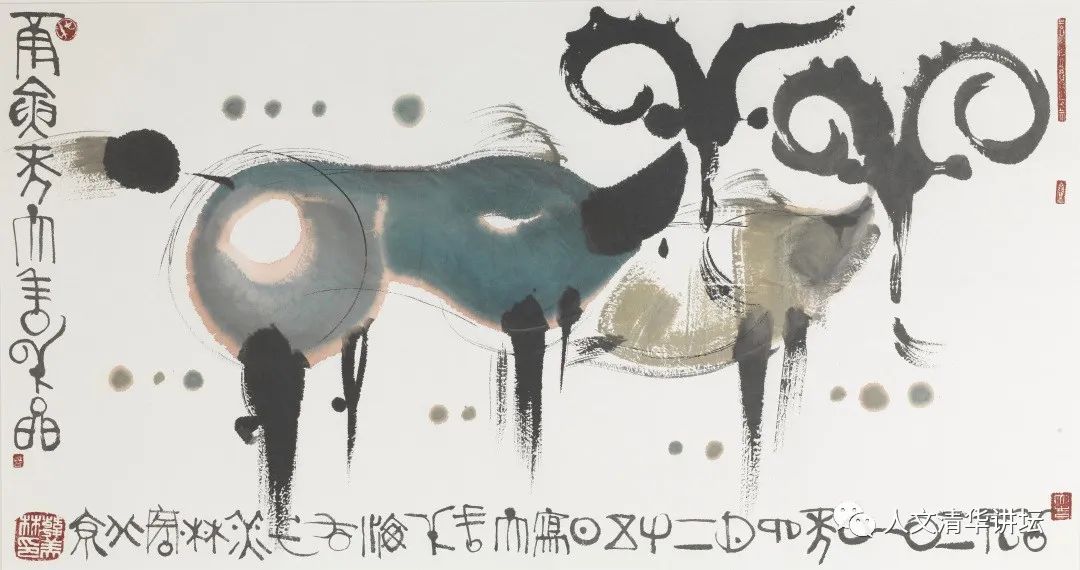
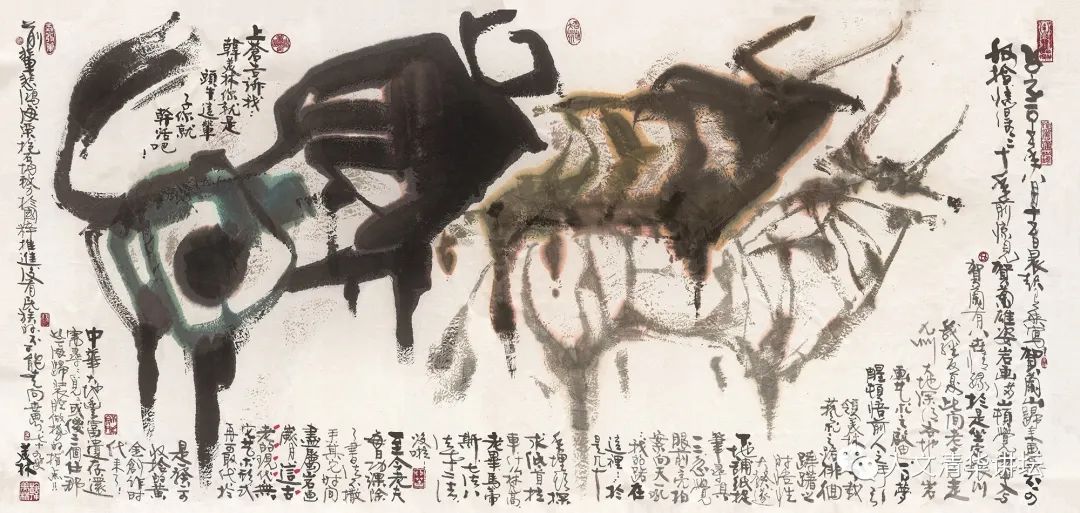
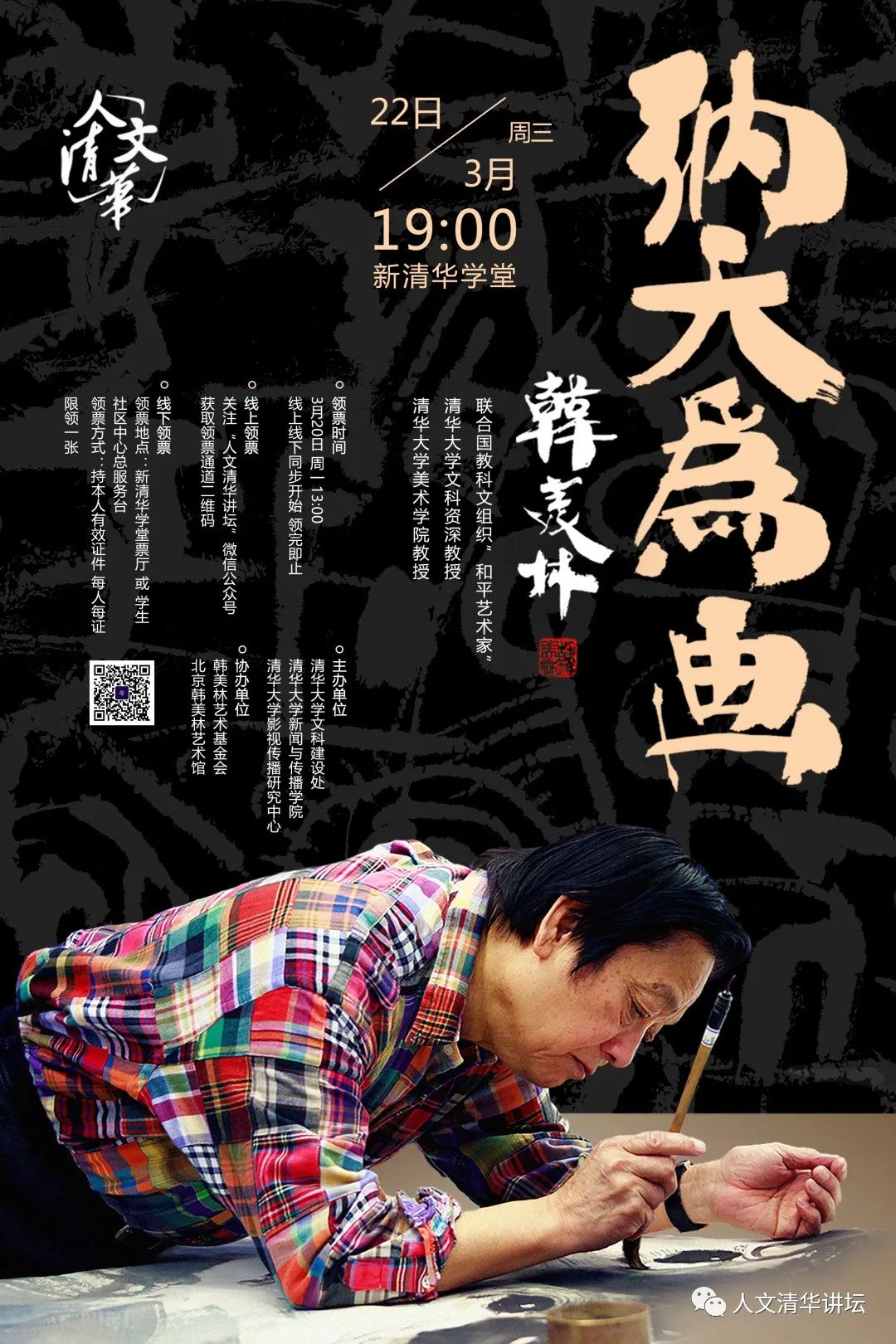
Master Han Meilin: A Hard Journey of Art Achieves a Beautiful Life.

  He presided over the design of the emblem and mascot "Fuwa" of the 2008 Beijing Olympic Games, and people affectionately called him "the father of Fuwa".

  He was awarded the title of "Artist of Peace" by UNESCO, "Coubertin Award" by the International Olympic Committee, "Cultural Medal of the President of Korea" and "Honorary Academician" by the University of Venice.

  He has four personal art galleries in Hangzhou, Beijing, Yinchuan and Yixing, and his works involve painting, calligraphy, sculpture, ceramics, design and many other aspects, and all thousands of works have been donated to the country for future generations to study.

  His achievements in painting, calligraphy, sculpture, ceramics and other artistic fields have attracted worldwide attention. He is called "China’s Picasso" because of his wide cross-border, profound artistic attainments, distinctive personality and great social influence, but he claims to be "the successor of grandma in northern Shaanxi".

  He is Mr. Han Meilin, a UNESCO peace artist, a senior professor of liberal arts in Tsinghua University and a professor at Tsinghua University Academy of Fine Arts.
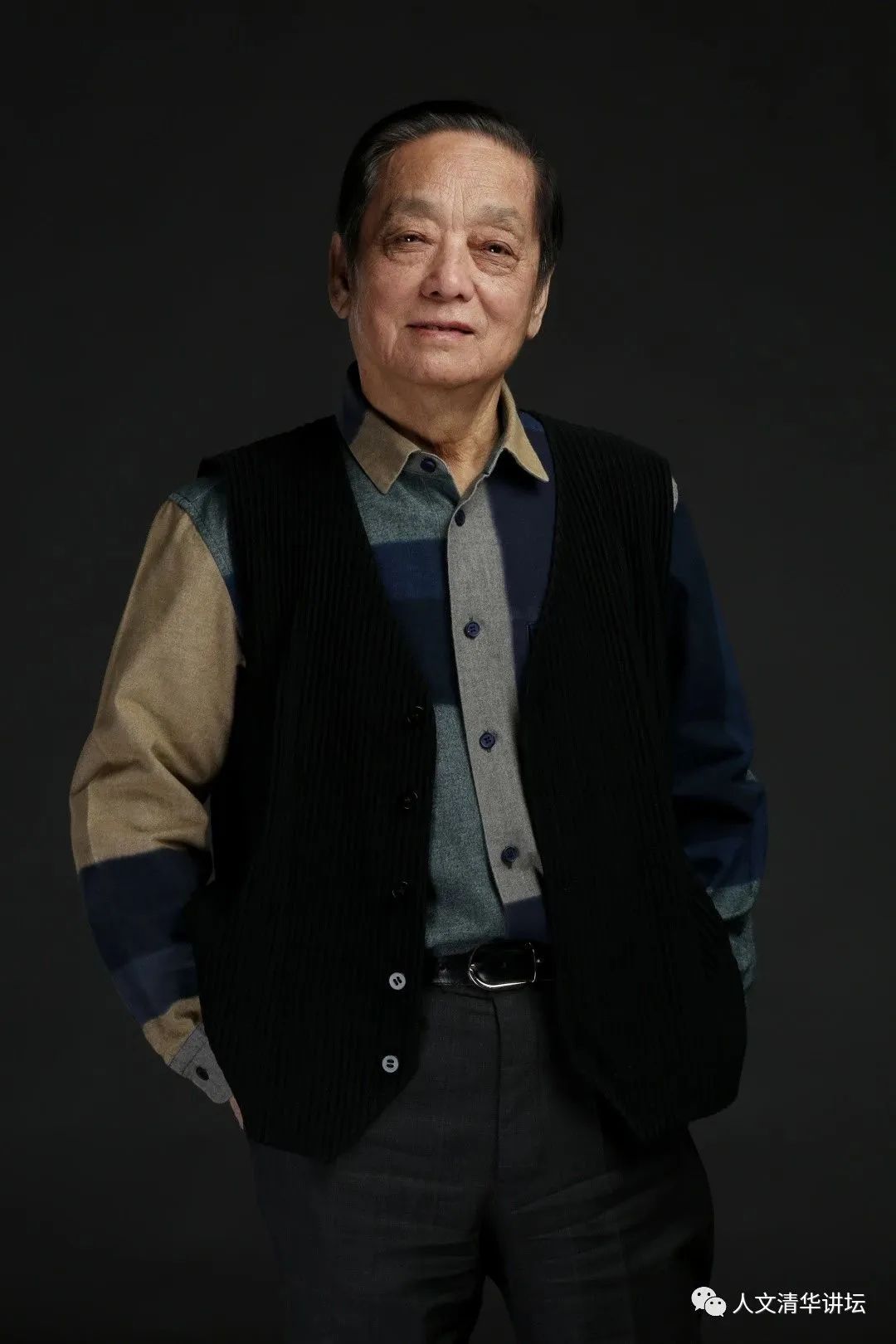
Han Meilin

  Born in Jinan, Shandong, China in 1936. In 1955, he was admitted to the Central Academy of Fine Arts (in 1956, he became the first student of the Central Academy of Arts and Crafts with the adjustment of departments). He is currently a senior professor of liberal arts in Tsinghua University, a librarian in central research institute of culture and history, honorary director of ceramic art committee of China Artists Association, vice president of World Chinese Association and honorary president of China Arts and Crafts Association.

  In recent years, "Han Meilin Art Museum" has been established in Hangzhou, Beijing and Yinchuan, and "Han Meilin Zisha Art Museum" has been established in Yixing, actively promoting social aesthetic education and international cultural exchanges. Establish "Han Meilin Art Foundation" and devote yourself to artistic public welfare and social charity. In 2015, he was awarded the title of "Peace Artist" by UNESCO. 2016 "The World of Merrill Lynch • Han Meilin’s Global Tour was launched, and he held solo exhibitions in Venice, Beijing, Paris, Liechtenstein, Seoul and Bangkok, and was awarded the title of "Honorary Academician" by the University of Venice. In 2018, he won the "Coubertin" Medal and the "Korean Cultural Medal" of the International Olympic Committee. In 2019, he won the "Lifetime Achievement Award for Influencing the World Chinese Award".

  Why did suffering make his life beautiful? Why is his life’s creation not the same? Where did his confidence come from? Why should artists learn to think independently about the world? Why do artists have to have great love?

  On March 22nd, at 7: 00 pm, Mr. Han Meilin, a UNESCO peace artist, a senior professor of liberal arts in Tsinghua University and a professor of Tsinghua University Academy of Fine Arts, gave a special performance "Taking Heaven as a Painting", which took you into the wonderful art world of this master!

  In the winter of 1936, Han Meilin was born in a family of four in Huangjinxiang, Jinan. His parents loved each other and lived with his grandmother who had been widowed for many years. Three generations lived happily in three tile houses in the alley. But the good times didn’t last long. My father died of tuberculosis two years later, leaving Han Meilin’s mother, two widows and three brothers who were not yet adults. At that time, the youngest brother was only born for more than a month. Two young widowed women resolutely shouldered the burden of life, helped each other to raise three children and never remarried. But even in such a difficult situation, two women in bad karma still attach importance to education and insist on sending their children to school.

  When Han Meilin was five years old, his mother sent him to a private school to practice calligraphy. Mr. Wang found Han Meilin’s square and tough personality and thought that he was the most suitable for Yan Zhenqing, a famous minister in the Tang Dynasty. Since then, he has laid the foundation for Han Meilin’s calligraphy all his life. At the same time, he began to show his talent for painting. He painted on the wall of his neighbor’s house with lime, and was beaten by his mother for destroying the newly painted wall. A little longer, Han Meilin entered Jinan Authentic Relief Society Primary School for the Poor. The school was founded by famous gentry and wealthy businessmen who worked in Jinan. It not only exempted tuition fees, but also invited Li Yuanqing, Zhao Yuanren, Chen Shuliang, Qin Hongyun and other famous artists to offer sports, music, art and other stylistic courses for students. The school is not far from home. It is a rare beauty for Han Meilin to grab a handful of tea dregs poured out of the teahouse for breakfast on the way to school on foot. Compared with the lack of material life, the school’s aesthetic education has given Han Meilin the best enlightenment in his artistic life. He loves painting more, and his teachers affectionately call him a "little painter".

  In 1948, Jinan ushered in liberation, and Han Meilin, who had just entered junior high school, decided to drop out of school to work to reduce the burden on his family. Shortly after the liberation of Jinan, the government planned to build a memorial tower for revolutionary martyrs on Sili Mountain in the south of the city. With the help of the Civil Affairs Department, Han Meilin, who was only 13 years old, became the correspondent of commander Wan Chunpu in the preparatory office. At that time, the relief group of the Tower Building Committee gathered a group of well-known domestic artists. Han Meilin, who was fascinated by painting since childhood, followed these artists for advice. Later, he was simply sent to the relief group by Commander Wan as a correspondent. He followed Wang Zhaoshan, Liu Su and Mud to make sculptures. In order to understand the human body structure, he made human skeleton specimens together with Xue Junlian. In the example of the artists, Han Meilin’s artistic level was rapidly improved.
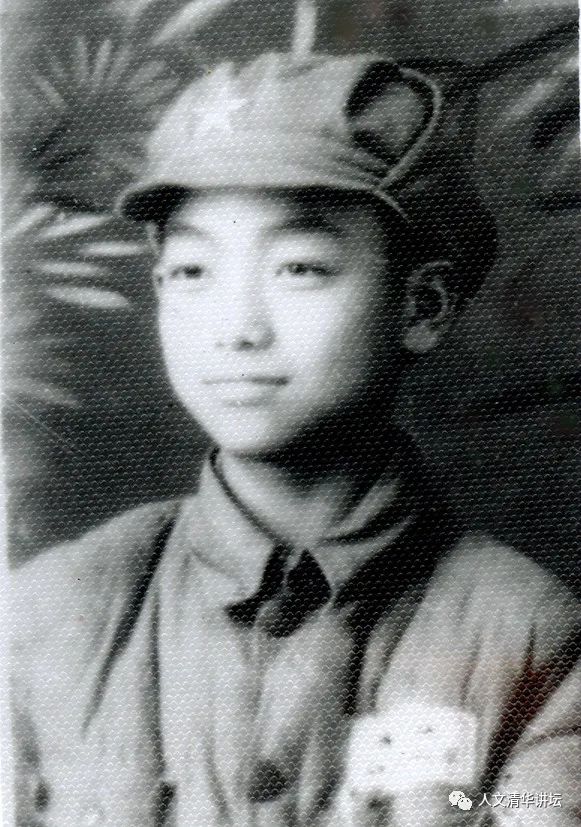
Mr. Han Meilin, who just joined the army in the Tower Building Committee.

  After the War to Resist U.S. Aggression and Aid Korea started, Han Meilin transferred to Jinan Repertory Theatre as an actor, and also volunteered to work part-time in the propaganda work of the troupe. Soon, the Repertory Theatre was dissolved, and Han Meilin was assigned by the Bureau of Culture and Education to serve as an art teacher in Nanchenggen Primary School in Jinan. At that time, Han Meilin was less than 15 years old, but he used his painting strength to subdue students about his own age, and also attracted primary school art teachers in the whole region to observe the teaching. At the beginning of the founding of the People’s Republic of China, new China was in ruins, and there was even a blank in primary school art education in China. Shandong People’s Publishing House came here to compile his lesson plans into two textbooks, Basic Knowledge of Painting and Reference Album of Primary School Painting Teaching. Han Meilin got 400 yuan for this. In that era when 10 cents could buy four eggs, this fee was a huge sum. Han Meilin used this money to buy gifts for his family and a bicycle for going out on weekends.
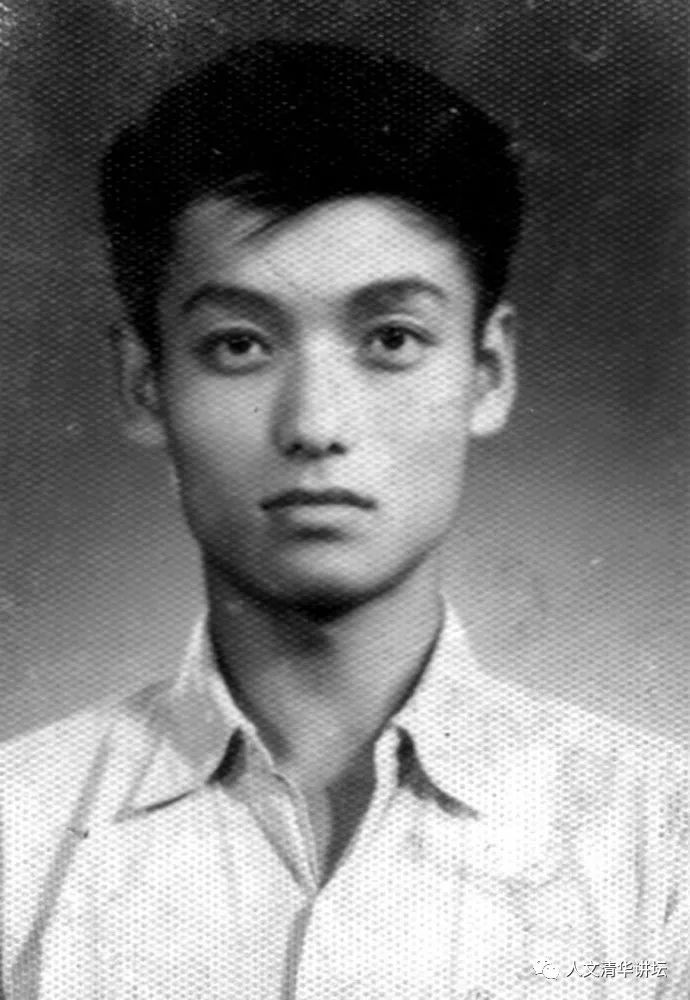
Mr. Han Meilin’s youth

  Han Meilin’s passion for fine arts touched Li Shuhua, a Chinese teacher at the same school. He introduced Han Meilin to his cousin Le Wei, who was studying at Shanghai Academy of Fine Arts. With the encouragement of Le Wei, Han Meilin decided to apply for the middle school attached to Central Academy of Fine Arts. Newborn calves are not afraid of tigers. Han Meilin went to Beijing with enthusiasm to catch the exam. He was unexpectedly received by Mr. Pang Xunqin, the director of the Department of Arts and Crafts of the Academy of Fine Arts and a master figure in the art world. Mr. Pang saw the talent of this young man from Han Meilin’s daily works and suggested that he directly apply for the university. In Mr. Pang’s expectant eyes, Han Meilin was heated and took on this seemingly impossible task. Han Meilin, who had only been in junior high school for three months, finished the senior high school course in 21 days with a strong momentum. Even his eyes were temporarily blind because of overuse. He finally got the eighth place in the Central Academy of Fine Arts. Under the guidance of Bole, this wild-growing swift horse finally embarked on the professional road of art. In college, although Han Meilin majored in design, his paintings were recognized by many people.
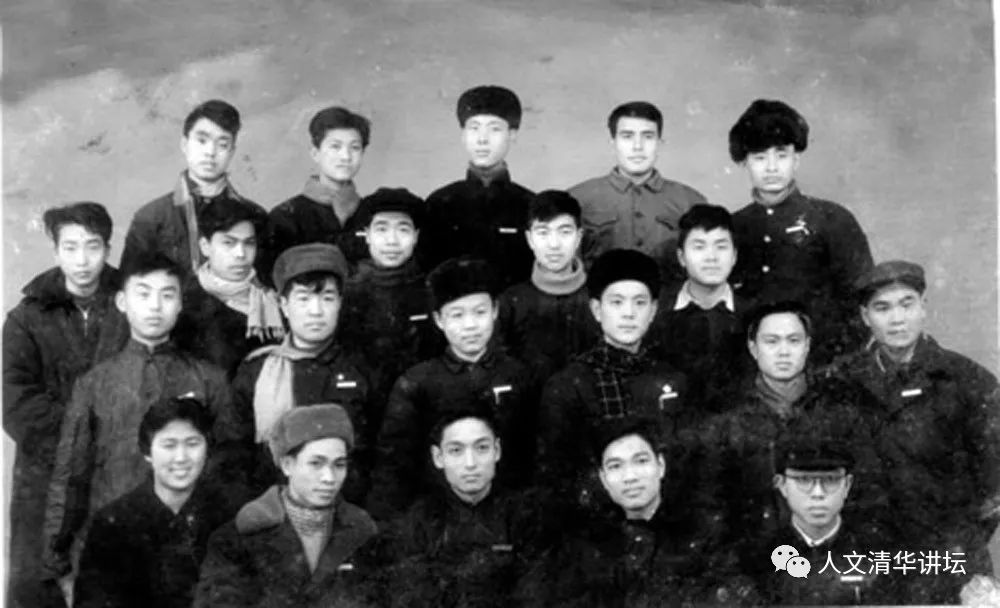
Mr. Han Meilin is the first class teacher in the Central Academy of Arts and Crafts (third from the left in the front row).

  In 1960, after graduating from Han Meilin University, he wanted to respond to the college’s call to go to Yunnan ethnic minority areas when filling out his assignment, but he was left as a teaching assistant in the Decoration Department of the Academy of Fine Arts because of his excellent performance. After teaching, Han Meilin created many excellent works and became a rising star in Ran Ran at that time.

  In 1963, Han Meilin was transferred to Anhui to organize the Academy of Fine Arts, and was involved in the catastrophe of the times. He was unjustly imprisoned, and his body and mind were greatly devastated. But even in prison, he tried his best to draw. Without a pen and paper, he painted rice soup on his pants. When the rice soup dried, his white pants became "drawing paper", and he painted on it with branches, which became his light in the dark.

  In 1972, Han Meilin was released from prison and was assigned to work in Huainan Ceramic Factory. The factory assigned him a crude dormitory of 6 square meters. Because there was a buttonwood tree outside the house, Han Meilin felt the vitality of the trees and named his hut Tongzhai. In the next six years, he lived in Tongzhai to create.
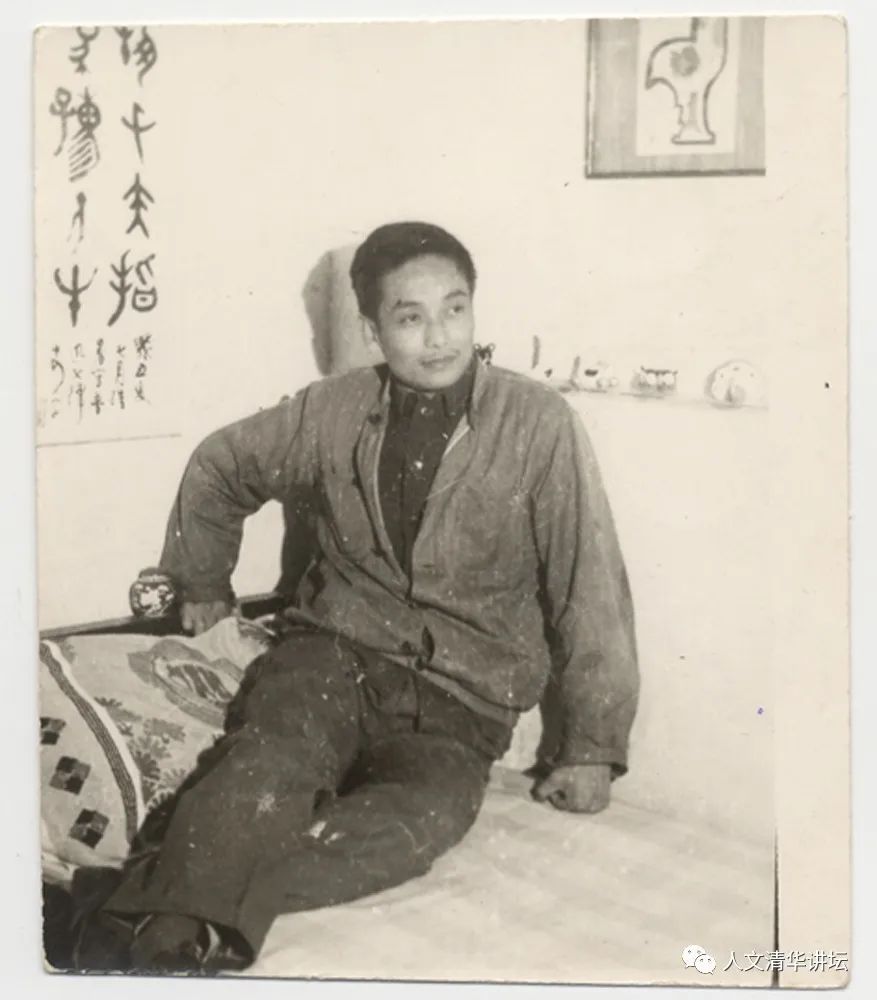
After he was released from prison, Mr. Han Meilin weighed only 36 kilograms.

  After he was released from prison, although his living conditions improved, he still couldn’t afford the high cost of ink painting. In order to make ink painting paper show the ink smudge effect similar to expensive rice paper, Han Meilin combined traditional ink painting with modern watercolor painting and created a new technique of brush painting — — Brush a layer of water on the hard paper first, and when the paper is half dry, quickly draw a pen to make the ink pigment "smudge" along the water potential. This kind of creation is not achieved overnight. Too much water brushing will make the ink flow away with the water, and it is impossible to maintain the shape. Too little water brush will make the drawing paper dry too fast, which will affect the blooming effect. After thousands of adjustment attempts, Han Meilin finally found the balance point between water and paper, and even created a new ink and wash color matching method.
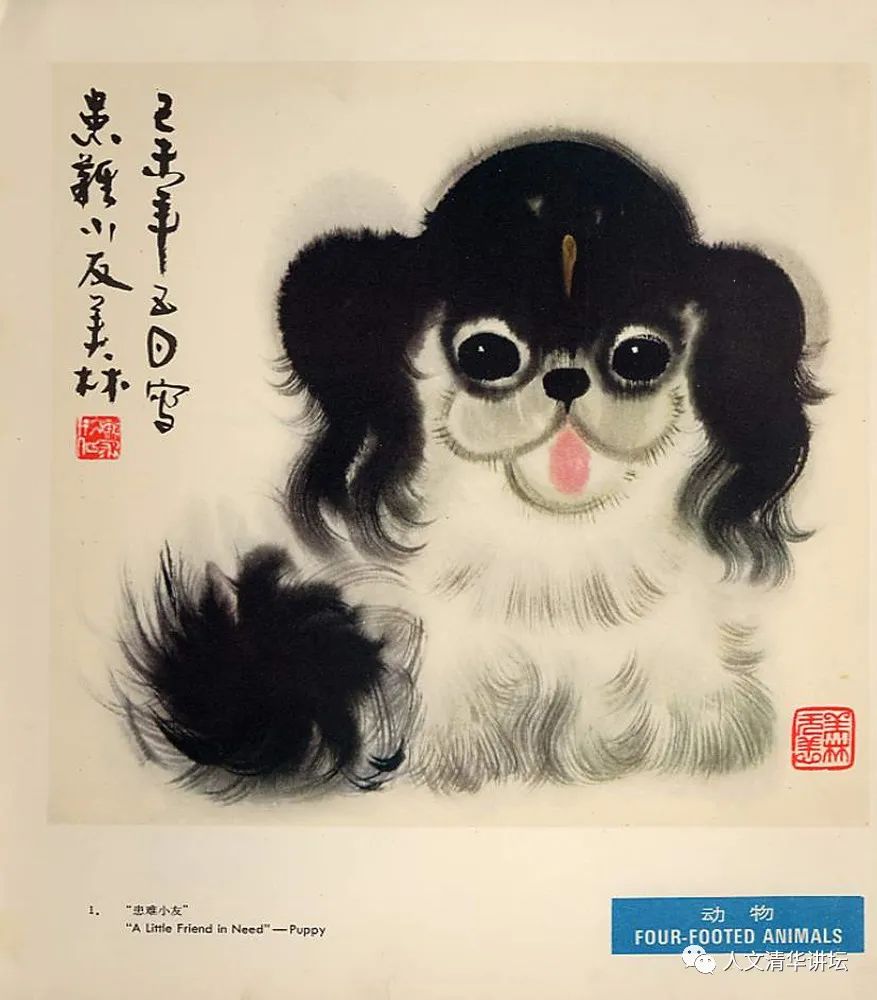
Mr. Han Meilin’s painting "Friends in Need"

  "Love" is the eternal theme of Han Meilin’s art. He said: "Artists should love the world, our society, our children, animals, plants and everything with love." Although he suffered a lot, Han Meilin never showed his suffering in his works of art, from Erhei, a close friend of poodle in times of trouble, to a monkey, a fox and a squirrel … … The animal shapes in Han Meilin’s brush painting are smart, and the fuzzy effect of ink and wash combined with blooming adds a cuteness.

  In 1978, Han Meilin was finally rehabilitated, transferred to Anhui Artists Association to engage in professional art creation, and later served as vice president of Anhui Painting Academy. The spring breeze of reform and opening-up blew away the gloom that had shrouded Han Meilin for many years, and his artistic life ushered in spring.

  In 1979, Han Meilin held his first solo art exhibition in China Art Museum, and published the first collection of animal paintings "Still on Earth" in the following year. In the same year, Han Meilin was invited to be the first China painter to hold a solo exhibition in the United States after the reform and opening up, starting from new york, he toured 21 cities including Boston, and became famous at home and abroad.

  In college, both the teachings of Chai Fei, Pang Xunqin and Zheng Ke and the friendship with Shen Congwen, who works in the Palace Museum, made Han Meilin deeply realize the profoundness of China arts and crafts. At that time, he was determined to follow the will of gentlemen, base himself on tradition and folk, and draw inspiration from land and history.
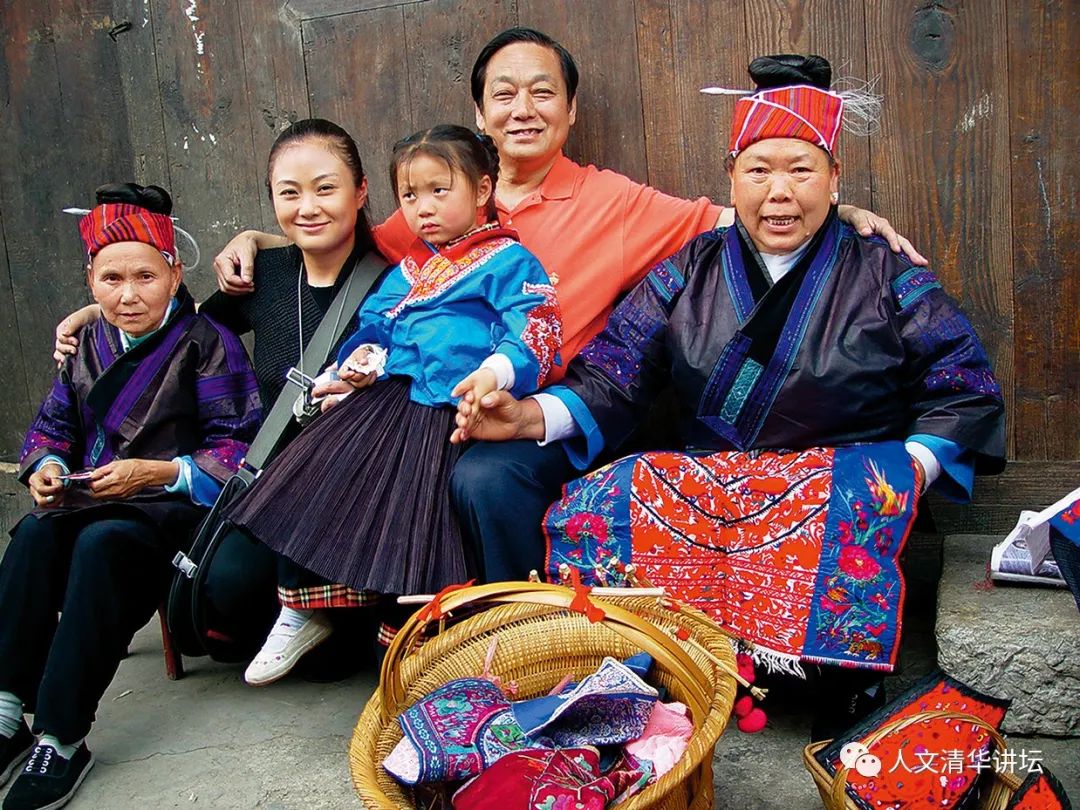
In 2003, the "Han Meilin Art Caravan" was held in Kaili, Guizhou.

  Han Meilin was inspired by an Indian film "Caravan", in which a group of actors sat in a caravan, and his heart yearned for the action of collecting wind wherever they went. Since 1977, Han Meilin led his own art caravan members to "drive" on the land of China, with the purpose of "helping the poor through culture and collecting wind through art", and went to the fields to learn various folk art techniques, and at the same time helped local difficult manufacturers to revive with his own creations. His interests seem to have no boundaries, from exquisite Henan Jun porcelain and Yixing purple sand to simple straw weaving and wall hanging. "Weaving, dyeing, engraving, carving, painting, writing, cloth, wood, stone, grass and metal, all contact, learning and teaching", he has gained endless artistic inspiration from the people, and his own creative path is also.
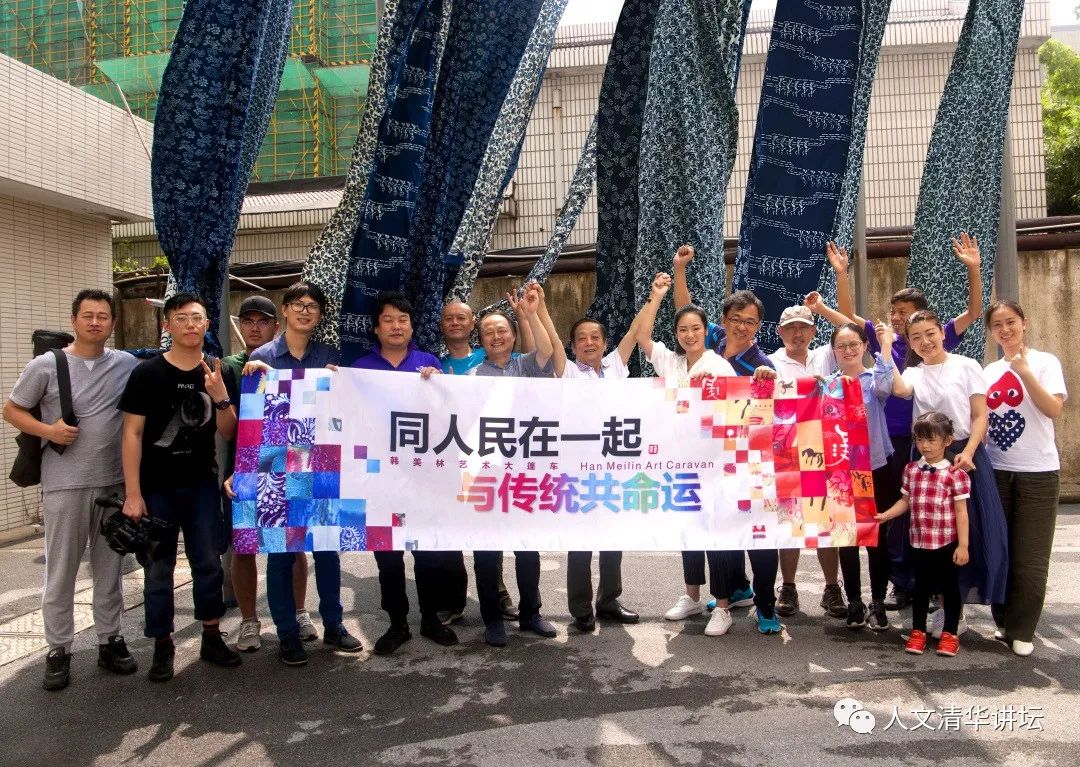
In September 2018, "Han Meilin Art Caravan" was in Nantong.

  Han Meilin always believes that image is the key to artistic creation. With image in mind, all kinds of materials can be used by him. He swims freely among ink, ceramics and bronze. When the times endow him with a new mission, he can devote himself to new creation at any time, so can painting and design.

  In 1980, China Post began to issue the first series of stamps on the zodiac, and the fourth set of special stamps on the zodiac in the year of pig in Guihai, which was issued in 1983, was designed by Han Meilin. The green leaves of hearts painted on pigs are very eye-catching, which not only has the traditional paper-cut and shadow play style, but also means a happy life with hearts, full of folk joy and festive atmosphere. This simple and exaggerated style of folk art has attracted worldwide attention.
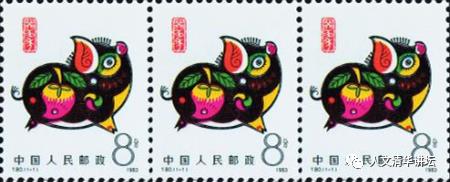
In 1983, Mr. Han Meilin designed the special zodiac stamp for the Year of the Pig.

  Since then, Han Meilin has integrated his understanding of traditional Chinese zodiac culture into vivid animal images, not only taking charge of the design of special stamps and commemorative medals of Chinese zodiac for many times, but also gradually formed the Han Meilin zodiac art with both national charm and modern aesthetics, leading China traditional culture to go abroad again.
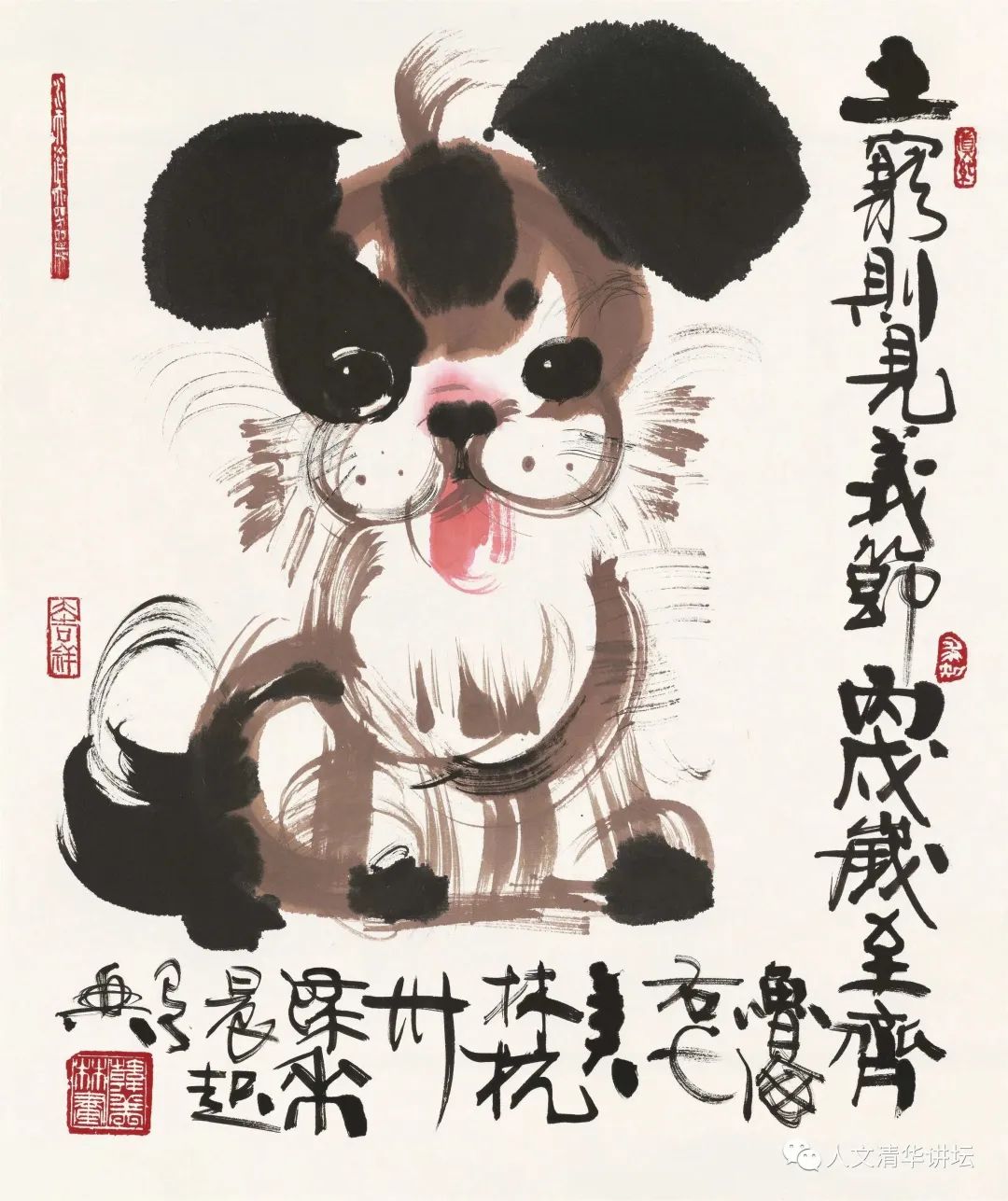
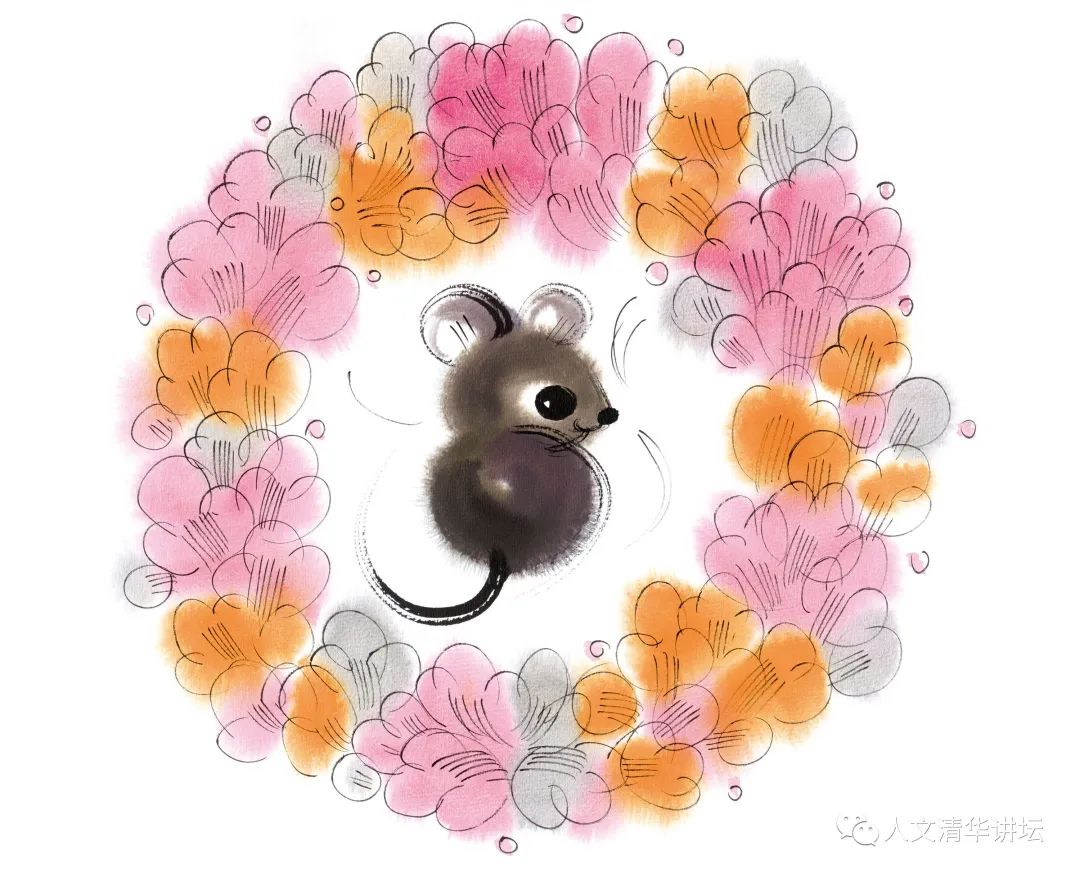
  The Zodiac in Han Meilin’s Works

  In 1989, Han Meilin Studio of China Artists Association was formally established, which is the first and only studio named after artists by China Artists Association. As a pilot project of market economy reform in the art field, Han Meilin led his team to create giant sculptures in 58 cities, such as Long Whistling in the Wind, Dashun Farming, Five Clouds and Nine Rus, Qian Jianglong, Qianwang Shooting the Tide, Huafeng Yingxiang, Hundreds of Birds Facing the Phoenix and Danfeng Chaoyang, etc., with more than 1,500 studio members at most. Han Meilin marks the rise of modern cities after China’s reform and opening up with a unique way of artists’ sculpture works.
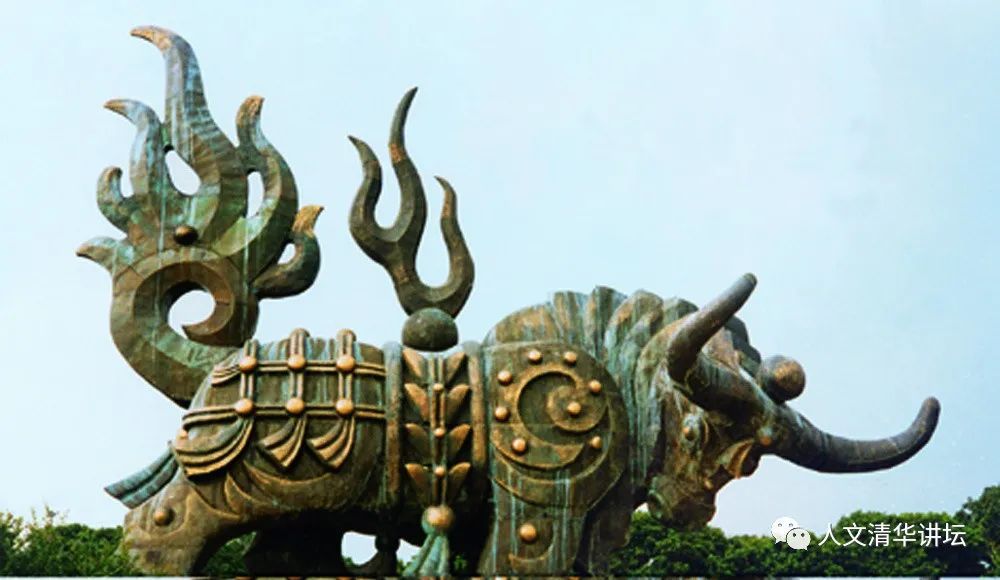
Shenzhen Shekou Sculpture "The Golden Bull"

  In 1996, the Atlanta Olympic Games was held in the United States, which coincided with the centenary of the modern Olympic Games. Han Meilin was invited to participate in the design competition of Olympic symbolic sculptures. It took him less than a month to complete the artistic conception and integrate the two Chinese elements, Tenglong and Huabiao, into the urban sculpture. Finally, the Five Dragon Bell Tower he designed stood out from the design schemes of 17 countries and was successfully selected.
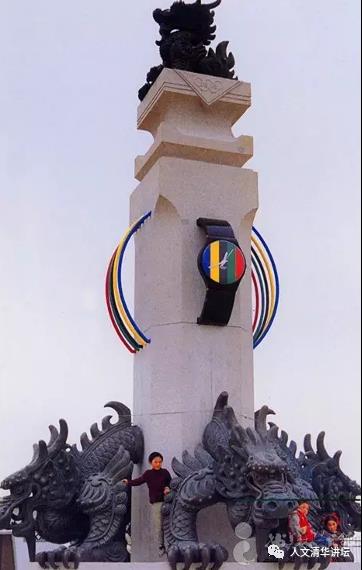
The sculpture "Five Dragon Bell Tower" designed by Mr. Han Meilin for the 1996 Atlanta Olympic Games.

  Han Meilin’s fate with the Olympic Games naturally continued in the process of China’s bid for hosting the Olympic Games. He successively presided over the design of the emblem, Olympic logo and mascot for the 2008 Beijing Olympic Games, making indelible contributions to the smooth hosting of the 2008 Beijing Olympic Games.

  In 2000, after continuous creation and revision, we finally had the "Chinese knot" with simple and smooth lines and rich meanings that we see today.
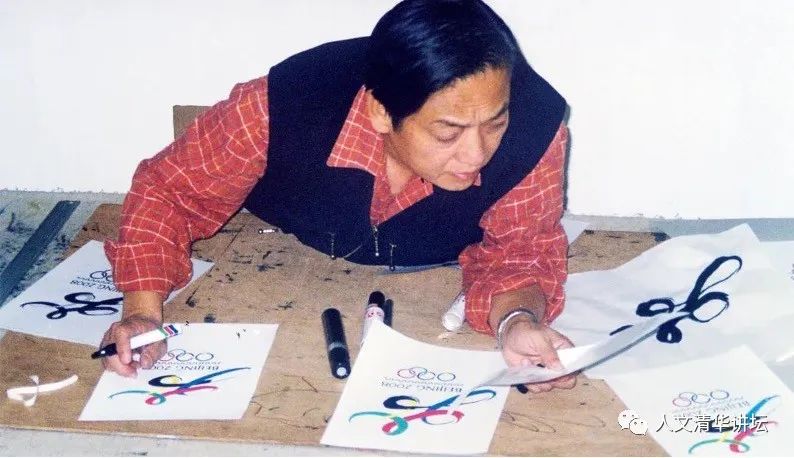
Mr. Han Meilin designed the logo of Beijing Olympic bid.

  The success of the Olympic bid is only the beginning, and greater challenges will follow. In 2005, the revision team composed of top experts such as Han Meilin began to revise the design scheme of mascots collected from all over the world, but the individual images such as rattle, panda and loong that entered the "final circle" could not perfectly show the theme of the 5,000-year Chinese civilization and the modern Beijing Olympic Games. When the design came to a deadlock, Han Meilin boldly proposed to design the mascot with a combined image instead of a single image. The new creative thinking found the key to the design of the mascot, and the embryonic form of "Fuwa" was born. After more than two months, Han Meilin closed the studio to further revise and improve the design scheme of "Fuwa", and was once taken to the hospital for a heart attack caused by sleepless nights.
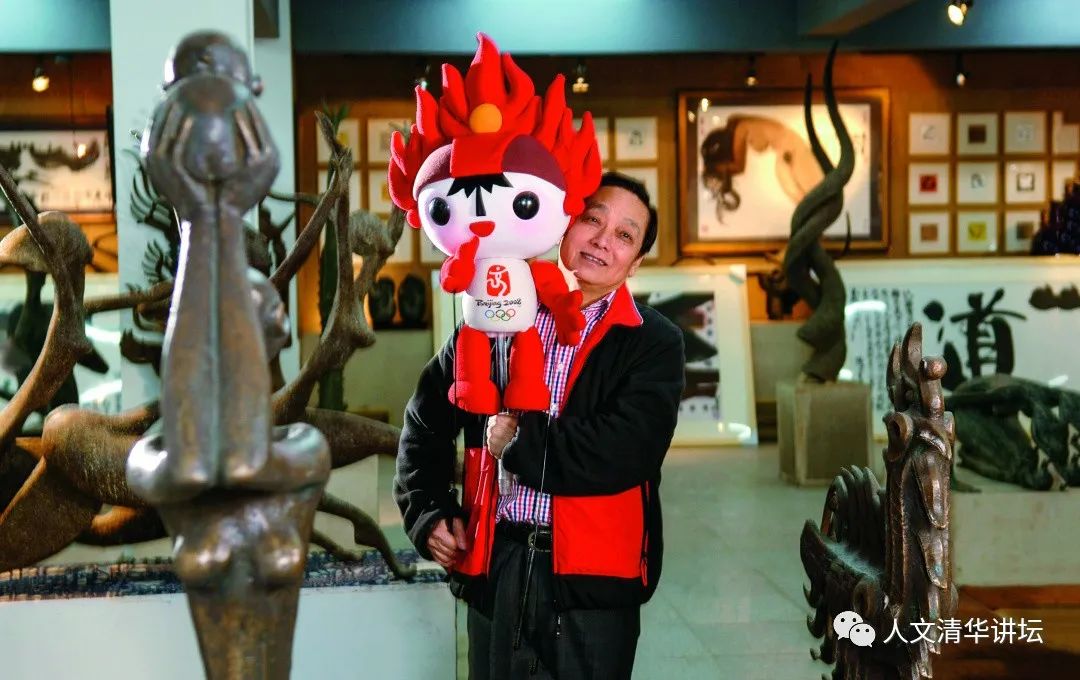
Mr. Han Meilin and Fuwa "Huanhuan"

  In 2018, the International Olympic Committee awarded Han Meilin the "Coubertin Medal" in recognition of his outstanding contribution to promoting the Olympic spirit. It can be said that he is still active in the front line of artistic creation in his octogenarian years, which is a true portrayal of the Olympic spirit.

  Since ancient times, China’s calligraphy and painting have paid attention to "the same origin of calligraphy and painting", while Han Meilin became famous for his paintings, but he has long been attached to calligraphy. When I was a child, my family was poor, and I found ancient books such as Four-body Thousand-character Writing, Six-book Classification, Shuowen Gushua, etc. When I didn’t understand their meaning, I was able to regard them as picture books and appreciate the beauty of words and images. In the travel activities, Han Meilin picked up the lost ancient Chinese characters from the ancient rock paintings of Helan Mountain, and from the fragments of ceramics, bronzes, tortoise shells and stone carvings scattered all over the country. He called these ancient Chinese characters, whose pronunciation and interpretation can’t be tested, "deaf-mute beauty", and recorded them almost instinctively in his own conception book. After decades of accumulation, they have reached tens of thousands. Once in Hong Kong, Mr. Qi Gong came across the ancient Chinese characters written by Han Meilin in his notebook, and suggested that he create them artistically, as if to wake up the dreamer in a word, and Han Meilin was determined to create a "heavenly book".
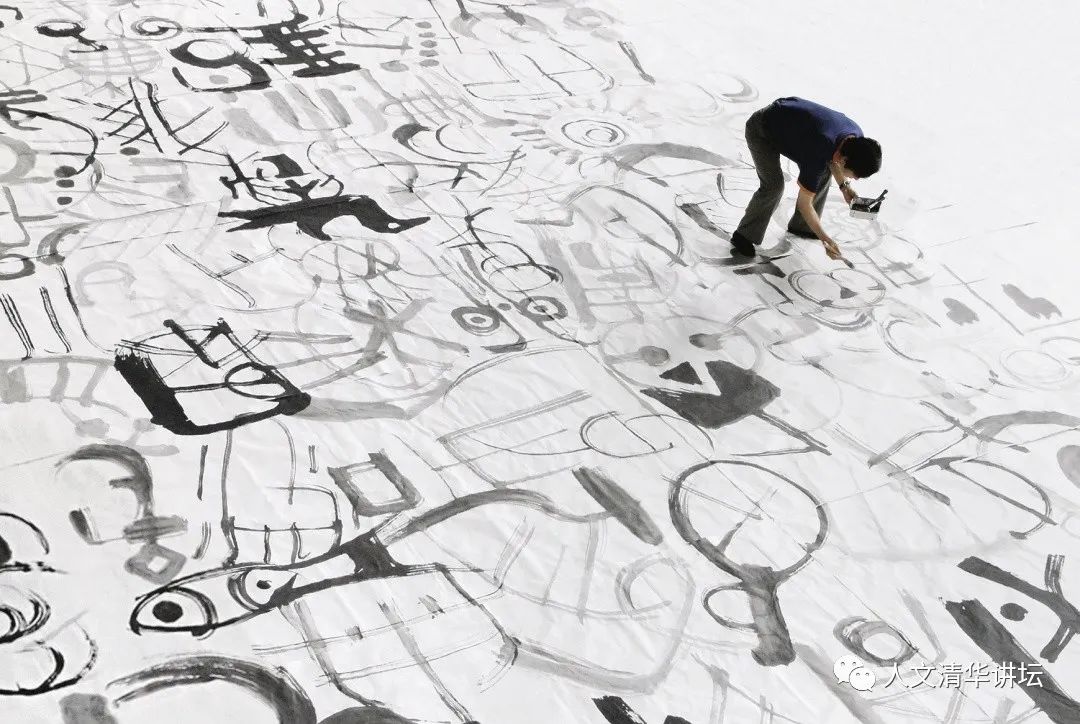
Mr Han Meilin is writing a gobbledygook.

  In 2007, Han Meilin spent 34 years collecting and writing the ancient Chinese character catalogue "Tianshu", which finally came out. He did not research the origin and interpretation of the characters, but pursued the visual beauty of the characters themselves, and performed it with modern aesthetics on the premise of retaining the structure and font of the characters. Huang Miaozi, a master of calligraphy and painting, wrote a poem for it, "Cangjie makes words and ghosts cry at night, and Merrill Lynch’s Tianshu is a god’s costume". "Tianshu" is also a book and a painting. After the first book was published, Han Meilin continued to collect, sort out and re-create, giving more modern life to ancient Chinese characters. He said that if his body permits, he would like to write the translated words, which is a gift that Han Meilin really wants to leave to the nation.
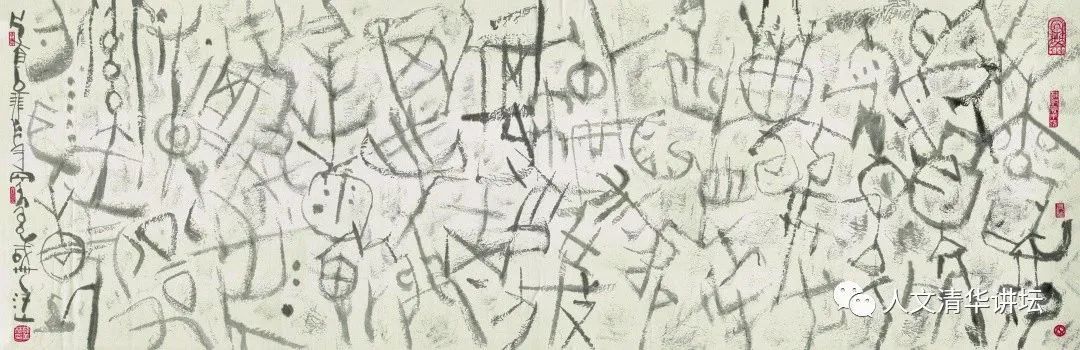
Gobbledygook size: 370*120cm Year: 2015

  Like most artists, Han Meilin has made great efforts in his creation, but he doesn’t care much about business affairs. In 2001, Han Meilin was admitted to the hospital for bypass surgery due to heart problems. When his life was dying, there were thousands of works left in the studio and he didn’t know what to do with them. After his recovery, Han Meilin, who didn’t want to get close to business, decided to donate his works to the country for future generations to study. Under the direction of his wife, Zhou Jianping, Han Meilin Art Museum was built in Beijing and Hangzhou at both ends of the Grand Canal. Subsequently, Yinchuan Pavilion was completed and opened in 2015. Han Meilin became the first China contemporary artist with three art galleries (Beijing, Hangzhou and Yinchuan). Its scale, category and quantity are vast, and it is known as "Dunhuang for one person". Han Meilin has a mantra: "I am making progress every day!" The growth of age can’t stop him from pursuing art. Under the impetus of continuous creation, Han Meilin Zisha Art Museum was established in Yixing, the birthplace of Zisha Pot, in 2019. At present, the expansion projects of Beijing, Hangzhou and Yinchuan have also been carried out in an orderly manner.
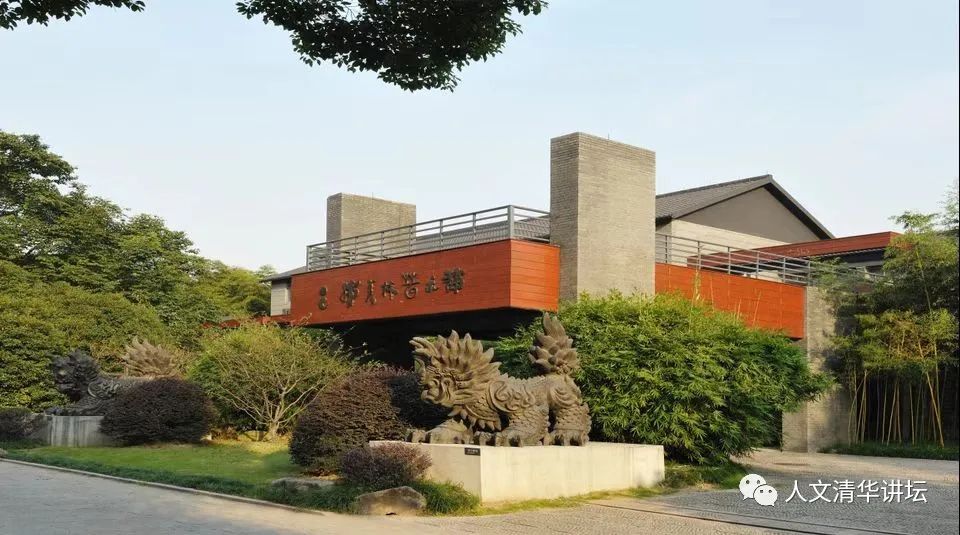
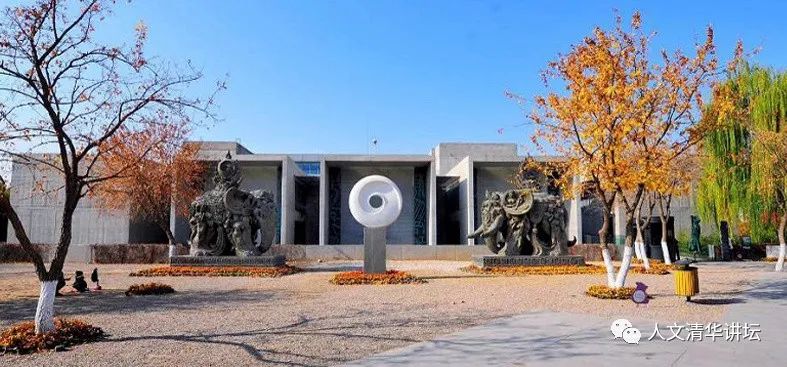
Han Meilin Art Museum in Hangzhou, Beijing and Yinchuan

  Over the years, Han Meilin has supported charity by donating money and works. In 2013, the Han Meilin Art Foundation was formally established, which enabled it to carry out art-related public welfare undertakings more systematically, regularly and continuously, promote cultural education and cultural inheritance by setting up scholarships, and donated funds to build Merrill Hope Primary School and Merrill Lynch classrooms in many places to promote the popularization of basic education and aesthetic education.
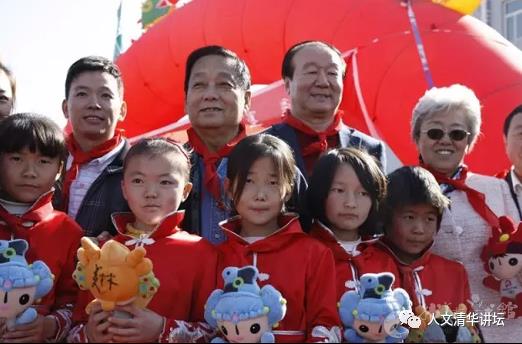
Donation ceremony of "Fuwa Nini Hope Primary School"

  In 2015, Han Meilin was awarded the title of "Peace Artist" by UNESCO, becoming the first person in China art circle to win this honor. Since then, Han Meilin has more actively participated in the cause of promoting cultural exchanges and cultural inheritance in various countries and regions, and in 2016, launched the "Merrill Lynch’s World Han Meilin Global Tour Exhibition", with the purpose of "paying tribute to the Renaissance, returning to the roots of the nation, and performing cultural duties", and carrying forward the "peaceful" and "pluralistic" cultural world outlook with art, and promoting the great ideal of "truth, goodness and beauty" in human society.
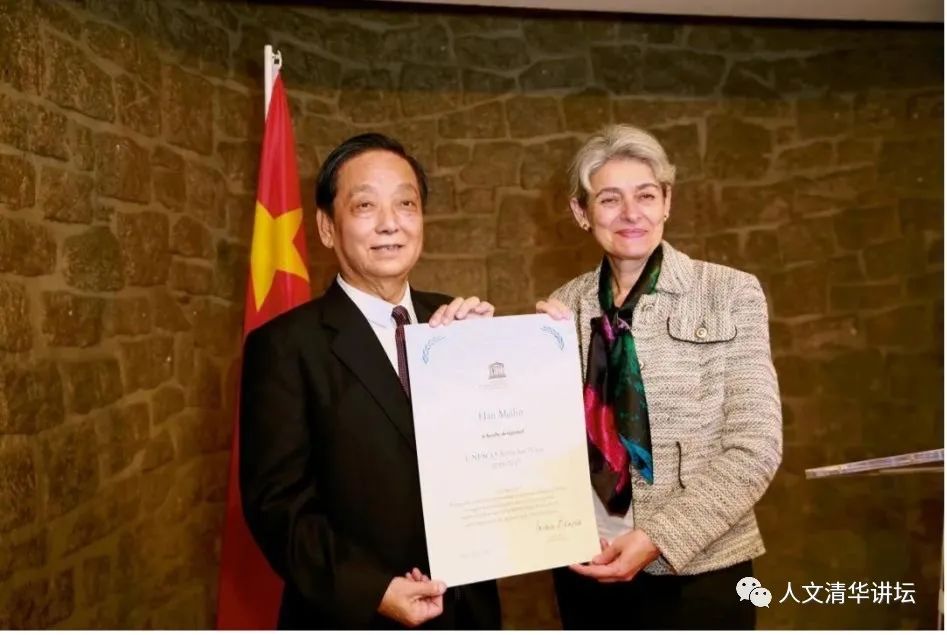
Irina bokova, then Director-General of UNESCO, awarded Mr. Han Meilin the certificate of "peace artist".

  Today, Han Meilin, who is 87 years old, still insists on writing and drawing every day, and maintains strong artistic creativity. Together with the art foundation he founded, he continues to promote the inheritance of national culture and international cultural exchanges. He calls himself a "time poor", so he should make up for the lost time in turbulent times with more diligent creation.
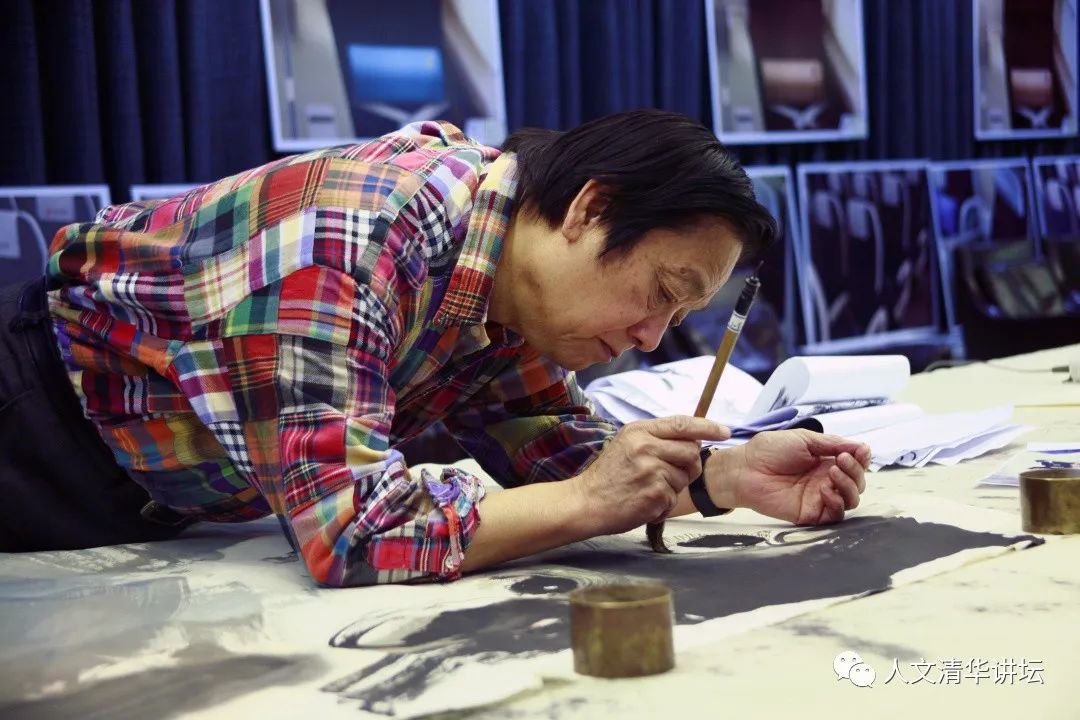
  Han Meilin’s life is so rich that it is difficult for us to define him in one word. He has made outstanding contributions in painting, calligraphy, sculpture, ceramics and other fields. Even his life itself has been carved into a masterpiece of art in the pursuit of goodness and beauty for decades. Such a master is a wonderful blessing from God to the world and to China.