Android 5.0 ushered in the "final chapter": a generation of classic systems was abandoned by the AI era.
As the most popular smartphone operating system in the world, Android has undergone many iterations and upgrades since its launch in 2008, and has undergone earth-shaking changes in vision, concepts and functions. In this process, Android has gradually grown from the original iOS follower to the dominant force in the mobile device market.
In February, 2024, Google launched the first developer preview version of Android 15 with the system code Vanilla Ice Cream. At this point, the digital version of Android has reached "15", and Google’s tradition of using desserts as the system code has been passed down for 15 generations. These 15 kinds of desserts have witnessed the growth of Android and also carried the memories of countless old players.
The update of the new version means the elimination of the old version, and Google terminated the support of Android 4.4 in July last year. Today, there is another name on the elimination list: Android 5.0.
In June 2014, Google announced Android5.0 on Google I/O and officially launched it in November of the same year. The first mobile phone with Android 5.0 pre-installed was Motorola Nexus 6. In the era of Android 5.0, some experience of Android system has been significantly improved, and the design style of Material Design gives people a bright feeling, while the mobile phone based on Android 5.0 kernel has also greatly improved the fluency of the whole machine. I dare not say that Android system has surpassed Apple in fluency, but at least it has reached a relatively close state.
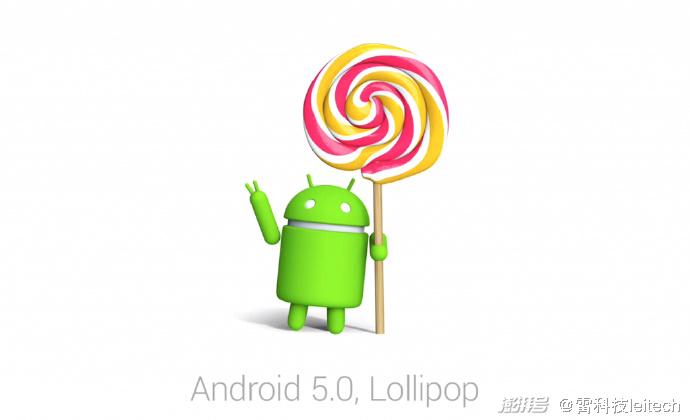
Source: Google
I don’t know if my friends have ever used mobile phones in the Android 5.X era. If so, you are welcome to share your memories of Android 5.X in the comments area. Below, Xiao Lei will take you back to this classic operating system 10 years ago.
Dream back to Android 5.X: brand-new interface design+support ART mode
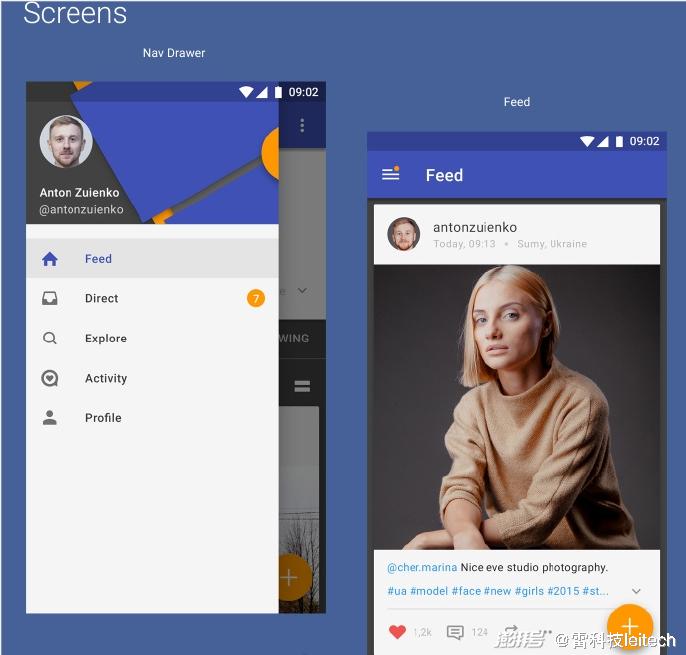
In terms of sensory interface design, Google redesigned the flat system UI based on Material Design style. The new system not only uses new color matching, but also adjusts the transparency of desktop icons and components, and various desktop widgets can also be stacked.
Material Design actually means material design, which can be said to be a new design language. In the treatment of basic elements, the operation buttons at the bottom of the screen are simplified into regular triangles, circles and quadrangles. The application tray is changed to pure white as the background, which unifies the system look and feel and experience of Android devices.
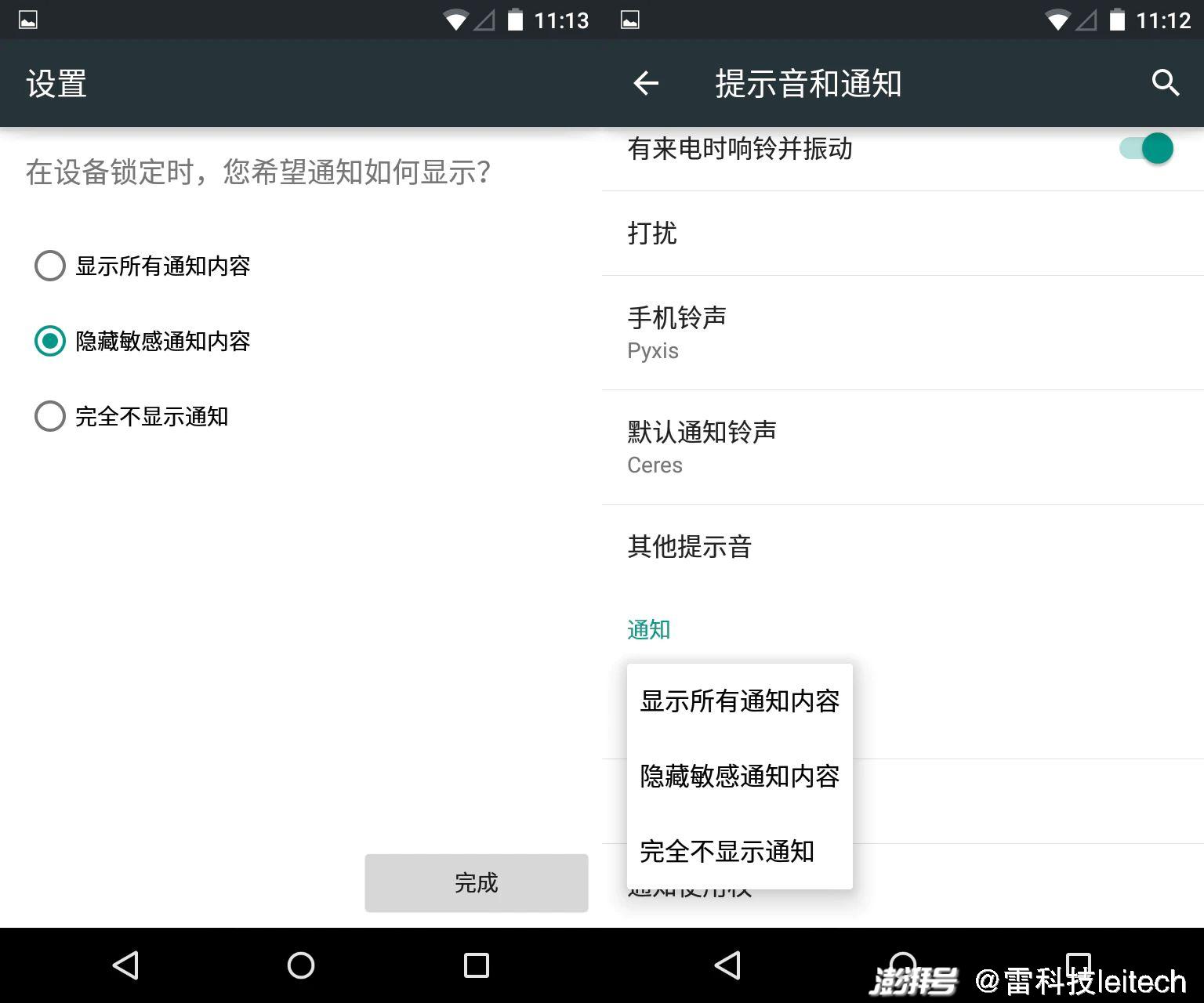
In addition, Google has comprehensively optimized the notification center so that native systems can also have third-party plug-in functions.For example, Android 5.0 can view and reply messages directly from the lock screen interface, or hide sensitive content and less urgent content in the notification, and give priority to displaying important information set by users.
Source: Weibo
If users want to see all the detailed notification contents in the lock screen interface, they can directly drop down and cover other operations. If it is SMS or WeChat, users can also reply directly in the notification bar. At the same time, Android 5.0 can also control the volume and display of notifications triggered by each application independently, and sort the notifications intelligently according to the priority.
Moreover, Android 5.0 also optimizes the functions of OK Google voice search, face unlocking, priority mode, visitor mode, multitasking window and so on.These functions that we seem to be sparse and ordinary now can be said to be "far ahead" at that time, and provide development ideas for the iteration of subsequent versions of the system. But the most impressive update in Android 5.0 has to be the ART mode.
Source: Weibo
The full name of ART is Android Runtime, which is an application running mode.Google introduced this model in Android version 4.4, but at that time, most domestic manufacturers "castrated" this model and still used Dalvik virtual machine. After Android 5.0, ART became the default mode of Android system.
Dalvik virtual machine relies on the compiler to communicate with the application. Every time the application runs, it needs to immediately convert the code in the program into machine code before it can run, which undoubtedly adds a process to the operation of the application, and also causes the phenomenon that the equipment consumes relatively fast power and occupies a large amount of memory. Even flagship machine, which has better hardware equipment, will get stuck and get hot after being used for a long time.
Compared with Dalvik virtual machine, ART mode solves this problem better. When the device installs the application program, the system will automatically pre-read and compile the program, so that the program can be directly compiled into machine language, avoiding the trouble of instant translation.In this way, when the device runs the application, it can achieve higher efficiency, save electricity and occupy less system memory, making the mobile phone run more smoothly.
Of course, the ART mode is not perfect. While solving the translation problem, ART still brings some side effects, such as taking up more storage space and taking longer time to install the program than Dalvik virtual machine. Compared with the improvement of users’ experience in running applications, these minor flaws are still acceptable.
Ten years after the release of Android 5.0, Android entered a recession.
Once upon a time, classic native Android systems such as Android 5.0 were sought after by a large number of fans because of their simplicity, efficiency, purity and elegance. Nowadays, the highlights of Android seem to only stay in memory.
Android occupied more than half of the mobile operating system market for the first time in 2015, and reached its peak in 2019, once occupying 75.47% of the global market share.However, StatCounter statistics show that as of February 2024, this data has fallen to 70.69%. The decline of Android in the domestic market is even more obvious, falling directly to 68%.
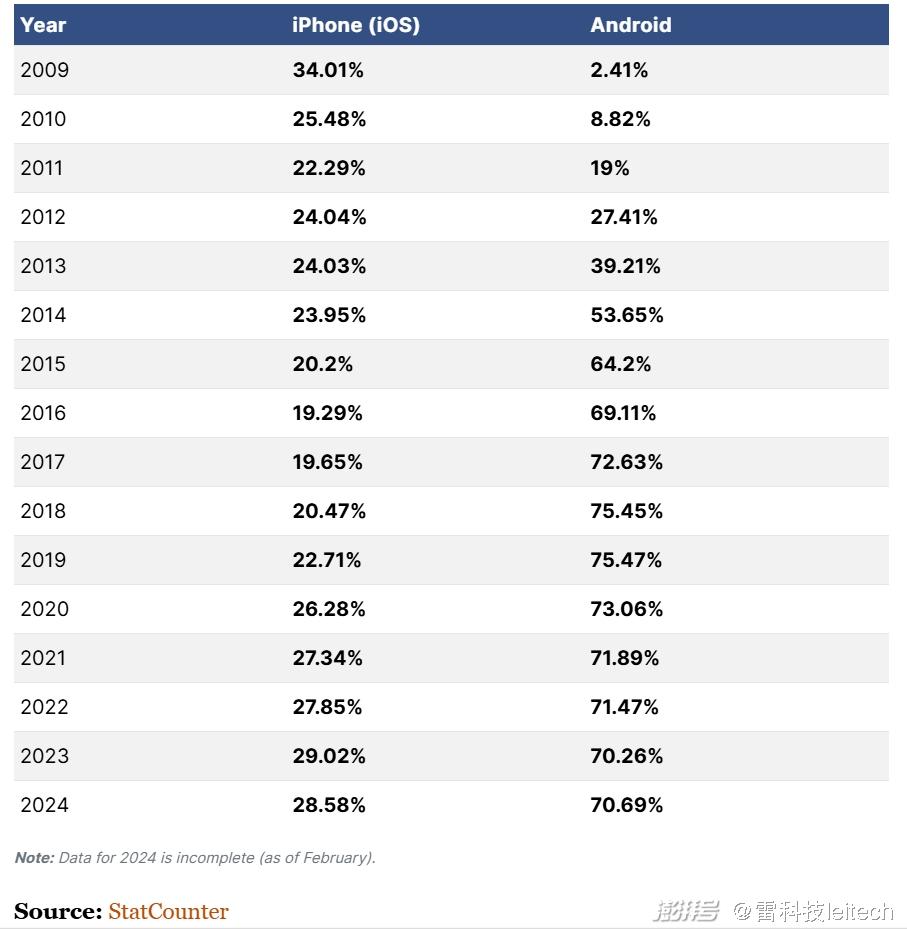
Source: StatCounter
Looking around the mobile phone market, customized UI represented by OPPO ColorOS and vivo OriginOS is actively embracing AI, while operating systems such as Huawei HarmonyOS and Xiaomi 澎湃 OS are developing a multi-terminal intelligent ecosystem, and Google has fallen behind too much. If the customized UI is not included in the statistics of Android, I am afraid that the market share of Android will further decline.
In addition to the rise of competitors, I am afraid that the lag in the development of native Android will have to pay a lot of responsibility for this.
For a long time, native Android is often vomited by users because the UI design is too simple and the functions are scarce.A set of customized system named "MaterialYou" has been used since Android 13. The main feature is that the system UI will match the colors according to the set wallpaper, thus making it more visually harmonious. Although it is much better than the previous version, it is still difficult to change the style of the original Android blank room.
Not to mention the function, the native Android function is generally lagging behind, and many new functions have similar treatment schemes on most customized UI. Even though AI is a big hot spot, the first developer preview version of Android 15 has nothing to do with it. It was not until the Google I/O held three months later that Google announced the deep integration of Android 15 and Gemini model. On the other hand, domestic manufacturers have already put forward relevant concepts as early as last year.
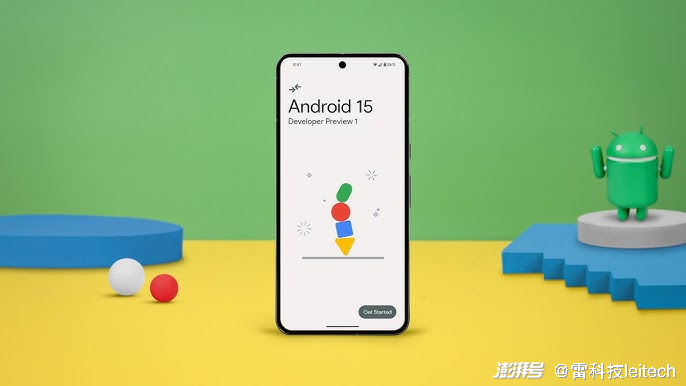
Source: Google
A colleague of Xiaolei bought a Google Pixel 6 last year in order to experience a truly pure native Android. Originally, I thought that this mobile phone should be the first pixel equipped with Tensor chip, and the experience should not be too bad. However, the actual experience shows that even the combination of native Android and Pixel can’t give full play to any advantages: the animation is blunt, the background management mechanism is chaotic, and the game performance scheduling is extremely poor.
You know, an operating system that is not easy to use will bring a great negative impact on the product, even if the performance of the product hardware is strong, it is difficult to save the hearts of consumers.
The Pixel series of mobile phones is the best example. This series of products shipped only 37.9 million units between 2016 and 2023, which is even worse than the annual shipment of Samsung A series, let alone competing with Apple’s iPhone.
On the contrary, many customized UIs have already entered a new stage of efficient combination of system and hardware. Since 2020, ColorOS 11, OriginOS and MIUI 12 have introduced a series of innovative functions combined with products, which have completely changed users’ views on them.
For example, OriginOS not only gives components with high enough custom space such as "deformation table" and "controller", but even atomic notification is an inter-generational design. ColorOS 11′ s quantum animation engine 2.0 enables Android phones to have silky interrupt animation like iPhone; At that time, Android 11 was still paying attention to the suspendable chat bubbles, and the gap between the two camps was not too big.
Source: OPPO
After all, native Android is indeed inferior to customized UI and other operating systems in many places. No matter the lack of functions or the backwardness of aesthetics, native Android cannot lead the Android operating system back to the peak of its share in 2019.
Products and systems complement each other, and the backwardness of either party will affect the overall sales. In the long run, when the underlying architecture of native Android can no longer meet the needs of customized UI, they are likely to make their own choices. By then, the Android market share may further decline.
Write it at the end
I believe that many people, like Lei, miss the Android system in the Android 5.0 period. At that time, regardless of Android systems at home and abroad, everyone was very concerned about the version iteration and function of native Android.
Today, customized UI is often ahead of native Android. Domestic users actually don’t pay much attention to when Google updated native Android, let alone what new functions and features it brought. Anyway, it is not as good as the customized UI they used.
Of course, whether it’s Android, iOS, HarmonyOS or customized UI, everyone is learning from and imitating each other and absorbing each other’s advantages. Although there are fewer features, the average level of mobile device operating system is improving and aligning with the naked eye, which is a good thing for users.
For a long time to come, Android will remain dominant in the mobile operating system market. Whether Google can regain its competitiveness on Android 15 and then Android 16, let us wait and see.
In the first half of 2024, the technology circle was surging.
The landing of large models is accelerated, and AI mobile phones, AI PC, AI home appliances, AI search, AI e-commerce … AI applications emerge one after another;
Vision Pro went on sale and landed in the China market, and then lifted the wave of XR space computing;
HarmonyOS NEXT was officially released, and the mobile OS ecology changed;
The car entered the "second half" in an all-round way, and intelligence became a top priority;
E-commerce competition is becoming increasingly fierce, and the volume is cheaper and more services;
The wave of going out to sea is surging, and China brands have embarked on a journey of globalization;
……
In July, the theme of mid-year review of Lei Technology was launched, summarizing the brands, technologies and products worth recording in the first half of 2024, recording the past and looking forward to the future, so please pay attention.